

 Nana Wu

 Dwi Wanna

 Suro Senen

 Evan Lee Salim

 Lina Irawan
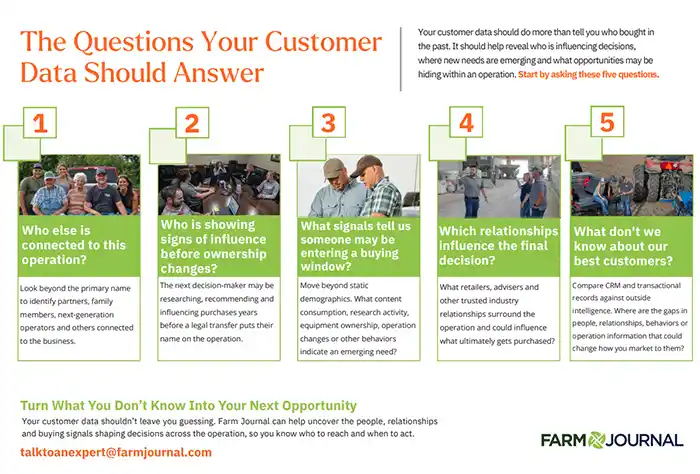
Introduction: The Paradigm Shift in Ag-Tech Marketing
The landscape of agricultural marketing is undergoing a seismic shift. For decades, the industry relied on traditional media—print trade publications, regional radio, and localized field days—to build brand equity. In recent years, the industry pivoted toward digital engagement, measuring success through the metrics of the early internet era: reach, clicks, and impressions. However, the golden age of "easy metrics" has come to an abrupt end.
Today, agricultural marketers are facing an environment defined by fiscal conservatism, technological disruption, and a fundamental collapse of traditional data reliability. As finance departments demand higher levels of accountability, the mandate for marketing teams has evolved from simple visibility to demonstrable revenue impact. To survive and thrive in this new reality, the industry must pivot toward a sophisticated, signal-based strategy that prioritizes high-intent data over superficial engagement.
Main Facts: The New Reality of Accountability
The core challenge facing modern ag-marketers is the "Accountability Gap." In previous fiscal cycles, marketing departments were often viewed as cost centers where "brand awareness" served as a sufficient justification for expenditure. That era has concluded.
1. The Fiscal Squeeze
With input costs rising and commodity price volatility becoming the norm, agribusinesses are tightening their belts. CFOs are no longer satisfied with reports detailing how many thousands of eyes saw a banner ad. They are asking for the "last mile" of marketing—specifically, how a digital touchpoint converted into a dealer visit or a product purchase.
2. The AI Acceleration
Artificial Intelligence has fundamentally altered the velocity of campaign execution. AI-driven tools can now generate content, optimize bidding strategies, and personalize messaging at a scale previously unimaginable. However, this has created a "noise crisis." As the digital ecosystem becomes flooded with AI-generated content, the signal-to-noise ratio has plummeted, making it harder for authentic brands to stand out.
3. The Erosion of Data Infrastructure
The deprecation of third-party cookies and the rise of strict privacy regulations have rendered many traditional digital tracking methods obsolete. Marketers who relied on third-party data to build their funnel are finding that their tracking pixels are no longer delivering the granularity required for precise attribution.
Chronology: The Evolution of Ag-Marketing Metrics
- Pre-2015: The Era of Reach. Success was measured by circulation numbers and broadcast footprints. The goal was ubiquitous brand visibility.
- 2015–2020: The Digital Awakening. As social media and programmatic advertising took hold, the focus shifted to "vanity metrics." Marketers celebrated high click-through rates (CTR) and social media engagement, often without tying these actions to actual sales.
- 2021–2023: The Data Reckoning. Privacy changes (such as Apple’s App Tracking Transparency) began to break traditional attribution models. Ag-marketers realized that clicks did not necessarily equate to customer intent.
- 2024–Present: The Signal Era. The current phase focuses on "high-intent signals." The industry is moving toward first-party data collection, CRM integration, and closed-loop reporting where every marketing dollar is tethered to a verifiable business outcome.
Supporting Data: Why "Reach" is No Longer Enough
Industry analysis indicates that while digital ad spend in agriculture continues to grow at a compound annual growth rate (CAGR) of roughly 8%, the efficacy of those dollars is stagnating.
- The Attribution Disconnect: Recent surveys of agricultural marketing executives show that over 65% of departments struggle to link digital campaigns directly to revenue.
- Signal Decay: Studies on digital ad effectiveness suggest that up to 40% of standard programmatic traffic in rural sectors is now filtered by automated ad-blockers or privacy-focused browsers, rendering standard tracking metrics inaccurate.
- Conversion Variance: Data suggests that campaigns targeting "high-intent signals"—such as farmers who have engaged with specific technical agronomy content or equipment configuration tools—outperform broad awareness campaigns in conversion rates by a factor of 4:1.
Official Responses and Industry Perspectives
Industry experts and marketing leaders are increasingly vocal about the need for a fundamental change in how marketing ROI is calculated.
"The question isn’t whether your ad was seen; the question is whether it influenced a decision," says Sarah Jenkins, a lead analyst in agricultural technology. "We are moving away from the ‘spray and pray’ model. The most successful firms are now investing heavily in their own databases. They are building private ecosystems where they own the customer relationship, rather than renting access via platforms that are increasingly opaque."
Furthermore, marketing directors at major machinery and chemical input firms note that their internal conversations have shifted from "What is the cost per click?" to "What is the cost per qualified lead?"
"We are essentially being forced to become data scientists," says a Director of Marketing for a major mid-west seed distributor. "We have to integrate our CRM with our ad-tech stack. If we can’t show that a digital touchpoint contributed to a sale in our salesforce automation system, we essentially assume the spend was inefficient."
Implications: Building a Resilient Strategy
To navigate this shifting landscape, agricultural marketers must adopt a new framework. The implications for the future of the industry are clear:
1. Prioritize First-Party Data
With third-party data becoming unreliable, brands must invest in their own infrastructure. This means creating valuable digital experiences—such as agronomic calculators, disease prediction tools, or inventory transparency portals—that incentivize farmers to share their data directly with the brand.
2. The Shift to "Signal-Based" Marketing
Instead of optimizing for clicks, marketers must optimize for "signals." A signal is an action that demonstrates a genuine intent to purchase or a high level of engagement with a brand’s value proposition. Examples include downloading a white paper, requesting a custom quote, or interacting with a dealer locator tool.
3. Closed-Loop Attribution
The integration of marketing technology (MarTech) and sales technology (SalesTech) is no longer optional. Companies must ensure that their digital advertising platforms are speaking to their CRMs. This allows for a "closed-loop" view, where a marketing team can track a farmer’s journey from the first impression on a mobile device to the final transaction at the dealership.
4. Quality Over Velocity
While AI allows for massive content production, marketers must be wary of "content pollution." The implication is that quality will become a greater differentiator than ever before. Brands that provide deep, technical, and hyper-relevant content that solves actual production challenges will win, while brands that merely fill space with generic AI-generated copy will be filtered out by an increasingly skeptical audience.
Conclusion: The Path Forward
The changing agriculture market is not an existential threat; it is an evolution. The marketers who treat this change as a challenge to improve their sophistication will gain a massive competitive advantage. By moving beyond the superficiality of clicks and impressions and focusing on the underlying signals of intent, agricultural brands can build deeper, more profitable relationships with the producers they serve.
In this new era, proof of impact is not just a demand from the finance team—it is the ultimate metric of a brand’s relevance in a complex, data-driven agricultural economy. The future belongs to those who can prove their value, one signal at a time.

 Nila Kartika Wati

 Layla Zulfa

