

 Nana Wu

 Dwi Wanna

 Suro Senen

 Evan Lee Salim

 Reynand Wu
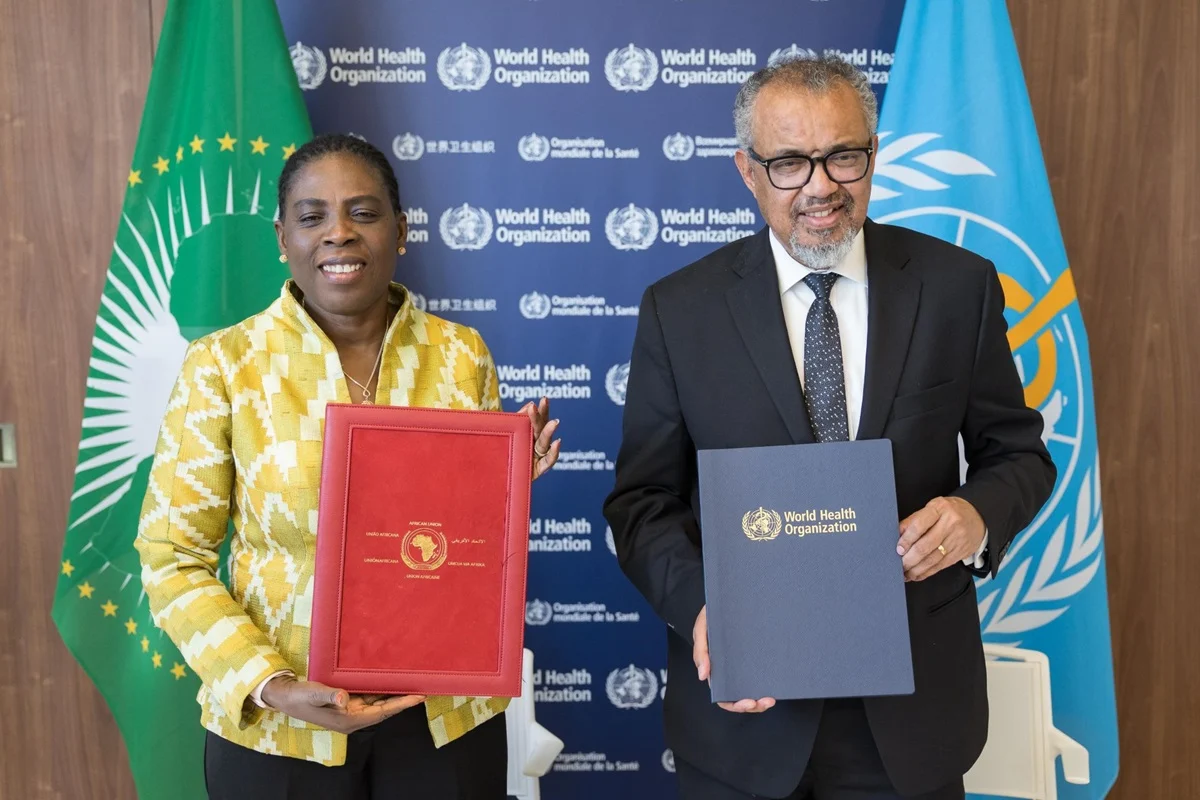
GENEVA – In a move signaling a profound shift in the governance of global health, the World Health Organization (WHO) and the African Union (AU) Commission officially renewed their strategic partnership today. The signing of an updated Memorandum of Understanding (MoU) on the sidelines of the 78th World Health Assembly in Geneva marks a pivot from traditional aid-based models toward a vision of continental health sovereignty and self-reliance.
As the global health landscape faces a period of unprecedented fiscal volatility and geopolitical shifts, this renewed agreement serves as both a roadmap for regional stability and a testament to the African Union’s growing influence in international affairs.
The Core Pillars of the New Agreement
The updated MoU is not merely a bureaucratic continuation of previous accords; it is a recalibrated framework designed to integrate the AU’s political leadership with the WHO’s normative and technical expertise. By streamlining collaboration across all AU entities, the agreement aims to tackle the fragmentation that has historically hindered public health interventions on the continent.
The agreement focuses on five primary domains of cooperation:
- Health Security and Pandemic Preparedness: Establishing robust, integrated surveillance systems to prevent and respond to cross-border health threats.
- Universal Health Coverage (UHC): Accelerating the expansion of primary healthcare to ensure equitable access for all, particularly in underserved rural and peri-urban areas.
- Sustainable Health Financing: Moving away from donor-dependent budgeting toward domestic resource mobilization and innovative health financing models.
- Health System Strengthening: Bolstering the resilience of national health infrastructures to withstand climate-related shocks and economic downturns.
- Technical and Normative Support: Leveraging WHO’s global expertise to guide the implementation of the AU’s flagship health policies, including those spearheaded by the Africa Centres for Disease Control and Prevention (Africa CDC).
Chronology: A Partnership in Evolution
The current milestone is the latest step in a relationship that has deepened significantly over the last decade.
- 2019: The original MoU was signed, creating the foundational structure for cooperation between the two organizations. It served as the primary mechanism for coordinating health policy during the formative years of the African Continental Free Trade Area (AfCFTA) negotiations.
- 2020–2022: The COVID-19 pandemic acted as a stress test for the partnership. During this period, the WHO and the AU worked in lockstep to secure diagnostic tools, PPE, and later, equitable vaccine access through the COVAX facility and the African Vaccine Acquisition Trust (AVAT).
- 2023: The African Union’s formal admission to the G20 provided the political platform necessary for this year’s renewal. It signaled that Africa’s health challenges are no longer viewed as peripheral, but as central to global economic stability.
- 2024 (Present): The signing at the 78th World Health Assembly represents a consolidation of these efforts, formalizing a shift toward long-term sustainability and the dismantling of aid-dependency structures.
Supporting Data: The Financial Imperative
The urgency of this renewal is underscored by a sobering reality: Africa is currently navigating a "polycrisis." According to recent reports from the African Development Bank and WHO regional offices, the continent is facing a tightening of fiscal space as bilateral aid from Western donors faces sharp contractions.
Current trends suggest that without a transition to "health sovereignty," millions of citizens remain vulnerable to preventable diseases.
- Funding Gaps: Recent analysis indicates that health expenditure in many sub-Saharan nations remains below the Abuja Declaration target of 15% of national budgets.
- The Burden of Dependency: Currently, some nations still rely on external funding for up to 40% of their essential health commodities. The new MoU specifically targets this dependency, aiming to support local manufacturing of medicines and vaccines—a vital component of the AU’s 2063 Agenda.
Official Responses: Shifting the Narrative
The signing ceremony was conducted by Her Excellency Ambassador Amma Adomaa Twum-Amoah, Commissioner for Health, Humanitarian Affairs, and Social Development, on behalf of AU Commission Chairperson Mahmoud Ali Youssouf, and Dr. Tedros Adhanom Ghebreyesus, WHO Director-General.
Commissioner Twum-Amoah’s Vision
Addressing the assembly, Commissioner Twum-Amoah was emphatic about the shift in philosophy. "This Agreement marks a new chapter in AU-WHO cooperation," she stated. "By working together more closely, we can better respond to the health needs of our populations and ensure that no one is left behind. We need to move from budgeting for survival to planning for health sovereignty."
Her comments reflect a growing sentiment within the AU that Africa must take the driver’s seat in designing its health architecture, ensuring that international partnerships support—rather than dictate—continental priorities.
Dr. Tedros’s Commitment
Dr. Tedros, acknowledging the precarious state of global health funding, highlighted the importance of this partnership in mitigating the impact of aid cuts. "This renewed agreement comes at a critical time, as cuts to bilateral aid imperil the health of millions in Africa," he noted. "It reflects our determination to translate our partnership into tangible results for the people of Africa, and support countries to leave behind the era of aid dependency and transition to sustainable self-reliance."
Implications: A New Global Health Order
The implications of this agreement extend far beyond the borders of the African continent.
1. Elevated Geopolitical Influence
With the AU’s seat at the G20, the organization is uniquely positioned to translate this MoU into global policy. The partnership ensures that when AU leaders speak on the global stage, they are backed by the technical and scientific weight of the WHO, creating a powerful coalition for health equity.
2. Strengthening Regional Resilience
The focus on "health sovereignty" implies a concerted effort to empower regional institutions like the Africa CDC. By decentralizing the response to health crises and fostering local manufacturing capabilities, the partnership aims to reduce the "time-to-market" for essential medicines and vaccines, ensuring that Africa is no longer at the back of the queue during future pandemics.
3. A Model for South-South Cooperation
This partnership provides a potential blueprint for other regional blocs—such as ASEAN or the Caribbean Community (CARICOM)—on how to effectively engage with international agencies. It demonstrates that the most effective path forward is a hybrid model where global norms meet regional political will.
Conclusion: The Path Ahead
The renewal of the MoU is a tactical response to a changing world. It acknowledges that while international support remains vital, the long-term solution for Africa’s health security lies within the continent’s own institutional capacity.
As the implementation phase begins, the success of this agreement will be measured not by the number of meetings held in Geneva, but by the tangible outcomes in local communities: improved life expectancy, better maternal and child health outcomes, and a robust, home-grown health workforce.
For the African Union and the World Health Organization, the mission is clear: to build a future where health is not a gift from donors, but a protected right guaranteed by resilient, sovereign, and self-sustaining national systems.
Media Contact Information
For further information, please contact:
- Professor Julio Rakotonirina | Director | Department of Health, Humanitarian Affairs and Social Development | African Union Commission | [email protected]
- Ms. Stéphanie Seydoux | Director | DG Envoy for Multilateral Affairs | World Health Organization | [email protected]
Additional support provided by the WHO Media Team and Mr. King David Cartey of the African Union Commission.


