

 Nana Wu

 Dwi Wanna

 Suro Senen

 Evan Lee Salim

 Asro
By Julie Littman | October 22, 2026
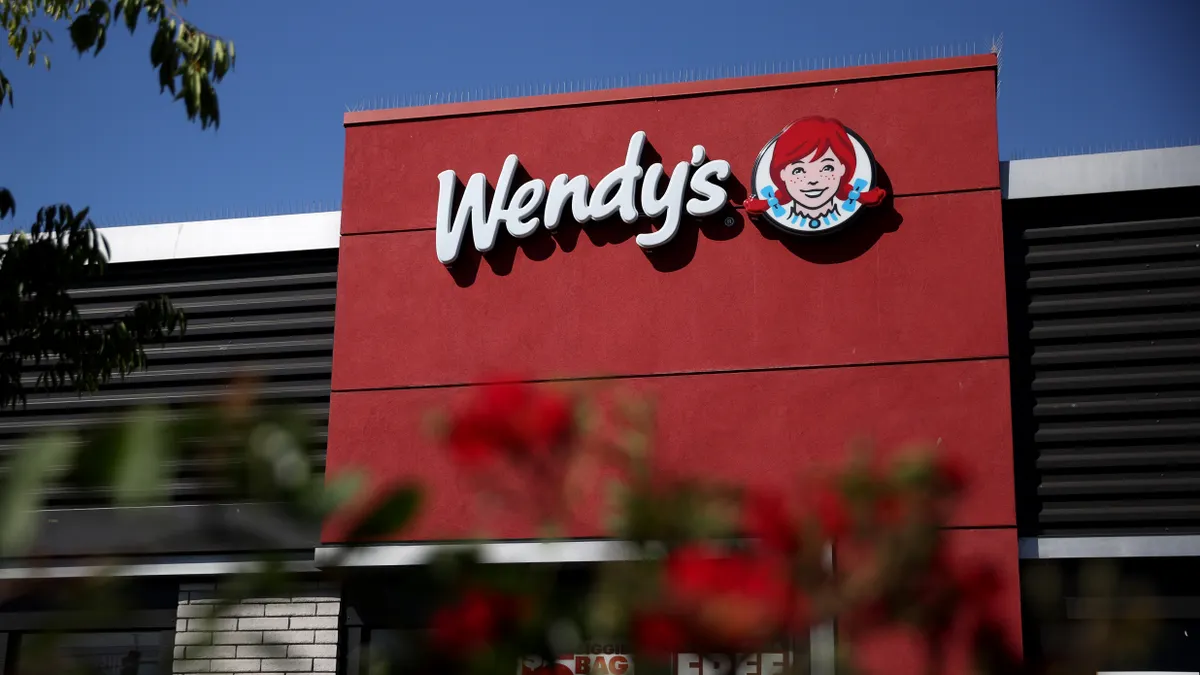
In a significant development within the ongoing Chapter 11 bankruptcy proceedings of Meritage Hospitality Group—once one of Wendy’s most prominent franchisees—the company has announced a strategic move to divest a substantial portfolio of restaurant units. The operator plans to sell locations across Tennessee, Arkansas, Mississippi, and Missouri to Divine Infinity Operations, a move intended to provide much-needed liquidity for the debtors’ estates and potentially resolve a deepening standoff with the franchisor.
The Path to Divestiture: Strategic Liquidation
The sale represents a critical milestone in Meritage’s effort to reorganize under the weight of mounting financial pressure. According to court filings, the transition of these units to Divine Infinity Operations is viewed by industry experts as a necessary step to preserve the "going-concern value" of the restaurants.
Christopher Kelleher, managing director of Auspex Capital, which marketed the sale, emphasized in a court filing that the buyer was specifically selected for its robust infrastructure, brand familiarity, and the necessary "franchisor relationships" required to obtain approval and secure financing for a transaction of this scale. "A prompt sale to the buyer will preserve the going-concern value of the restaurants, preserve hundreds of jobs and the restaurants’ franchise relationship, and provide liquidity for the debtors’ estates," Kelleher noted.
Chronology of a Collapse
The decision to sell follows a volatile period for Meritage, characterized by declining sales, strained margins, and an increasingly adversarial relationship with Wendy’s corporate headquarters.
- Late 2025: Meritage begins the search for a strategic buyer, recognizing that its operational footprint had become unsustainable under current debt loads.
- September 16, 2026: Wendy’s officially terminates its franchise agreements with Meritage, citing the operator’s failure to pay over $27 million in outstanding royalty obligations.
- September 17, 2026: One day after the termination notice, Meritage files for Chapter 11 bankruptcy protection.
- October 1, 2026: Meritage formally objects to Wendy’s initial claims in court, seeking injunctive relief and arguing that the termination notice was an attempt to gain leverage rather than a genuine effort to cease operations.
- October 22, 2026: Meritage announces the deal with Divine Infinity Operations, aiming to clear its ledger of royalty debts and satisfy its obligations to the court.
The Standoff: Franchisor vs. Franchisee
The sale is expected to smooth the friction between Meritage and Wendy’s. The franchisor had previously objected to Meritage’s "first-day motions" in bankruptcy court, arguing that because the franchise agreements were terminated prior to the filing, the operator had no right to continued support or brand usage.
Meritage, however, pushed back, asserting that the termination notice was legally ambiguous and lacked proper service. In court documents, the franchisee claimed that Wendy’s never sent a physical copy of the notice to Meritage’s offices. Furthermore, Meritage alleged that the franchisor never actually intended for the "lights to go out" at the restaurants, characterizing the emailed notification as a strategic play to gain leverage in ongoing negotiations.
The dispute highlights the high-stakes nature of franchise bankruptcy, where the brand’s reputation is often at odds with the operator’s need to preserve assets. Meritage claims that a transition period is essential for an "orderly transition," whereas the franchisor’s initial stance suggested a desire for a cleaner break from an operator that had fallen significantly behind on its financial commitments.

Supporting Data: A Macro-Trend of Distress
The struggle faced by Meritage is not an isolated incident; rather, it is emblematic of a broader trend within the quick-service restaurant (QSR) sector. Throughout 2026, the industry has seen a cascade of franchisee bankruptcies, including operators of major brands such as Carl’s Jr., Hardee’s, Popeyes, and Moe’s Southwest Grill.
The underlying causes of this industry-wide distress include:
- Compressed Margins: Rising costs of food commodities and labor have left little room for error.
- Shifting Consumer Behavior: Persistent inflation has curtailed consumer spending, leading to decreased traffic and lower check averages.
- Ineffective Marketing Strategies: In the case of Meritage, the company struggled for several quarters with declining sales, which it attributed in part to a brand marketing strategy under Wendy’s prior management that favored deep discounting and national promotions over long-term brand equity.
As consumer spending remains tepid, the "efficiency" of a restaurant’s operation has become the primary determinant of survival. For operators with high debt-to-equity ratios, the inability to pivot quickly to a leaner model has proven fatal.
Official Responses and Legal Strategy
The court proceedings remain active as Meritage works through at least four omnibus motions aimed at rejecting various unexpired leases. These motions are designed to reduce the company’s overhead and shed underperforming locations that are not part of the current sale to Divine Infinity Operations.

From the perspective of the debtors, the sale is a vital piece of the puzzle to keep the remaining business alive. By paying down past-due royalties, Meritage hopes to normalize its relationship with Wendy’s, effectively "resetting" the franchise relationship under new management. For Wendy’s, the involvement of an experienced, stable operator like Divine Infinity provides an exit ramp from a high-risk situation, ensuring that the affected locations continue to contribute to the brand’s footprint rather than becoming vacant storefronts.
Implications for the Future of QSR Franchising
The Meritage case serves as a cautionary tale for both franchisors and franchisees. It underscores the fragility of the franchise model when communication breaks down during financial downturns.
- The Importance of Liquidity: Franchisees must maintain cash reserves capable of weathering prolonged periods of low consumer traffic. When margins are compressed by national discounting, the cushion disappears, leading to royalty defaults.
- Franchisor Support: The dispute over whether a termination notice constitutes a "short-term license" for continued operation reveals a legal gray area. Future franchise agreements will likely see tighter, more explicit language regarding the "winding down" of operations during bankruptcy to prevent the kind of court battles seen here.
- Consolidation Trends: The entry of entities like Divine Infinity Operations into the market suggests that the QSR landscape is shifting toward larger, more diversified, and better-capitalized multi-unit operators. Small-to-mid-sized franchisees may find it increasingly difficult to compete in an environment where scale is required to offset rising operational costs.
As the legal proceedings continue, all eyes will be on how the bankruptcy court treats the balance between protecting creditor interests and maintaining the viability of the Wendy’s brand. For now, the sale to Divine Infinity Operations marks a transition—not just for the specific units involved, but for a industry that is rapidly recalibrating to a new reality of higher costs and more selective, value-conscious consumers.
The resolution of the Meritage bankruptcy will likely set a precedent for how other distressed operators approach their own exit strategies, potentially favoring structured divestitures over total liquidation. As the dust settles on this specific deal, the primary takeaway for the restaurant industry is clear: in an era of thin margins, the ability to adapt to financial, operational, and legal pressures is the ultimate arbiter of success.

 Siti Muinah

 Rifan Muazin

