 Dwi Wanna
 Nana Wu
 Muslim
 Reynand Wu
 Ammar Sabilarrohman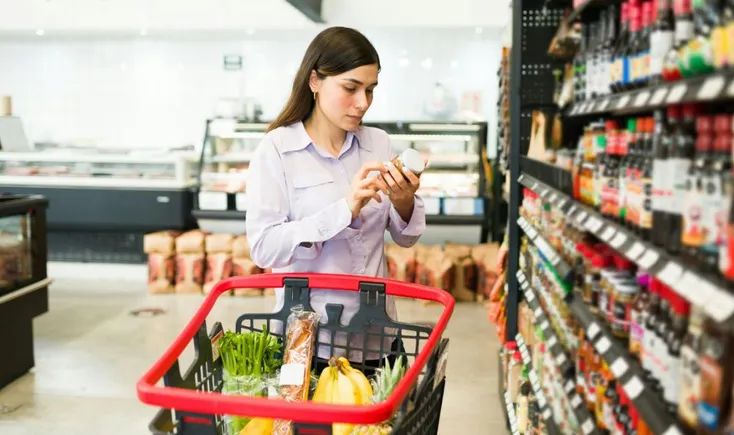
The modern food industry is navigating a precarious intersection of economic volatility and shifting consumer behavior. As inflation continues to temper household budgets and global geopolitical instability creates supply chain friction, the optimism that once defined the post-pandemic recovery is being replaced by a cautious, defensive posture. For food marketers, the challenge has never been greater: how do you maintain brand equity and drive sales when your primary audience is actively cutting back?
Recent data from the University of Michigan’s Consumer Confidence Index underscores the gravity of the situation, revealing a stark 14% decline in short-term economic expectations. This erosion of confidence is not merely a macroeconomic statistic; it is a direct reflection of the persistent pressure exerted by elevated food prices and broader market uncertainty. As household grocery bills remain stubbornly high, the threshold for consumer loyalty is being tested. Consequently, marketing budgets are facing unprecedented levels of scrutiny as leadership teams demand greater efficiency and demonstrable return on investment (ROI).
The Current Landscape: A Shift in Strategic Priority
The current economic climate is forcing a fundamental rethink of advertising strategies across the Consumer Packaged Goods (CPG) sector. A recent industry study of senior advertising and marketing leaders highlights this reactive shift: approximately 26.4% of surveyed executives are actively reallocating their budgets toward lower-cost, high-efficiency channels. Simultaneously, 22.4% of brands are choosing to reduce the frequency of their media campaigns to keep total expenditures flat, rather than cutting their overall presence entirely.
This trend suggests that the industry is moving away from the "growth at all costs" mentality that defined the previous decade, pivoting instead toward a philosophy of "resilient efficiency." For food brands, this means that every dollar spent must now be justified by its ability to convert or retain customers in an environment where every purchase is a calculated decision.
Chronology of the Current Economic Squeeze
To understand how we arrived at this juncture, one must look at the progression of the last few years:
- 2020-2021 (The Pandemic Surge): Unprecedented demand for at-home food consumption led to a boom in marketing spend and product expansion.
- 2022-2023 (The Inflationary Shock): Global supply chain disruptions and rising energy costs forced a rapid increase in retail food prices. Consumers began trading down to private labels.
- 2024 (The Sentiment Deficit): Despite stabilization in some supply chains, the psychological impact of persistent inflation has settled into a long-term trend of consumer caution, leading to the current 14% decline in confidence metrics.
The Cost of Going Dark: Why Brand Equity Cannot Be Neglected
When corporate margins are compressed by rising costs for raw ingredients and fuel, the instinct for many finance departments is to trim the "discretionary" marketing budget. However, historical data consistently warns against this. Brands that retract their advertising spend too aggressively during a downturn often face a "long-term decay" scenario.
The erosion of brand equity is a silent killer. When a brand disappears from the consumer’s sightline, it cedes market share to competitors who maintain a consistent presence. Furthermore, rebuilding brand awareness and customer loyalty once the economy improves is significantly more expensive than maintaining it during the downturn.
The Efficiency Mandate
Maintaining a presence does not require an exorbitant budget, provided the strategy is optimized. The focus must shift from broad-spectrum awareness to targeted, high-performing channels. Data indicates that specific media formats are currently outperforming others in terms of efficiency. For instance, in recent performance benchmarks, audio channels delivered an impressive ROI of approximately $2.50 for every dollar spent, while print media outperformed even that, yielding an ROI of over $4. By pivoting away from underperforming digital display ads and doubling down on channels that offer higher conversion rates, marketers can "keep the lights on" without breaking their financial constraints.
Data-Driven Decision Making: The Role of Scenario Planning
In an era where the market can shift overnight, static annual planning is no longer sufficient. Leading food brands are increasingly adopting "scenario planning"—a methodology that combines historical performance data with real-time market signals to create a range of potential budget outcomes.
Scenario planning acts as a strategic stress test. It allows marketing leaders to answer "what-if" questions:
- What happens to our ROAS if we shift 15% of our budget from TV to social media?
- How does a 10% increase in ingredient costs affect our ability to maintain our current reach?
- What is the impact on incremental revenue if we reduce our frequency by one-third?
By modeling these scenarios, companies can create a "playbook" for various economic conditions. When paired with advanced Marketing Mix Modeling (MMM), these scenarios become highly actionable. Modern software solutions now allow teams to simulate the impact of these changes in minutes, rather than waiting weeks for manual reports. This agility is the competitive edge that separates the market leaders from those who react too slowly to supply chain disruptions or sudden shifts in consumer sentiment.
Official Responses and Industry Implications
Industry leaders are echoing the call for agility. During recent earnings calls, several major CPG executives noted that while they are reformulating products to manage cost-of-goods-sold (COGS) increases, they are simultaneously doubling down on "value messaging."
"The consumer is smarter than ever," noted one analyst. "They are looking for value, but they are also looking for reliability. If a brand disappears from the shelf or the screen, the consumer assumes the brand has failed or is no longer relevant."
Strategic Implications for the Future
The implications for the food sector are clear: the "wait and see" approach is a liability. To emerge from this cycle of uncertainty, brands must adopt three pillars of resilience:
- Prioritize High-ROI Channels: Audit the current media mix and aggressively cut channels that do not demonstrate a clear path to conversion.
- Institutionalize Scenario Planning: Move away from fixed budgets toward dynamic, data-simulated allocation models that allow for rapid pivots.
- Protect Brand Identity: Even if total spend must be reduced, maintain enough frequency to remain "top of mind." The goal is to be the first brand the consumer reaches for when their personal economic situation improves.
Conclusion: The Path Toward Long-Term Strength
The food industry is no stranger to disruption. From the logistical nightmares of the pandemic to the inflationary spikes of the last two years, CPG brands have proven themselves to be remarkably adaptable. However, the current period of low consumer confidence represents a different kind of challenge—one that requires less "firefighting" and more "precision engineering."
By leveraging technology to simulate market outcomes, focusing on the channels that provide the most efficient return, and resisting the urge to go dark, food marketers can navigate the current storm. The brands that successfully implement these strategies will do more than just survive the current fiscal year; they will secure a stronger, more defensible position in the market. When the economy eventually recalibrates, these brands will not be starting from scratch—they will be ready to scale, having maintained the trust and attention of the consumer throughout the most difficult of times.

 Azzam Bilal Chamdy
 Ali Ikhwan