

 Dwi Wanna
 Nana Wu
 Muslim
 Reynand Wu
 Ammar Sabilarrohman
 Rifan Muazin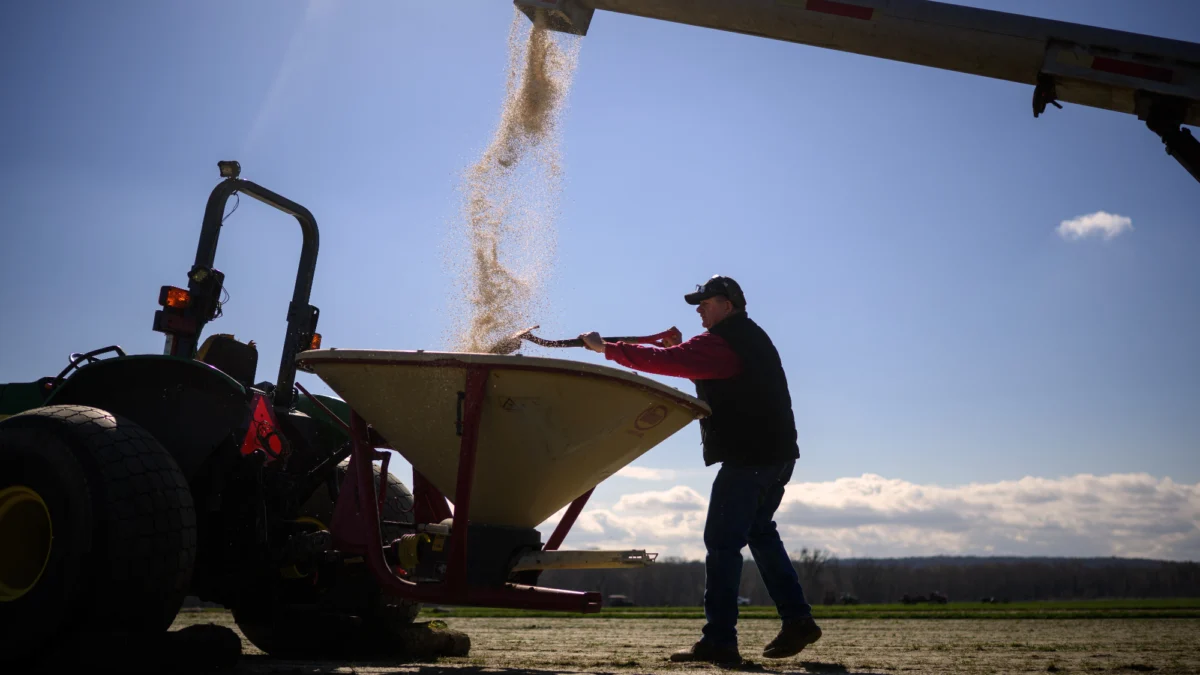
As the spring planting season reaches its zenith across the American heartland, a silent, devastating crisis is unfolding in the fields. Across the United States, 70 percent of farmers report they are unable to secure enough fertilizer to maintain their standard crop yields, a shortfall that threatens to ripple from rural silos to the dinner tables of millions. At the center of this agricultural emergency is a bottleneck of global proportions: the Strait of Hormuz.
With approximately one-third of the world’s nitrogen-based fertilizer—the bedrock of modern global agriculture—relying on passage through this critical maritime chokepoint, the ongoing war between the United States and Iran has effectively shuttered the waterway. For producers like Bill Collins, a fourth-generation farmer in Rocky Hill, Connecticut, the geopolitical conflict is no longer a distant news story; it is a direct threat to his family’s century-old livelihood. Facing skyrocketing fuel costs and a desperate shortage of inputs, Collins has made the painful decision to cut his production by 20 percent, a defensive measure designed to protect his razor-thin profit margins.
The Anatomy of a Slow-Moving Crisis
What experts are calling a "slow-moving food crisis" is predicated on a simple, brutal economic reality: when farmers cannot afford or obtain fertilizer, they plant less. When they plant less, the market supply tightens, and food prices inevitably climb.
The consequences of this disruption are not confined to the rural US. The United Nations has issued dire warnings, estimating that the continued closure of the Strait of Hormuz could push up to 45 million people toward starvation worldwide. The vulnerability of the global food system is being laid bare, revealing that a security crisis in the Middle East has immediate, localized consequences in the soil of Iowa, the plains of South Dakota, and the fields of Connecticut.
A Chronology of Escalation
The current state of emergency did not happen overnight. The path to this season’s agricultural failure can be traced through a series of escalating global and economic pressures:
- February 2026: The conflict in Iran intensifies, leading to the effective closure of the Strait of Hormuz to most commercial shipping. Global nitrogen fertilizer prices begin a steep, immediate ascent.
- March 2026: As planting preparations begin, US farmers report unprecedented volatility in input costs. Diesel prices, already burdened by supply chain disruptions, begin to climb, compounding the pressure on machinery-heavy operations.
- April 2026: Fertilizer manufacturers, operating within a highly consolidated market, report record-breaking revenues even as the agricultural sector enters a period of severe contraction.
- May 2026: The full impact becomes clear: 86 American farms file for Chapter 12 bankruptcy in the first quarter alone. Farmers across the country begin "pivot planting," shifting nearly 4 million acres from corn to soybeans in a desperate attempt to mitigate the need for expensive nitrogen fertilizers.
- Current Status: Senate hearings convene to address the national security implications of the food crisis, yet policymakers struggle to provide immediate, tangible relief to producers on the ground.
Data and Market Realities
The statistics surrounding the 2026 growing season are stark. According to data from the University of Illinois, nitrogen fertilizer prices have surged by 28 percent since the onset of the conflict in February. This increase is being absorbed almost entirely by farmers, while the four major manufacturers who control the vast majority of the US market continue to report robust earnings.
Omanjana Goswami, an agricultural policy researcher at the Union of Concerned Scientists, notes that the structure of the industry is inherently fragile. "The fertilizer industry is one of the most heavily consolidated industries," Goswami explains. "At the same time that these companies are making billions of dollars in profits over the years, farmers have seen profit margins go down drastically because of the higher cost of fertilizer."
For farmers like Trent Kubik, president of the South Dakota Corn Grower’s Association, the timing is catastrophic. "We expected our costs were going to be higher than normal, as we’d be purchasing [fertilizer] closer to peak demand season," Kubik testified before the Senate. Instead, the war has caused these costs to nearly double, leaving many producers effectively priced out of the market. "During the last 75 days, a lot of money was being made—but it wasn’t by farmers," he added.
Official Responses and Political Stasis
On Tuesday, the Senate Agriculture, Nutrition, and Forestry Committee held a hearing to address the crisis. Sen. John Boozman (R-Ark.) set the tone of the discussion by declaring that "food security is national security." However, the hearing exposed a significant gap between the recognition of the problem and the ability to implement a solution.
While some lawmakers, such as Sen. Raphael Warnock (D-Ga.), expressed deep indignation at the compounding factors—the war, the trade wars, and the skyrocketing cost of fuel—the proposed interventions remain limited. Discussion has largely focused on mandating greater price transparency from fertilizer manufacturers, a measure that analysts suggest will do little to lower prices or reopen the critical supply chain routes currently blocked by the war.
"Between the war in Iran, spiking fuel and fertilizer prices, and illegal trade wars, increasing the cost of equipment, and limiting market access, it’s no wonder that farmers in Georgia I talked to say that they can’t take much more," Sen. Warnock noted. "At this point, the best-case scenario for farmers is the reopening of the Strait of Hormuz."
Deepening Implications: The Bread Aisle and Beyond
The ripple effects of this crisis extend beyond the farm gate. Wheat, in particular, is positioned to be the next casualty of the current agricultural model. Unlike corn or soy, which are often diverted for animal feed or biofuels, the majority of US-grown wheat is destined for human consumption.
When combined with an unseasonably warm spring and persistent drought conditions across the plains states, the lack of nitrogen fertilizer is resulting in what experts are calling the worst year for wheat yields in decades. Consumers should prepare for significant price volatility in the bread aisle by the end of the year.
Furthermore, the crisis is highlighting the inherent risks of an agricultural model that relies on global supply chains for essential inputs. Goswami argues that this is not an isolated event but a recurring pattern of failure. "Farmers get thrown head first into a crisis every time global supply chains are hit," she said, pointing to the earlier shocks caused by the Russian invasion of Ukraine in 2022 and the COVID-19 pandemic.
Many analysts are now warning that the damage is already locked in. Even if the conflict in Iran were to reach a diplomatic resolution tomorrow, the market shockwaves are expected to persist through at least 2027. For the American farmer, this means a long, uncertain road ahead, where the stability of the global food supply remains at the mercy of geopolitical maneuvering and an increasingly fragile, consolidated industrial system.
As the sun sets over farms like Bill Collins’ in Connecticut, the concern is no longer just about the current harvest—it is about whether the current system can survive another season of such intense, externally imposed volatility. The "slow-moving food crisis" is now in full motion, and its final cost has yet to be tallied.

 Azzam Bilal Chamdy
 Ali Ikhwan