Nana Wu

 Dwi Wanna

 Suro Senen

 Evan Lee Salim

 Reynand Wu
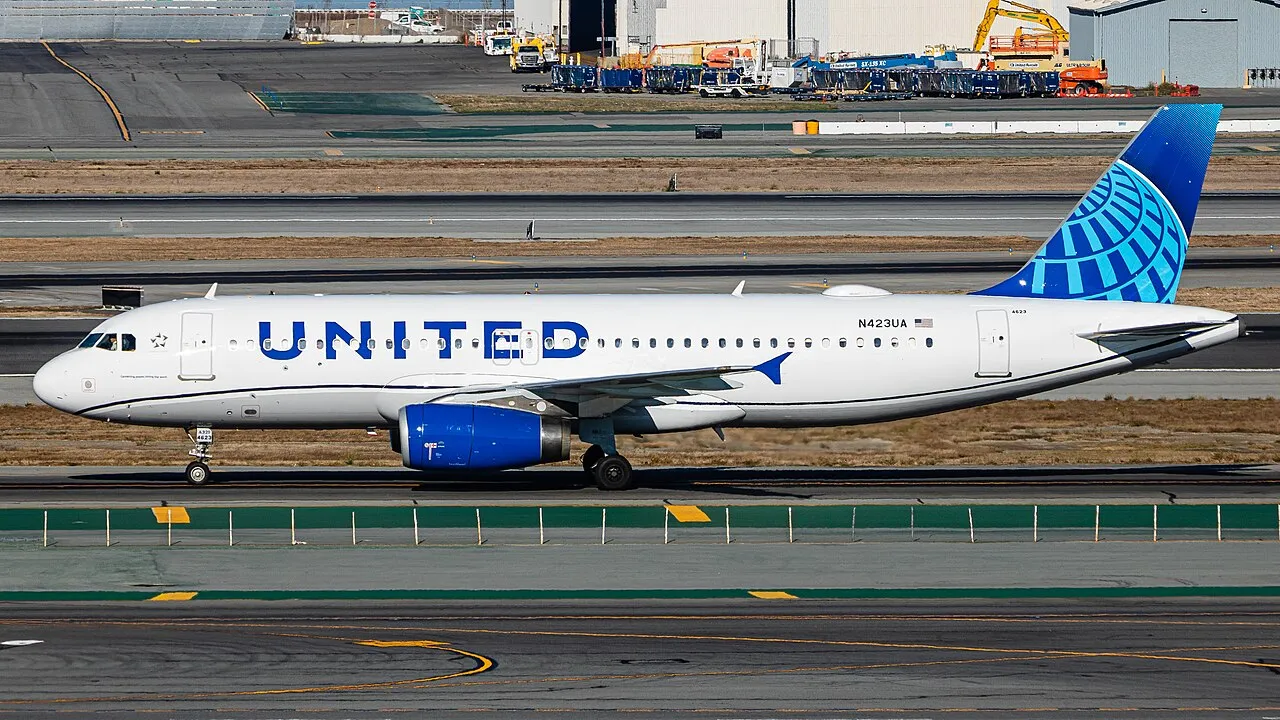
The aviation industry is currently witnessing a tectonic shift in passenger expectations. For decades, in-flight Wi-Fi was viewed as a luxury—often slow, unreliable, and prohibitively expensive. However, as the digital nomad lifestyle merges with the demands of modern business travel, the cabin has become an extension of the office. United Airlines, recognizing this fundamental change in traveler behavior, has placed a massive strategic bet on SpaceX’s Starlink to redefine the passenger experience.
During the carrier’s most recent earnings call, the discourse surrounding satellite connectivity reached a fever pitch, with "Starlink" being mentioned 24 times. CEO Scott Kirby, usually focused on fleet logistics and macroeconomic headwinds, dedicated a significant portion of his address to the technology, framing it not just as an amenity, but as a "truly differentiating RASM (Revenue per Available Seat Mile) tailwind" for 2027.
The Strategic Pivot: Why Starlink?
For years, the airline industry has struggled with legacy satellite connectivity providers that relied on geostationary satellites. These systems often suffered from high latency and limited bandwidth, leading to the "buffering" experiences that frustrated travelers.
Starlink, by contrast, utilizes a constellation of thousands of Low Earth Orbit (LEO) satellites. This proximity to the Earth’s surface allows for significantly faster speeds and lower latency, effectively mirroring the experience of high-speed fiber internet on the ground. For United, this is the "holy grail" of in-flight connectivity.
The Competitive Edge
Kirby’s emphasis on the technology stems from the realization that connectivity is no longer an "extra"—it is a prerequisite for brand loyalty. As he noted during the earnings call: "We know that eventually high-speed, low-earth orbit Wi-Fi will be industry standard for everyone. But for 2027 and really 2028, we are well on our way to being the only global U.S. airline with Starlink at scale. So, a lot of new customers are going to try us."
This "first-mover" advantage is central to United’s marketing strategy. By positioning itself as the only major global U.S. carrier to offer a consistent, high-speed, gate-to-gate internet experience, United aims to capture a segment of the business travel market that prioritizes productivity above all else.
Chronology of the Connectivity Revolution
The journey toward a fully connected fleet has been years in the making, reflecting both technological maturation and shifting internal priorities at United.
- 2023: The Testing Phase: United begins rigorous evaluations of various satellite providers, weighing the costs of hardware retrofitting against the potential for increased passenger satisfaction scores.
- Early 2024: The Partnership Announcement: Following successful trials, United formally announces a partnership with SpaceX to install Starlink hardware across its mainline and regional fleets.
- Mid-2024: The Rollout Begins: Installation teams start the complex process of modifying aircraft to support the high-bandwidth antennas required for the Starlink network.
- 2025: Operational Scaling: With approximately 44% of its fleet currently equipped with the technology, United shifts into high gear, accelerating the installation timeline to meet the 2027 target.
- 2027 (The Target): United projects that the entire fleet will be fully operational with Starlink, coinciding with the airline’s forecast for maximum competitive advantage and revenue growth.
Supporting Data: The Economics of Connectivity
While passenger experience is the public-facing narrative, the underlying economics of the Starlink investment are rooted in RASM—a critical industry performance metric.
Improving the Bottom Line
In the current economic climate, airlines are grappling with volatile jet fuel costs and inflationary pressures on labor and maintenance. To maintain profitability, carriers must find ways to increase the "yield" per seat. Starlink contributes to this in three distinct ways:
- Ancillary Revenue: By providing a superior product, United can potentially command premium pricing or justify higher ticket prices for business-class travelers who demand reliable connectivity.
- Loyalty Retention: Business travelers are increasingly choosing flights based on the ability to work during transit. Reliable Wi-Fi acts as a retention tool, keeping travelers within the United ecosystem.
- Operational Efficiency: High-speed connectivity allows for better integration with United’s own digital tools, including real-time baggage tracking and flight disruption management, reducing costs associated with customer service and ground operations.
Fleet Penetration
As of the latest reporting period, United has successfully retrofitted roughly 44% of its fleet. While the scale of this task is monumental—involving thousands of man-hours and complex FAA certification processes for each aircraft type—the airline remains on track. The investment is viewed as a "capital-efficient" move when weighed against the long-term revenue gains expected from being the only global carrier with such a widespread, high-performance network.
Official Responses and Executive Vision
CEO Scott Kirby has been unequivocal in his support for the project. In his view, the technology is not merely a "nice-to-have" but a core component of the "United Next" growth strategy.
"We are well on our way," Kirby stated. The executive team at United is clearly positioning the airline as the "tech-forward" option in an industry often criticized for being slow to adopt consumer-facing digital innovations.
From an operational standpoint, United’s leadership has emphasized that the installation process is designed to minimize aircraft downtime. By aligning retrofits with regularly scheduled heavy maintenance, the airline is managing to upgrade its fleet without disrupting its published flight schedules. This logistical precision is critical, as any unnecessary grounding of aircraft would immediately negate the revenue benefits the airline hopes to realize.
Implications for the Future of Aviation
The implications of United’s massive investment in Starlink extend far beyond the carrier’s own balance sheet.
Shifting Industry Standards
United’s aggressive pursuit of high-speed connectivity forces the hand of its competitors. Airlines like Delta and American will likely face increasing pressure from their own corporate clients to match the level of service offered by United. This creates a "connectivity arms race," which will ultimately benefit the passenger. As the cost of satellite hardware continues to decline and LEO networks expand, the "default" state of a flight will transition from "offline" to "always connected."
The Cabin of the Future
With ubiquitous, high-speed Wi-Fi, the very purpose of the cabin changes. It is no longer a place to disconnect; it is a collaborative space. Airlines will likely begin to integrate more seat-back entertainment systems that sync with personal devices, or even offer cloud-based productivity suites that allow for seamless file sharing and video conferencing.
Environmental and Operational Considerations
While the primary focus is on the passenger, the operational data harvested through improved connectivity is immense. Faster, more reliable data links between the cockpit and ground operations allow for more efficient flight path optimization, potentially reducing fuel burn—a key goal for United as it pursues long-term sustainability targets.
Conclusion
United Airlines’ decision to make Starlink a cornerstone of its 2027 strategy is a bold, forward-thinking move that recognizes the changing nature of the global workforce. By prioritizing high-speed, low-latency connectivity, United is effectively betting that the future of air travel will be defined not just by seat pitch or lounge access, but by the ability to remain fully functional while at 35,000 feet.
As the airline works toward its 2027 goal of full fleet integration, the industry will be watching closely. If Kirby’s vision of a "differentiating RASM tailwind" proves accurate, United will have set a new gold standard for the modern airline, transforming the cabin from a confined space into a high-speed, global workplace. The investment in Starlink is, at its heart, an investment in relevance in an increasingly digital world. For United Airlines, the future of the friendly skies is, quite literally, connected.

 Ammar Sabilarrohman