

 Nana Wu

 Dwi Wanna

 Suro Senen

 Evan Lee Salim

 Muslim
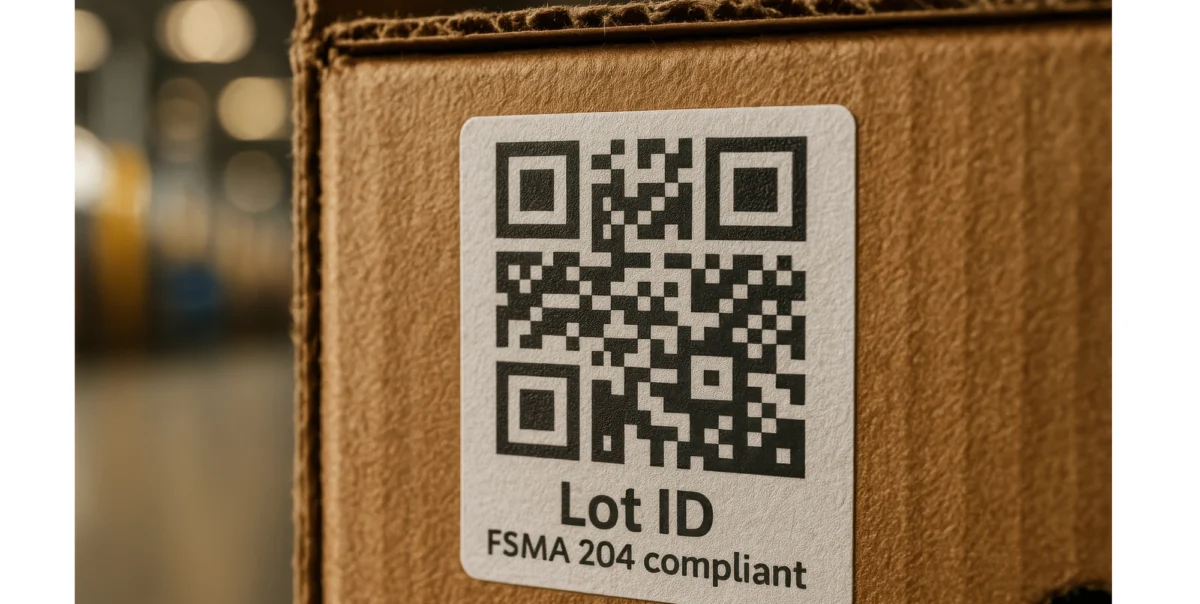
On November 6, 2026, the U.S. Food and Drug Administration (FDA) will convene a public meeting titled "Challenges and Solutions in Lot-Level Food Traceability." While the agency frames the event as a forum for implementation, industry insiders and food safety advocates view it as something far more specific: a tactical conversation regarding how to dilute the rule’s most potent requirement—the traceability lot code—to the point of near-irrelevance.
For those wishing to weigh in, the window for action is narrow. Public registration to speak closes on October 26, with no same-day participation permitted. Following the meeting, written comments are due by December 6 under Docket No. FDA-2014-N-0053. This meeting represents the latest chapter in a fifteen-year saga, a period defined by bureaucratic delays, heavy-handed lobbying, and a legislative maneuver that has effectively handcuffed the FDA from enforcing a single line of a rule mandated by Congress in 2011.
The Mandate: Closing the "One-Up, One-Down" Gap
The Food Traceability Rule stems from Section 204 of the Food Safety Modernization Act (FSMA), signed into law in January 2011. The core intent was simple yet transformative: to identify foods most frequently associated with outbreaks and mandate that manufacturers, processors, and retailers maintain robust, standardized records.
The "Food Traceability List" covers high-risk items including leafy greens, melons, sprouts, nut butters, soft cheeses, and various fresh-cut produce. Before this rule, the industry relied on a "one-up, one-down" system—a fragmented paper trail that often left investigators unable to connect a localized outbreak in a restaurant back to the specific farm of origin. FDA pilot projects conducted in 2011 and 2012 confirmed the systemic failure of this approach, proving that the gap between a sick customer and the contaminated field was too wide to bridge during a public health crisis.
The new rule requires companies to record "Key Data Elements" (KDEs) at critical points—harvesting, cooling, packing, shipping, and receiving—and to link them via a unique Traceability Lot Code. When an outbreak occurs, companies must be able to produce an electronic, sortable spreadsheet within 24 hours. The Congressional Research Service estimates this will impact over 323,000 domestic businesses operating roughly 484,000 establishments.
A Chronology of Stagnation
The timeline of the Food Traceability Rule is a masterclass in administrative drift.
- 2011–2013: Congress sets a January 2013 deadline for the proposed rule, which the FDA misses.
- 2016: The FDA finally delivers its report on the necessary pilot projects to Congress.
- 2018: The Center for Food Safety and the Center for Environmental Health sue the FDA, resulting in a consent decree that forces a production schedule.
- 2020–2022: The FDA publishes a proposed rule in 2020 and a final rule on November 21, 2022.
- 2023–2025: The compliance date is set for January 20, 2026. However, in March 2025, the FDA announces a 30-month extension to July 20, 2028, citing supply chain "unpreparedness."
- 2025 (November): Congress passes H.R. 5371, which includes Section 780, a provision explicitly stripping the FDA of the funds required to enforce the rule before July 20, 2028.
Unlike an administrative delay—which is an agency asking for time—a funding bar is a legislative mandate that removes the agency’s ability to act, regardless of its own internal readiness or desire to proceed.
The Lobbying Effort and Legislative Maneuvering
The stall in implementation is not merely a product of technical complexity; it is the result of a coordinated campaign by powerful industry trade associations. Federal lobbying disclosures reveal that organizations such as the International Foodservice Distributors Association (IFDA), the National Restaurant Association, and the National Retail Federation actively lobbied for the rule’s delay and the inclusion of "flexibilities."
The legislative strategy was spearheaded by a handful of members of Congress, including Rep. Scott Franklin (R-FL), who introduced H.R. 7563—a bill designed to relieve retailers and warehouses of the burden of tracking lot codes. While H.R. 7563 never reached a floor vote, its language was absorbed into the agriculture appropriations process.
Key figures in this effort include Rep. Sanford Bishop (D-GA), Rep. Jimmy Panetta (D-CA), and Rep. Andy Harris (R-MD). These members sit on the very subcommittee responsible for funding the FDA. Through the appropriations process, they successfully inserted language that effectively neutered the rule, bypassing the need for a public hearing or floor debate. While the Senate attempted to hold the line, the House-led Section 780 prevailed, leaving the FDA effectively powerless to enforce the law for the next two years.
The Cost of Inaction: The Taylor Farms Outbreak
The human cost of these delays is not theoretical. In 2026, the FDA closed its investigation into the largest Cyclospora outbreak in American history, involving over 12,800 illnesses, 570 hospitalizations, and two deaths. The source was shredded iceberg lettuce from Taylor Farms de Mexico.
Because the industry lacked a unified, lot-level traceability system, investigators spent weeks tracing the product. During those twelve days, public trust plummeted, lettuce sales collapsed, and California growers were forced to plow under healthy, non-contaminated crops. The "one-up, one-down" system proved insufficient once again, demonstrating that when traceability fails, the innocent suffer alongside the guilty.
Official Responses and Internal Readiness
The FDA is not entirely blameless in this delay. A January 2026 Government Accountability Office (GAO) report confirmed that the internal system the FDA is required to build to receive and analyze traceability data does not yet exist. The agency has repeatedly pushed its own internal deadlines back in lockstep with the industry’s compliance extensions.
Furthermore, the agency has begun to carve out exemptions. On October 8, 2026, the FDA issued draft guidance stating it would not enforce the rule against retail establishments and restaurants with annual food sales between $250,000 and $1 million. While the FDA claims this provides relief to small operators, critics argue it is the first step in eroding the rule’s integrity before it has even been implemented.
Implications: A Call for Corporate Leadership
The current state of the Food Traceability Rule presents a paradox: the technology exists, the standard is set, and major players—including Walmart, Kroger, and Albertsons—had already built the necessary infrastructure to comply before the delay was announced.
The burden of action now rests with those who have already invested in safety. If the major retailers and produce associations that are "ready" to comply do not publicly demand the rescission of Section 780, the argument that the industry is "too unready" to handle the rule will continue to dominate the narrative.
For the November 6 meeting, the strategy is clear:
- Demand no further erosion: No "flexibility" should allow the lot code to disappear at the distribution center.
- Pilot testing: Any proposed flexibilities must be tested through real-world simulation, consistent with the industry’s own initial demands.
- Full enforcement: Congress must rescind Section 780 and allow the Senate’s deadline of July 20, 2028, to stand as the final, immutable date for full compliance.
Fifteen and a half years have passed since Congress first ordered the creation of a modern, electronic food traceability system. The records required by the rule already exist in warehouses across the country; they simply remain trapped in silos. The question for the FDA and the industry on November 6 is whether they will finally allow that data to flow, or if they will continue to permit a broken system to dictate the safety of the American food supply.


