Nana Wu

 Dwi Wanna

 Suro Senen

 Evan Lee Salim

 Ammar Sabilarrohman
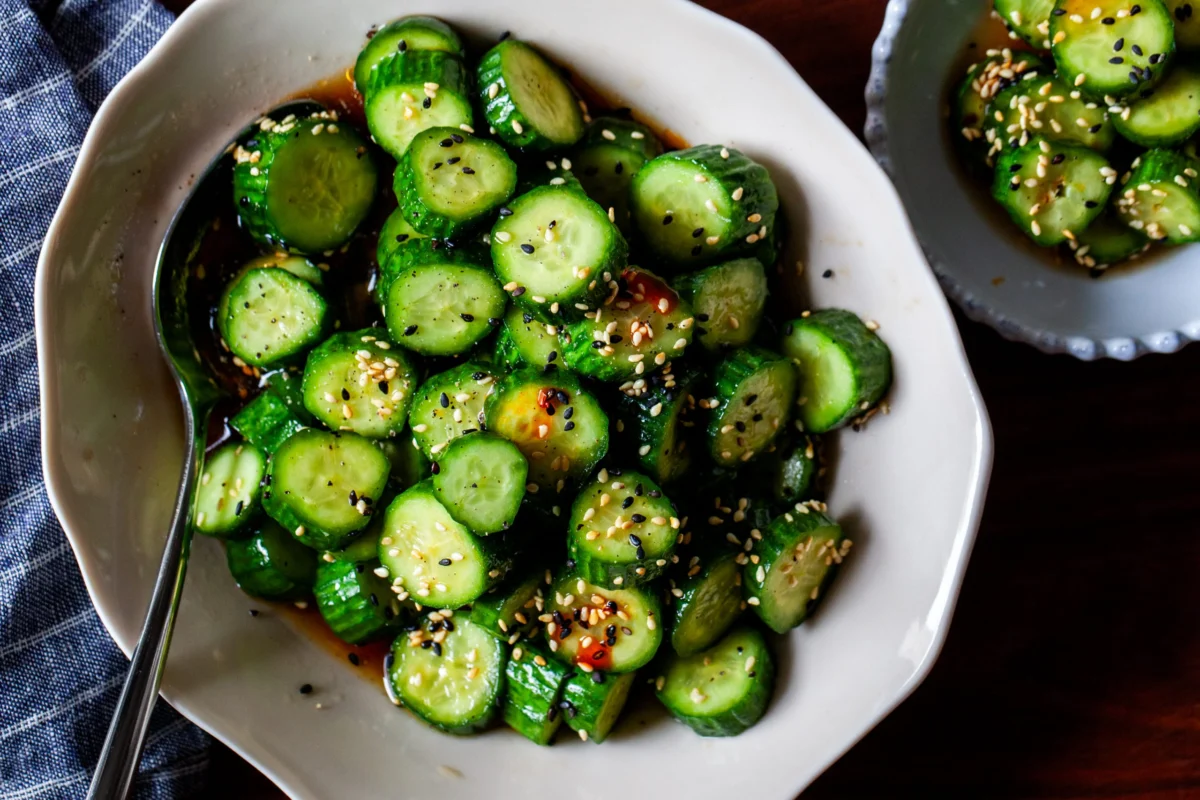
Main Facts: The Culinary Case for the Cucumber
In the pantheon of summer staples, few ingredients command as much respect as the cucumber. It is the quintessential cooling agent—hydrating, inexpensive, and endlessly versatile. Yet, despite being a household favorite that graces dining tables throughout the week, the humble cucumber has been conspicuously absent from the curated archives of modern recipe databases.
For nearly two decades, home cooks have sought out sophisticated, complex dishes, often overlooking the simple elegance of a well-executed cucumber salad. This oversight is finally being addressed. The "Cucumber Salad with Sesame and Rice Vinegar" is not merely a side dish; it is a masterclass in minimalism. By stripping away unnecessary complexity—specifically the sugar often found in traditional iterations—this recipe relies on the fundamental interplay between acidity, salt, and texture.
The dish is a riff on the Japanese sunomono, a term translating to "vinegared things." While traditionally served as a light, sweet-and-sour palate cleanser, this updated version opts for a savory profile that makes it a perfect companion for the heavy, salty notes of stir-fries, potstickers, and noodle dishes. It is a dish born of necessity during the relentless heat waves of summer, proving that culinary satisfaction often comes from subtraction rather than addition.
Chronology: From Casual Weeknight Staple to Documented Recipe
The journey of this specific cucumber salad from an unmeasured, "thrown-together" weeknight fix to a formalized recipe is a testament to the evolving nature of home cooking. For years, the recipe existed only in the muscle memory of the creator. It was a fluid process: a dash of vinegar here, a splash of sesame oil there, and a casual toss of salt.

The process of formalizing this dish began with a recognition of its recurring presence in the home. Unlike elaborate, obsessive "finetuning" projects, this salad represented the opposite: a reliable, stress-free component of the meal. The transition from intuitive cooking to standardized measurement was driven by a desire to share this utility with a broader audience.
- The Intuitive Phase: For years, the salad was assembled on instinct, often adjusted based on the contents of the pantry.
- The Formalization Phase: Realizing that the dish was a staple for family meals, the author finally utilized measuring spoons to document the ratios of rice vinegar, sesame oil, and soy sauce.
- The Refinement Phase: The technique of "salting for the moment"—allowing the cucumbers to macerate for as little as 10 minutes—was solidified as the standard, proving that one does not need hours of preparation to achieve a high-quality result.
- The Integration Phase: The recipe was integrated into the rotation of weeknight meals, paired consistently with dumplings and noodles, before being published as a foundational resource for home cooks.
Supporting Data: The Science of the "Moisture Deficit"
The brilliance of this cucumber salad lies in the technique of pre-salting. When salt is applied to sliced cucumbers, it initiates a process of osmosis. Because the interior of the cucumber cells has a higher water concentration than the surrounding salt-dusted environment, water is drawn out of the vegetable.
This creates a "moisture deficit" within the cucumber flesh. Once the excess liquid is drained away, the cucumber acts like a sponge, ready to absorb the dressing. By eliminating the excess water, the dressing—composed of rice vinegar, sesame oil, and soy sauce—is not diluted. Instead, the flavors penetrate the cell walls, resulting in a more intense, vibrant taste profile.
From a nutritional standpoint, the cucumber remains a powerhouse. Composed of approximately 95% water, it serves as a critical hydrating agent during high-temperature months. Furthermore, the use of rice vinegar provides a mild, fermented acidity that aids in digestion, while the addition of sesame oil introduces healthy fats and a deep, nutty aroma that balances the crispness of the vegetable.

Official Responses: Community Engagement and the 2026 Classroom Wishlist
Culinary excellence is rarely an isolated endeavor; it is inherently tied to community and social responsibility. The publication of this recipe coincides with the launch of the 2026 Smitten Kitchen Classroom Wishlist Project. This initiative bridges the gap between home kitchens and the classroom, focusing on the critical needs of educators.
The project encourages individuals to:
- Identify local impact: Selecting schools in one’s immediate vicinity or childhood neighborhood.
- Targeted support: Searching for classroom descriptions that resonate with specific values or interests.
- Scalable contribution: Emphasizing that no donation is too small. Whether it is a box of crayons, a set of pencils, or essential classroom books, the aggregate effect of these small contributions is significant.
The project’s philosophy mirrors the approach to the cucumber salad: small, thoughtful actions—whether in the kitchen or in the community—yield outsized, positive results. By providing a direct link to the spreadsheet of teacher needs, the project streamlines the process of giving, removing the friction that often prevents people from acting on their charitable impulses.
Implications: A Shift Toward Simplified Nutrition
The rise of this cucumber salad as a "staple" has broader implications for how we view home cooking. In an era dominated by complex food trends and "influencer" recipes that require exotic ingredients, there is a growing movement toward "radical simplicity."

The Return to Raw Ingredients
The recipe emphasizes the inherent quality of the vegetable itself. By keeping the cucumbers "chunkier" than standard slices, the dish preserves the structural integrity and the satisfying "snap" that is often lost in thinly sliced, over-marinated salads. This encourages a return to the appreciation of raw ingredients in their most natural state.
The Sustainability of the Weeknight Meal
By encouraging the use of frozen or homemade potstickers paired with this salad, the recipe promotes a sustainable approach to weeknight dining. It reduces the reliance on processed, pre-packaged side dishes and encourages the "batch cooking" mentality—where a double batch of salad is prepared specifically to ensure leftovers, which, as noted, become "gently pickled" and arguably better after 48 hours in the refrigerator.
The Role of Food in Emotional Regulation
Finally, there is an unspoken psychological benefit to this dish. The author notes that the salad is so popular that it must be doubled to ensure there is enough left for the actual meal, as family members are prone to finishing the entire bowl before sitting down. This highlights the role of simple, healthy food in fostering a positive home environment. It is not a dish that demands performance or presentation; it is a dish that demands to be eaten.
Conclusion: The Final Verdict
The Cucumber Salad with Sesame and Rice Vinegar is more than just a recipe; it is a philosophy of balance. It balances the heat of summer with the cooling properties of the vegetable; it balances the effort of cooking with the reward of a fast, delicious side; and it balances the act of feeding one’s family with the responsibility of supporting one’s community.

As we move through the heat of the season, the imperative is clear: find the simplest, most effective way to nourish ourselves. Whether it is by preparing a bowl of perfectly salted, vinegared cucumbers or by clearing a classroom wishlist, the most meaningful impacts are often the ones that require the least fanfare. This salad stands as a reminder that the best recipes are often the ones we’ve been making all along, just waiting for the right moment to be measured, recorded, and shared.

 Ali Ikhwan