
 Ammar Sabilarrohman
 Laily UPN

 Evan Lee Salim
 Jia Lissa
 Asep Darmawan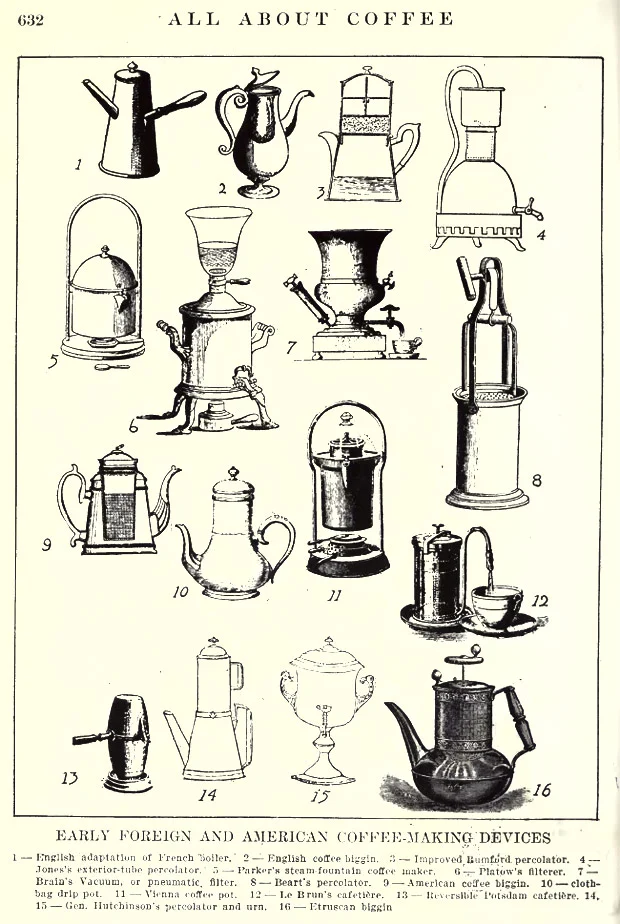
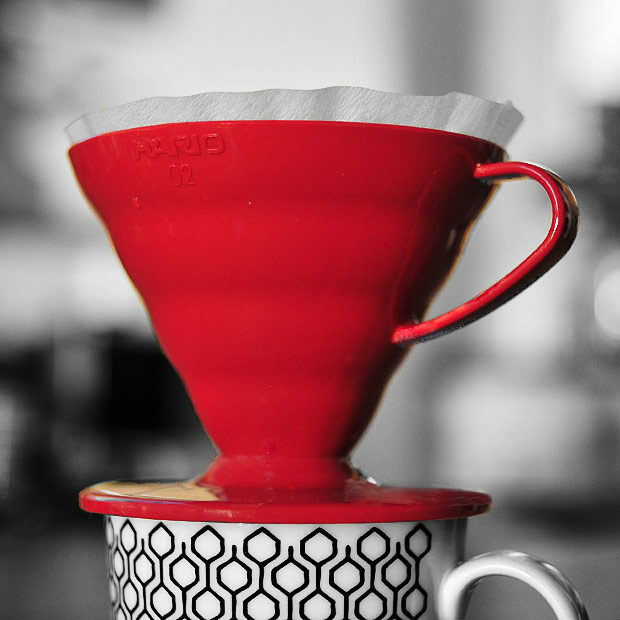
For many, the morning ritual of brewing coffee is a simple act of habit. For the chemist, the barista, and the enthusiast, it is a high-stakes experiment in fluid dynamics, thermodynamics, and organic chemistry. While the humble Hario V60 or the classic Chemex may appear as mere kitchen tools, they are in fact precision instruments designed to navigate the chaotic molecular landscape of the coffee bean.
In this exploration, we delve into why the pursuit of the "perfect cup" is less about following a recipe and more about mastering the science of selective extraction.
The Chemistry of the Brew: Understanding Extraction
At the core of coffee brewing lies a fundamental principle: the soluble components within a roasted coffee bean possess varying extraction rates and solubility profiles. When water meets ground coffee, it does not act as a uniform solvent. Instead, it extracts different compounds—acids, sugars, and eventually, bitter plant fibers—at different speeds.
If one were to grind coffee as finely as possible and steep it for an extended duration, the extraction yield could reach as high as 30%. While this approach, reminiscent of a traditional Turkish coffee, results in a potent brew, it is rarely the "ideal" cup. Total extraction is not synonymous with quality. Instead, the pursuit of flavor relies on selective extraction—an uneven process where we intentionally target the most desirable chemical compounds while leaving the undesirable, bitter elements locked within the cellular structure of the grounds.
A Chronology of Innovation: From 1922 to the Modern Era
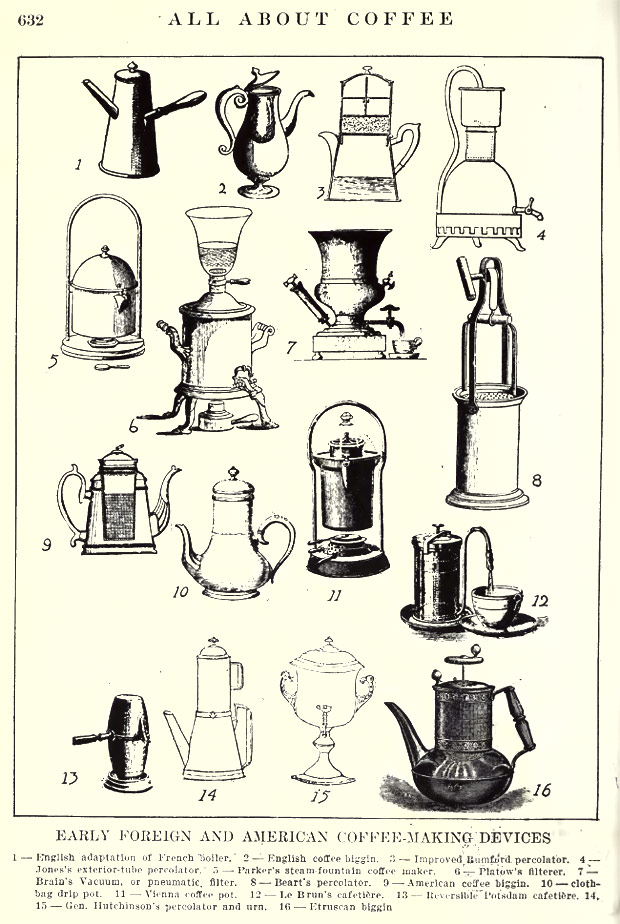
The quest to refine the coffee extraction process is not a modern obsession. Looking back at historical texts, such as William Ukers’ 1922 magnum opus All About Coffee, it is clear that engineers and inventors have spent over a century attempting to solve the "coffee knot."
Throughout the 20th century, the evolution of the drip coffee maker progressed from rudimentary gravity-fed contraptions to the sophisticated, geometry-driven drippers we see today. The 1970s marked a resurgence in percolation technology, yet even these machines often failed to address the core problem: the path of least resistance. Water, in its physical nature, is "lazy." It will always seek the easiest route through a bed of coffee, leading to channeling—where water bypasses large portions of the grounds entirely—leaving the potential of the bean unfulfilled.
Supporting Data: The Variables of the Pour-Over
The pour-over method is often mistakenly described as simple. In reality, it is a complex system where at least a dozen independent and dependent variables dictate the final sensory profile of the drink.
The Anatomy of the Equipment
When evaluating brewing hardware, several design choices fundamentally alter the cup:
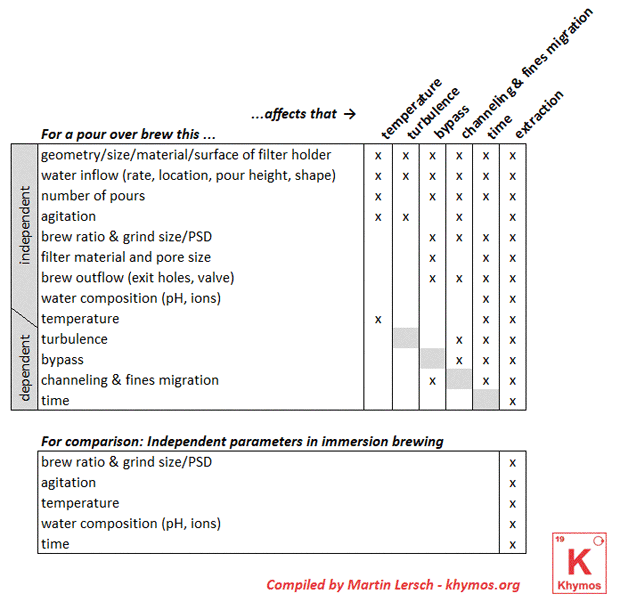
- Material and Thermal Stability: Metal is often a poor choice due to its high thermal conductivity, which draws heat away from the brewing slurry unless the device is vacuum-insulated. Plastic, such as the polypropylene used in the Hario V60, remains a favorite among professionals for its low thermal conductivity and durability.
- Geometry and Bed Depth: A tall, narrow coffee bed increases contact time but restricts flow. Conversely, a flat-bottomed geometry (like the Kalita Wave) promotes a faster, more uniform flow, though it requires precise water distribution to prevent uneven extraction.
- Filter Interaction: The filter is not merely a sieve. In devices like the Chemex, the paper clings to the smooth walls, preventing bypass and forcing water through the grounds. In other designs, ridges or fluted patterns are essential to maintain flow.
- The Problem of Bypass: Any water that flows around the coffee bed rather than through it is effectively "bypassing" the extraction. While this can serve as a way to dilute a brew, it is essentially an uncontrolled variable that ruins consistency.
Correlation Table Summary
| Parameter | Influence on Extraction |
|---|---|
| Grind Size | Determines surface area; finer grinds increase contact time but heighten risk of clogging. |
| Water Temperature | Affects solubility of individual compounds; higher heat extracts faster. |
| Inflow Control | Prevents physical disturbance of the bed, reducing channeling. |
| Exit Hole Size | Regulates the draw-down time; smaller holes extend contact time. |
The Search for Repeatability: Immersion Brewing
If the pour-over is a high-wire act of precision, immersion brewing—such as the French Press or the AeroPress—is the "safety net." For those seeking consistency, immersion offers a robust alternative.
By steeping coffee in a fixed volume of water for a predetermined duration, the variables of water flow and bypass are largely eliminated. The process approaches a state of equilibrium, where the brew becomes a representative sample of the soluble compounds. However, this comes at a cost: immersion brewing often results in a "muddier" cup due to the presence of fine sediment. While many enjoy the heavy body this provides, those seeking clarity often opt for a secondary paper filtration, which effectively removes both the fines and the coffee oils, leading to a cleaner, more nuanced profile.
Implications: The Myth of the "Perfect" Recipe
The obsession with complex brewing techniques often leads to a proliferation of "coffee myths"—unsubstantiated claims that circulate through the barista community. The primary reason two people using the same beans and the same dripper produce different results is that most recipes are incomplete. They focus on brew ratio and time, but fail to account for water chemistry, filter paper density, ambient humidity, and the specific particle size distribution (PSD) of the grind.
The implications for the home brewer are clear: stop chasing the perfect "recipe" and start managing the variables. Understanding that your equipment is designed to either encourage or inhibit water flow is the first step toward true mastery.
Professional Perspectives on the Future of Brewing
In the scientific community, the consensus is shifting toward the idea that the "ultimate" brewer is one that removes the human element of error. Devices like the Tricolate or the Büchner funnel—which utilize a flat, deep bed and specific filtration methods—are gaining traction because they minimize bypass and maximize the consistency of the extraction.
As seen in the iconic "Breaking Bad" scene featuring Gale Boetticher’s elaborate, laboratory-grade coffee setup, there is a universal desire for the perfect extraction. While we may not all need a complex glass manifold to make a good cup of coffee, the underlying sentiment remains: coffee is a chemical process that rewards those who take the time to understand its mechanics.
Whether you are a fan of the clean, crisp profile of a well-executed pour-over or the deep, sediment-rich body of a French Press, the goal remains the same. By controlling the interaction between water and coffee, we transform a simple bean into a complex, multi-dimensional experience. The "perfect" cup is not a static destination; it is an ongoing experiment, one pour at a time.

 Pevita Pearce