Nana Wu

 Dwi Wanna

 Suro Senen

 Evan Lee Salim

 Laily UPN
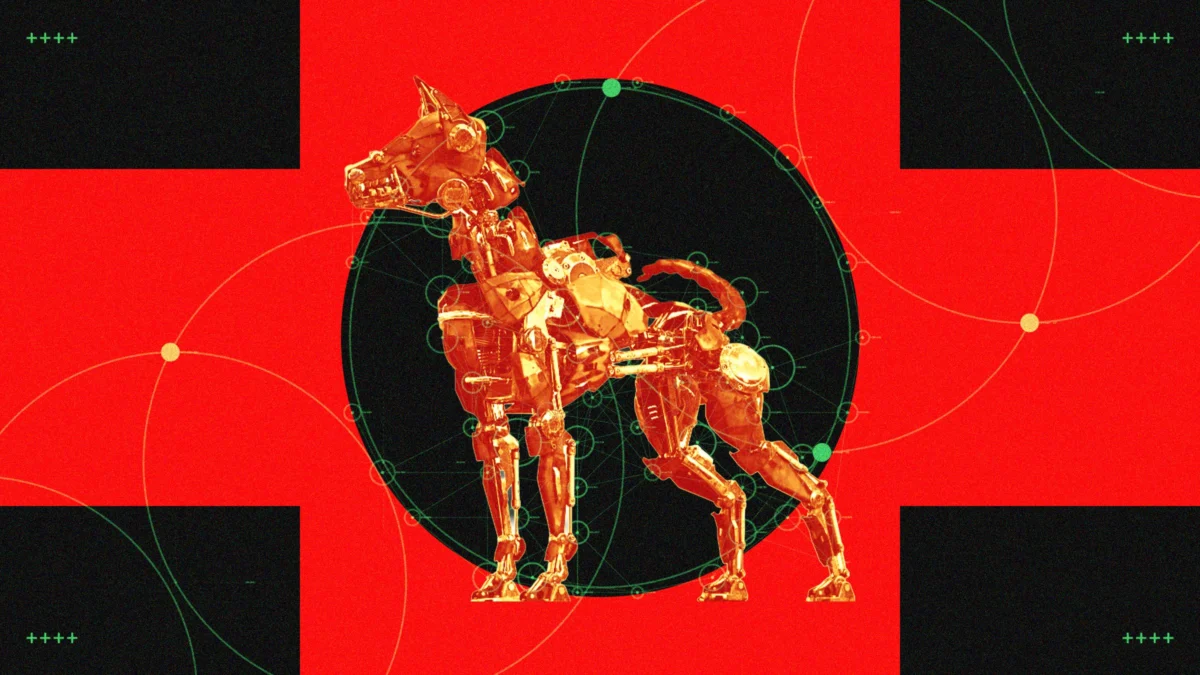
In a move that feels ripped from the pages of speculative science fiction, a newly emerged startup named Warhound has officially stepped out of stealth mode with a mission that is as ambitious as it is ethically provocative: to fundamentally reshape the future of canine performance for the United States military, law enforcement, and emergency services. Armed with $200 million in initial funding and the backing of some of the most influential figures in Silicon Valley’s defense-tech sector, Warhound aims to build a domestic supply chain of "genetically enhanced" working dogs, effectively ending the American reliance on foreign breeding programs.
The company, headquartered in Texas, is the collaborative brainchild of Palmer Luckey—the founder of defense-tech titan Anduril—and Ben Lamm, the co-founder of Colossal Biosciences, a firm famously focused on de-extinction technology. While the concept of military working dogs is as old as warfare itself, Warhound represents a radical departure from traditional training, moving into the realm of genomic editing and high-tech augmentation.
The Genesis of a Project: From Stealth to Spotlight
The journey toward Warhound began over a year ago, born from a strategic assessment of the United States’ national security requirements. For decades, the US military has relied heavily on European breeders to supply high-performance dogs, such as Belgian Malinois and German Shepherds. This dependency has created logistical vulnerabilities and a lack of control over the genetic lineage of the animals that serve on the front lines.
"Our goal is to rebuild America’s domestic supply of elite working dogs," says Ben Lamm. By leveraging the genetic expertise developed by Colossal Biosciences, Warhound intends to standardize the quality of these canines, ensuring that every animal deployed possesses the physical and cognitive traits necessary for the most demanding environments.
The company’s leadership team underscores its seriousness. David Spirk, a former Chief Data Officer at the Department of Defense with a background at Palantir, has been appointed as CEO. The roster of investors is equally formidable, featuring heavyweights such as In-Q-Tel, Sequoia Capital, and ARK Invest. While Palmer Luckey and Ben Lamm will not be involved in the day-to-day operations, Lamm serves on the company’s board, providing a bridge between Colossal’s genetic research and Warhound’s operational goals.
The Science of the "Super-Dog": Genetics and Beyond
The core of Warhound’s strategy is a two-pronged approach: biological optimization through gene editing and technological integration through hardware.
H3: Genomic Editing for Longevity and Performance
The initial phase of the company’s work involves the collection of blood samples from the "top-performing" military and police dogs currently serving in the United States. Using these samples, Warhound aims to clone the most effective specimens, thereby replicating their successful temperaments and physical capabilities.
However, cloning is merely the foundation. The startup is currently in the process of editing the genomes of their first cohort of puppies, which are expected to arrive in early 2027. The immediate objective is to purge the lineage of hereditary health defects that have historically plagued working breeds, most notably hip dysplasia and other joint issues that often cut a dog’s service life short.
Looking further into the future, the scope becomes significantly more "interesting," as Lamm puts it. The company is exploring the integration of olfactory receptor genes sourced from wolves—a nod to Colossal’s ongoing Dire Wolf De-Extinction Project. By enhancing the sensory capabilities of these dogs, Warhound hopes to create animals with an unprecedented ability to detect explosives, narcotics, and hidden personnel in complex environments.
H3: The Cybernetic Intersection
Perhaps the most striking aspect of the Warhound model is its integration with Anduril’s technological ecosystem. While rumors of "cyborg dogs" have circulated, the company has sought to clarify the scope of its "Augments." The plan involves equipping these canines with advanced body armor, sophisticated sensors, and real-time data-sharing software that feeds directly into the handler’s battlefield situational awareness systems.
"Dog safety and performance, and then helping continue to improve the human handler and dog bond, and working as a team—that is what the mission is," Lamm noted in an interview with WIRED. While he remained tight-lipped regarding the potential for future weaponized or laser-equipped platforms, the implication remains: the dog of the future will be a networked participant in the modern digital battlefield.
The Strategic and Economic Implications
The establishment of Warhound marks a turning point in the commercialization of defense biotechnology. By bringing genetic engineering into the fold of military procurement, the company is effectively treating the canine as a piece of hardware that can be optimized, upgraded, and mass-produced to meet specific mission requirements.
H3: Ending the Reliance on Foreign Markets
The logistical benefit of a domestic, high-volume, high-quality breeding program cannot be overstated. By ensuring that the U.S. military is self-sufficient in its supply of working dogs, Warhound mitigates the risks associated with international supply chains, which are susceptible to geopolitical shifts, trade disputes, and varying quality standards.
H3: The Ethical Frontier
The emergence of Warhound has sparked a necessary debate regarding the ethics of bio-engineering animals for combat. While the company operates under the guidance of the American Humane Society, the prospect of creating "designed" creatures for the express purpose of military duty raises significant questions.
Critics worry about the unintended consequences of gene editing—whether "optimizing" a dog for scent or endurance might inadvertently compromise its temperament, social intelligence, or long-term psychological well-being. Furthermore, there is the existential concern of weaponizing biology. If we can edit the olfactory genes of a dog to turn it into a more efficient tracker, where do we draw the line? At what point does the "working dog" become a piece of living military equipment?
Looking Ahead: The 2027 Horizon
As Warhound moves forward, the industry will be watching the 2027 milestone with baited breath. The birth of the first gene-edited, cloned, and "augmented" puppies will serve as a proof-of-concept for the entire field of defense-related biotechnology.
The company’s leadership maintains that their focus remains squarely on the bond between human and animal. By reducing the physical toll of service through medical innovation and providing handlers with superior situational data, they argue that they are not replacing the human-dog relationship, but rather enhancing it.
As Lamm noted when comparing the project to a fusion of "Captain America" and "Ironman" tech, the ambition is to create something that feels like it belongs in a comic book. Whether this ambition translates into a safe, sustainable, and ethical advancement in military capability remains to be seen.
For now, the project stands as a testament to the blurring lines between biology and defense technology. In an era where the battlefield is becoming increasingly digital, Warhound is betting that the most effective tool in the kit remains the dog—but with a code that has been rewritten to ensure that the "best friend" of the soldier is also the most efficient asset on the front lines.
Summary of Key Facts
- Company Name: Warhound
- Founders: Palmer Luckey (Anduril) and Ben Lamm (Colossal Biosciences)
- Funding: $200 million
- Key Personnel: CEO David Spirk (formerly of the DOD and Palantir)
- Mission: Genetic enhancement and domestic supply of elite military/police dogs
- Timeline: First puppies expected in early 2027
- Primary Technologies: Gene editing, cloning, advanced body armor, and situational awareness software
- Strategic Goal: Eliminating hereditary health issues and enhancing olfactory/physical performance to reduce reliance on European breeders.
As the program moves from the drawing board to the laboratory, the public, the scientific community, and the military establishment will continue to evaluate whether Warhound is truly an evolution of the working dog, or the beginning of a paradigm shift that demands a new set of ethical standards for our non-human allies.


 Pevita Pearce