
 Dwi Wanna
 Nana Wu
 Muslim
 Reynand Wu
 Ammar Sabilarrohman
 Lina Hope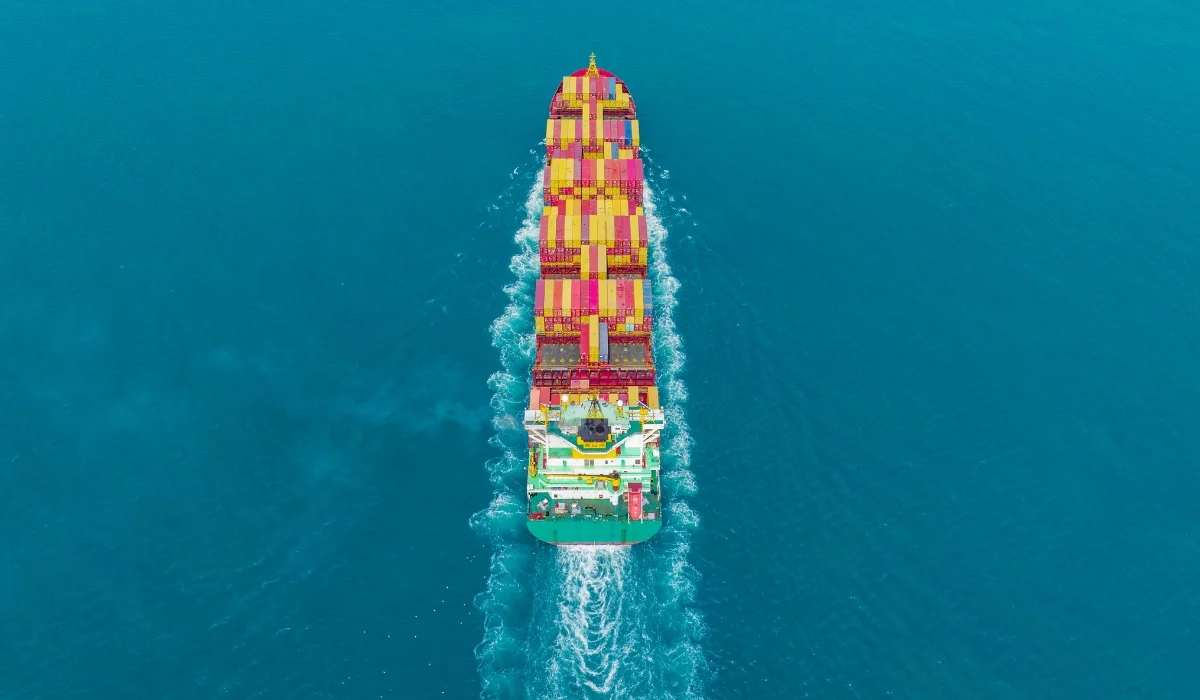
As geopolitical tremors from the Middle East conflict radiate across the globe, the world is waking up to an uncomfortable truth: our food security is built on a foundation of sand. From the chokepoints of global trade routes to the reliance on volatile fossil-fuel-derived inputs, the current crisis has laid bare the systemic failures inherent in our modern agricultural model.
In the United Kingdom and beyond, the narrative of "food security" has been hijacked by a narrow focus on immediate supply. However, experts from the Sustainable Food Trust (SFT)—Head of Policy Megan Perry and Senior Researcher Robert Barbour—argue that we are failing to recognize the systemic rot. To them, the current crisis is not merely a temporary supply chain hiccup; it is a siren call for a radical, structural transformation of how we grow, process, and distribute our food.
Main Facts: The Anatomy of a Global Crisis
The conflict surrounding Iran has transformed from a regional security issue into a global economic emergency. At the heart of this disruption is the Strait of Hormuz—a narrow, vital artery through which 20% of the world’s oil and gas passes. However, the impact on the global dinner plate is less about the fuel in our cars and more about the gas in our soil.
Natural gas is a critical feedstock for the production of synthetic nitrogen fertilizer. As tensions rise and shipping lanes face the threat of closure, the cost and availability of these fertilizers have plummeted into chaos. Because modern industrial agriculture is addicted to synthetic inputs, the ripple effects are being felt from the rice paddies of India to the broadacre farms of Australia and the heartland of the United States.
The crisis is characterized by a "triple threat":
- Input Scarcity: Fertilizer plants are shuttering globally, leading to reduced yields and escalating production costs.
- Economic Contraction: The fuel price spike is forcing industries to close, leading to widespread unemployment and a subsequent collapse in the purchasing power of the most vulnerable.
- Environmental Catastrophe: Beyond the immediate loss of life, the conflict is accelerating the climate crisis. The carbon footprint of the war alone is estimated to be equivalent to the annual emissions of dozens of smaller nations combined.
Chronology of a Disruption
- Early March 2026: Initial reports of the conflict begin to disrupt maritime trade routes, specifically targeting tankers and merchant vessels near the Strait of Hormuz.
- Mid-March 2026: Fertilizer plants in India, Bangladesh, and Pakistan report shutdowns due to acute natural gas shortages, signaling an impending global shortage for the upcoming planting seasons.
- Late March 2026: The United Nations declares a climate emergency, highlighting that the conflict is exacerbating environmental instability. Simultaneously, the UK government releases its "Land Use Framework," which critics argue doubles down on industrial, input-heavy farming models.
- April 2026: Australia reports that its national fertilizer reserves are expected to run dry by mid-month. The Philippines formally declares a national state of emergency as food prices surge and local transport industries face collapse.
Supporting Data: The Fragility of Centralization
The vulnerability of the current system is not an accident; it is the result of decades of consolidation.
The UK’s Precarious Position
The UK represents a case study in reliance. We currently import roughly 60% of our fertilizer and 50% of our food. This is not just a logistical choice; it is an ideological one. Our supply chains are heavily consolidated, with nine major retailers controlling over 94% of the market. This "just-in-time" model leaves no room for error, as seen in the current crisis.
Global Economic Impacts
- Philippines: Jeepney drivers, the backbone of local logistics, have seen their incomes slashed by 50–60%, preventing the efficient transport of goods.
- India: In the industrial hub of Gujarat, the ceramic industry has ceased operations, leaving 400,000 workers without wages. In Mumbai, the hospitality sector is operating at 80% capacity due to resource shortages.
- Climate Cost: In the first 14 days of the conflict alone, 5 million tonnes of greenhouse gases (GHG) were released, further destabilizing the very climate that global agriculture depends upon for stable harvests.
Official Responses: A Failure of Vision?
The UK government’s response has been largely reactive. The recently unveiled Land Use Framework emphasizes a "growth and efficiency" model, prioritizing high-intensity sectors like poultry. However, this approach is fundamentally flawed. As agricultural analyst George Monbiot and other experts have noted, the poultry sector is one of the most dependent on imported soy-based feeds.
By prioritizing "business as usual," the government is opting for short-term fixes that actually increase our long-term fragility. The term "resilience" is frequently utilized by policymakers, yet in practice, it is being used to justify the maintenance of a system that is, by its very nature, brittle.

Greenpeace and other environmental watchdogs have warned that the term "food security" is being "hollowed out and weaponized." Large-scale industrial players are positioning themselves as the necessary saviors against empty shelves, conveniently ignoring the fact that their consolidated, chemical-dependent model is the primary architect of the current crisis.
Implications: A Path Toward Radical Transformation
If the current crisis teaches us anything, it is that we cannot continue to rely on a global system that treats food as a commodity detached from the environment. To build true resilience, we must pursue a wholesale transformation.
1. The Agroecological Shift
We must pivot away from input-heavy agriculture. By integrating nature into food production—using organic fertilizers, crop rotation, and soil health management—we can decrease our dependence on volatile global supply chains. A "whole farm" approach that values biodiversity is not just better for the planet; it is a buffer against the next geopolitical shock.
2. Decentralization and Local Infrastructure
The UK must transition from a centralized, retail-dominated model to a decentralized, localized supply chain. Embedding smaller-scale processing facilities and market gardens across the country would make our food system more flexible. If one region faces a crisis, others can compensate. Smaller, localized infrastructure is also inherently more secure, making it less of a target for geopolitical disruption.
3. Dietary Alignment
We must rethink our diets to align with what the UK can sustainably produce. The heavy reliance on imported fruit, vegetables, and feed-grains is an ecological and economic liability. Empowering local communities to produce food—through school curriculums, community gardens, and urban horticulture—is essential for building a populace that is connected to its food source.
4. Energy Independence
Just as we are weaning our energy sector off fossil fuels, we must wean our food system off the agrochemical industry. Nitrogen-based fertilizers are the "fossil fuels of the food world." True security comes from biological independence, not chemical dependence.
Conclusion: The Choice Before Us
The threats to our food system are no longer theoretical; they are manifesting in empty wallets, closed factories, and a warming planet. As Professor Tim Benton has argued, it often takes a crisis to catalyze real change. We possess the knowledge, the resources, and the capability to build a food system that is both resilient and regenerative.
The current path—tinkering at the edges of an industrial, centralized model—is a recipe for continued volatility. The alternative is a radical, systemic shift toward agroecology, community-led production, and a recognition that our food security is inextricably linked to the health of the earth. The consequences of failing to act are catastrophic, but the rewards for success—a future that is truly secure for both people and the planet—are the only path forward.
We are at a crossroads. We can continue to allow fossil fuel interests to dictate our foreign policy and our dinner plates, or we can seize this moment to build a food system that is designed for the long term, rather than the next quarter. The choice is ours, but the window of opportunity is closing fast.

 Sagoh
Sagoh