Nana Wu

 Dwi Wanna

 Suro Senen

 Evan Lee Salim

 Muslim
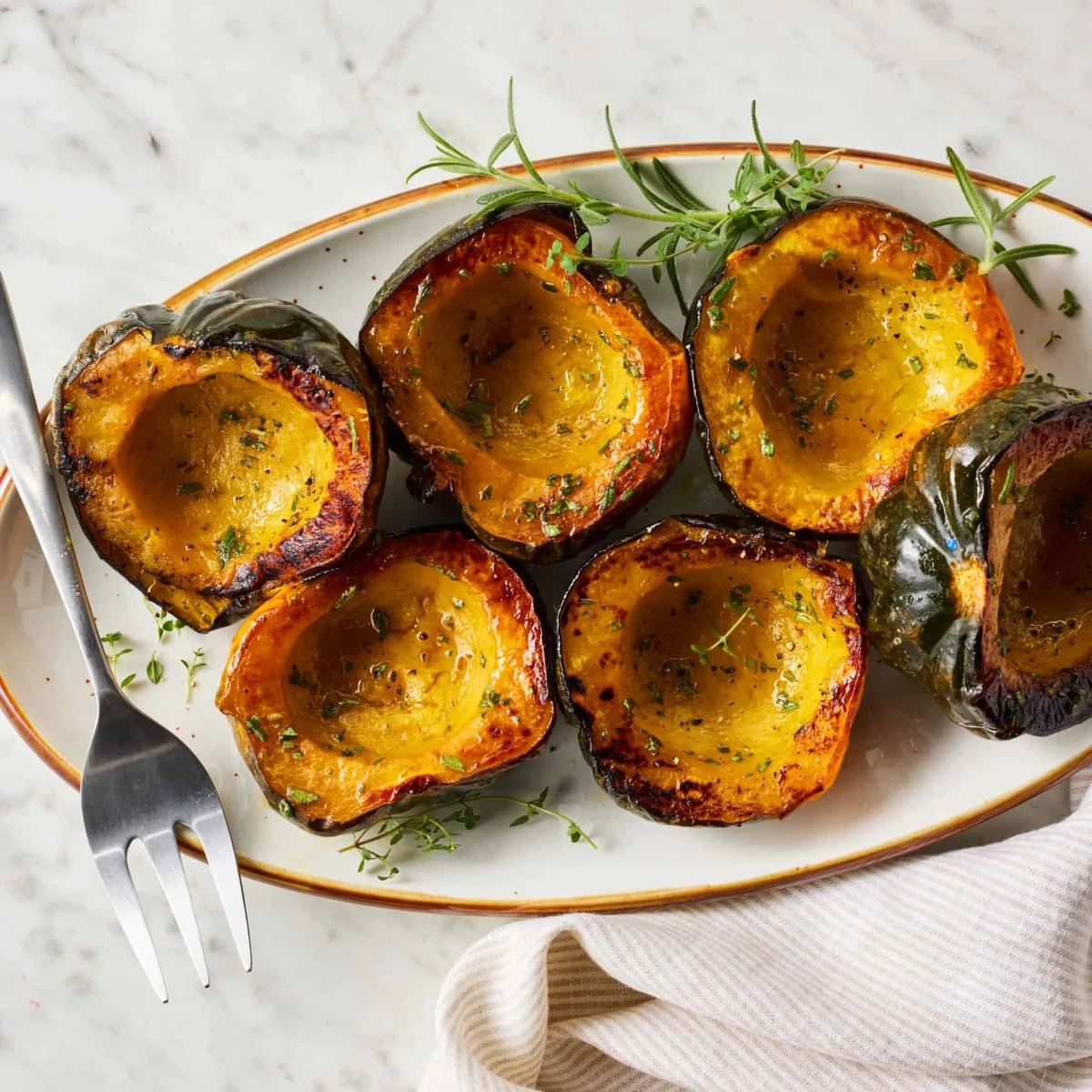
As the crisp autumn air settles and the harvest season begins to dominate the culinary landscape, few ingredients capture the essence of the transition quite like acorn squash. With its distinct ridged exterior and vibrant, sweet, and nutty flesh, this winter squash is a staple of both home kitchens and professional dining tables. While often overlooked in favor of its larger cousins—like butternut or pumpkin—the acorn squash is a versatile powerhouse, serving as an ideal vessel for everything from decadent maple-glazed sides to hearty, savory-stuffed main courses.
This guide provides an exhaustive look at the art, science, and methodology behind preparing the perfect roasted acorn squash. Whether you are a novice cook looking to master a fundamental seasonal technique or a seasoned chef refining your holiday repertoire, understanding the nuances of this ingredient is essential for a successful fall menu.
Main Facts: The Anatomy of a Perfect Roast
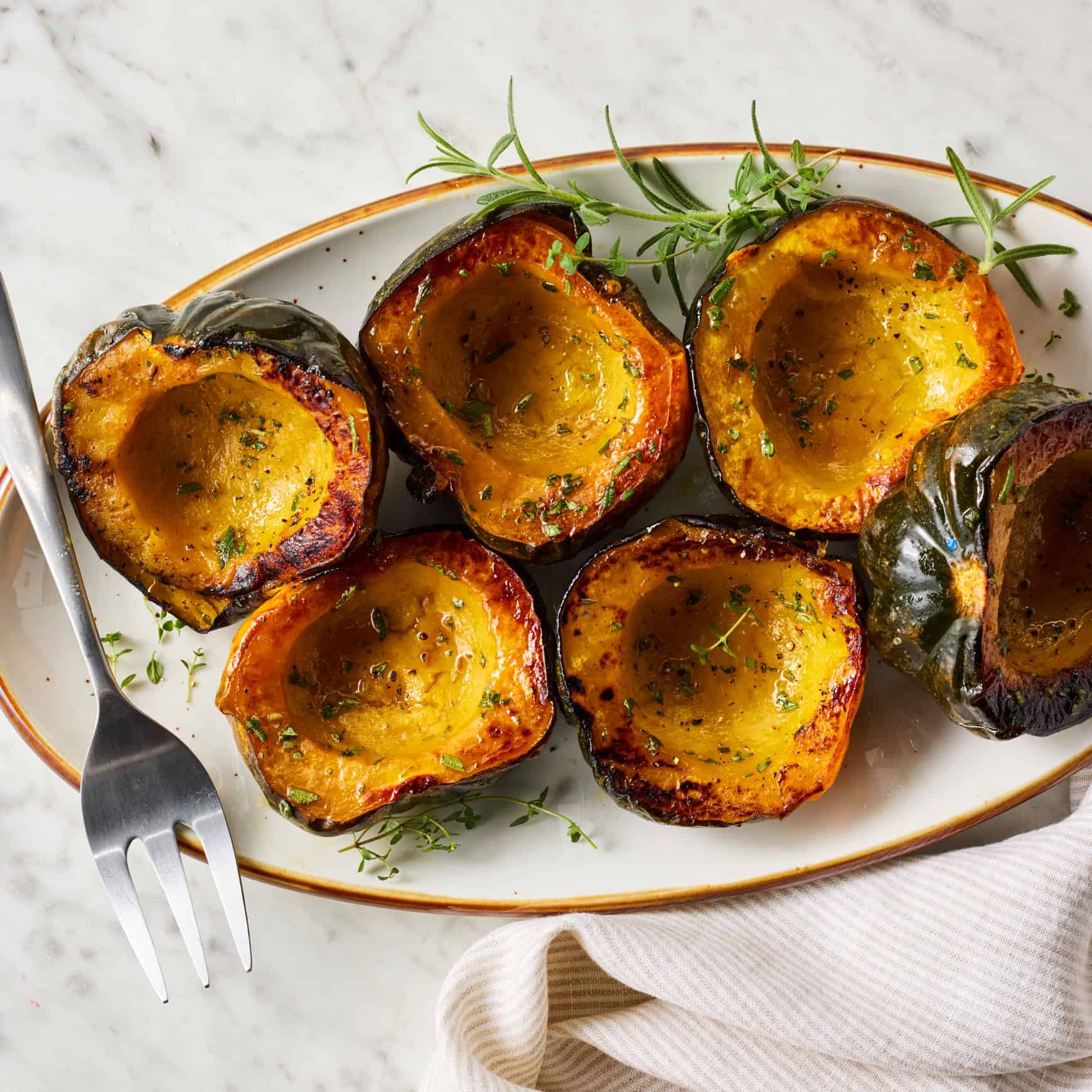
At its core, roasting acorn squash is an exercise in balancing natural sugars with heat. The objective is to achieve a tender, custard-like texture in the flesh while developing a deep, caramelized exterior that enhances the squash’s innate sweetness.
The primary profile of a high-quality roasted acorn squash relies on three pillars:
- Selection: Choosing a squash that is heavy for its size with a matte, dark green skin (or variegated orange and green, depending on variety). A glossy, shiny skin often indicates the squash was picked too early.
- The Maillard Reaction: By exposing the cut surfaces to high heat, we trigger the Maillard reaction—a chemical interaction between amino acids and reducing sugars that creates the complex, toasted flavor profiles associated with superior roasting.
- Sweet and Savory Balance: While the flesh itself is naturally sweet, the addition of maple syrup and high-quality olive oil acts as a catalyst, pulling moisture from the fibers and creating a syrup-like glaze that coats the palate.
Chronology: From Farm to Table
Mastering this dish requires an appreciation for the preparation process. The following steps outline the standard professional workflow for preparing, roasting, and finishing a perfect acorn squash.
Phase 1: Preparation and Safety
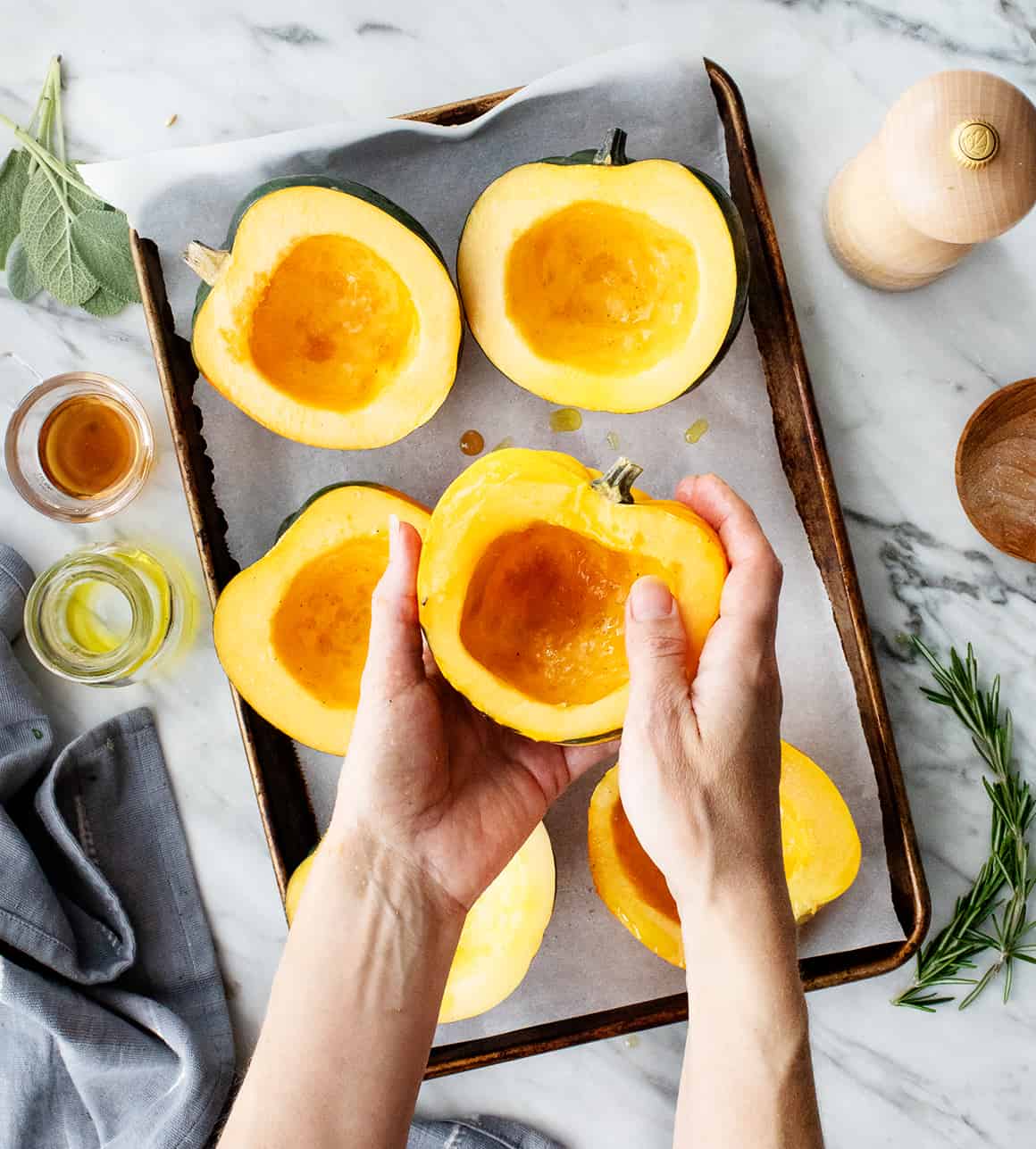
The most daunting aspect of working with winter squash is the initial cut. Because the rinds are dense, professional technique is paramount.
- Stabilization: Always place the squash on a damp paper towel or a non-slip cutting mat to prevent the squash from rolling during the initial incision.
- The Cut: Using a sharp, heavy-duty chef’s knife, slice the squash vertically from the stem to the tip. If the knife gets stuck, do not force it; remove the blade and re-insert it along the same path.
- Seed Removal: Using a sturdy metal spoon, scoop out the fibrous pulp and seeds. These seeds, much like pumpkin seeds, can be saved and roasted separately as a nutrient-dense snack.
Phase 2: Seasoning and The "Glaze"
Once the halves are prepped, the seasoning phase begins. The combination of olive oil and maple syrup is the industry gold standard. The oil provides the necessary fat for heat conduction, while the maple syrup facilitates deep caramelization. Fresh herbs—thyme, rosemary, or sage—should be applied before the final stage of roasting to infuse the oil with aromatics.
Phase 3: The Thermal Process
The squash should be placed cut-side up on a parchment-lined baking sheet. Roasting at a temperature between 400°F and 425°F is optimal. This temperature range ensures the squash cooks through to a tender consistency before the sugars have a chance to burn.

Phase 4: The Finishing Touch
Upon removal from the oven, the squash should be allowed to rest for 3 to 5 minutes. This allows the internal steam to redistribute, ensuring the flesh retains its structural integrity when plated.
Supporting Data: Nutritional Density and Culinary Versatility
Acorn squash is not merely a vehicle for flavor; it is a nutritional powerhouse. According to the USDA nutrient database, a single serving of roasted acorn squash (roughly one half) provides a significant intake of essential vitamins and minerals.
Nutritional Profile (Per Half)
- Calories: 145 kcal
- Fiber: 3g (Crucial for digestive health)
- Potassium: 763mg (Surpassing many bananas in mineral density)
- Vitamin C: 29% of the Daily Value
- Vitamin A: 16% of the Daily Value
The inclusion of healthy fats—provided by the olive oil—is essential for the absorption of fat-soluble vitamins (A, D, E, and K) present in the squash. Furthermore, the inclusion of iron and calcium makes this dish a nutritionally balanced addition to any vegetarian or plant-forward diet.
Official Perspectives: The Chef’s Approach to Variations
When interviewed about the versatility of this ingredient, culinary educators emphasize that the "base" recipe is simply a starting point. The simplicity of the olive oil and maple glaze allows for significant creative divergence.

Professional Variations
- The Savory Pivot: For those who prefer a less sweet dish, substituting maple syrup with balsamic reduction or a miso-butter glaze provides an umami-rich experience.
- The Texture Play: Adding toasted pecans or pumpkin seeds during the last five minutes of roasting introduces a textural crunch that complements the creaminess of the roasted flesh.
- The Stuffed Method: Once mastered, the roasted halves serve as the ideal vessel for stuffings. Quinoa, wild rice, cranberries, and toasted walnuts are common additions that transform a side dish into a protein-rich main course.
The Question of the Skin
A common point of debate among culinary professionals is the edibility of the skin. Unlike butternut squash, which requires peeling due to its thick, fibrous nature, acorn squash skin is remarkably thin. When roasted correctly, the skin softens enough to be entirely palatable. This reduces food waste and increases fiber intake, aligning with current "root-to-stem" culinary trends.
Implications: The Future of Seasonal Cooking
As consumers become more interested in localized and seasonal eating, the role of the winter squash in the modern diet is expanding. The shift toward plant-forward dining has elevated the acorn squash from a "holiday garnish" to a fundamental component of the weekly meal plan.
Sustainability and Storage
Acorn squash is an exceptionally durable vegetable. In a cool, dry, and dark environment, a whole acorn squash can be stored for up to two months, making it a critical ingredient for food security and winter meal planning. The economic implications are also noteworthy: it remains one of the most affordable produce items in the autumn and winter months, providing a high-volume, low-cost nutrient source for families.
The Social Component
In the context of the American holiday table, the roasted acorn squash serves as a unifying dish. Because it is naturally gluten-free and easily adapted to be vegan, it bridges the gap between different dietary needs, ensuring that all guests can participate in a traditional festive meal without the need for multiple specialized preparations.
Conclusion: A Skill for a Lifetime
Learning to cook acorn squash is a rite of passage for the home cook. It is a dish that rewards patience and simplicity. By focusing on the fundamentals—selecting the right produce, mastering the cut, and respecting the thermal requirements of the oven—any cook can elevate this humble squash into a centerpiece of their autumn and winter repertoire.
As you look forward to your next seasonal gathering, consider the roasted acorn squash not just as an option, but as an essential element of your menu. It is, ultimately, a testament to the idea that the most satisfying meals are often those that require the fewest ingredients, provided they are prepared with precision, care, and an appreciation for the season.
Quick Reference Guide for the Home Cook
- Prep Time: 10 Minutes
- Cook Time: 35–40 Minutes
- Temperature: 425°F (220°C)
- Key Indicator of Doneness: A fork should slide through the thickest part of the flesh with zero resistance, and the edges should show deep, golden-brown caramelization.
By mastering these steps, you are not just following a recipe; you are participating in a long-standing tradition of culinary excellence that defines the warmth of the autumn kitchen. Whether served alongside a classic Thanksgiving stuffing or as a solitary, healthy dinner, the roasted acorn squash stands as an enduring classic of the modern culinary canon.

 Ali Ikhwan