

 Nana Wu

 Dwi Wanna

 Suro Senen

 Evan Lee Salim

 Sagoh
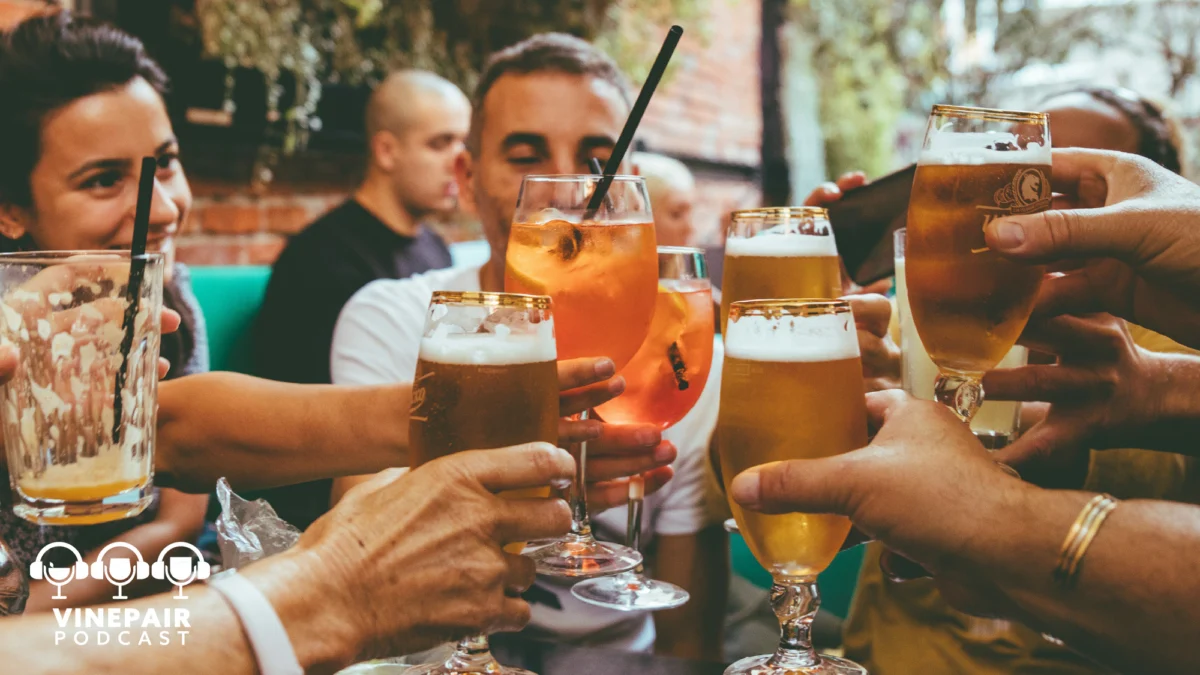
The landscape of American social consumption is undergoing a tectonic shift. For decades, the beverage alcohol industry—spanning beer, wine, and spirits—has relied on a "public-first" model, pouring billions of dollars into on-premise activations, high-energy nightlife marketing, and the romanticized imagery of the bustling neighborhood bar. However, a seismic change in consumer behavior, accelerated by the post-pandemic economic reality, has left many brands scrambling to find their footing.
In the latest episode of The VinePair Podcast, hosts Adam Teeter, Joanna Sciarrino, and Zach Geballe dissect a pivotal report from the Royal Bank of Canada (RBC) that confirms what many industry insiders have long suspected: the consumer has retreated to the living room, and the marketing playbook hasn’t kept pace.
Main Facts: The New Reality of Alcohol Consumption
The core premise of the RBC report is simple yet devastating to traditional sales models: the "on-premise" experience (bars, restaurants, and nightclubs) is losing its grip on the average consumer. As budgets tighten under the pressure of inflation and general economic uncertainty, the frequency of dining out or visiting nightlife venues has dropped significantly.
However, the report clarifies that this is not a decline in alcohol consumption itself; rather, it is a migration of the occasion. Consumers are still drinking, but they are doing so at home. The "at-home" occasion has become the primary battleground for market share, yet major drinks brands continue to focus their creative efforts and advertising budgets on the high-energy, social-out-of-home environment.
The disconnect is stark. While brands are still selling the "party," the consumer is buying the "wind-down." This fundamental misalignment is creating a void in the marketplace—one that savvy, nimble brands are beginning to fill, while traditional giants struggle to pivot their messaging from the nightclub dancefloor to the quiet comfort of the sofa.
Chronology of the Shift: From Pubs to Parlors
To understand the current crisis, one must look at the timeline of the modern drinker’s evolution:
- Pre-2020: The Golden Era of On-Premise: Marketing was heavily skewed toward "discovery" and social validation. Brands spent heavily on sponsorships, high-profile events, and partnerships with influential hospitality venues. The goal was to make the product a "must-have" social accessory.
- 2020-2022: The Pandemic Disruption: Forced lockdowns shifted the industry entirely to off-premise retail. During this period, the industry saw a massive spike in e-commerce, home-delivery services, and the "cocktail at home" culture. Brands briefly pivoted their marketing to match this reality.
- 2023: The Illusion of Normalcy: As venues reopened, many brands rushed to revert to their pre-pandemic marketing strategies, assuming that consumer habits would reset to their 2019 baseline.
- 2024-Present: The Economic Reality Check: The RBC report highlights that, even with venues fully operational, the economic squeeze has forced a permanent change. Consumers are now choosing at-home drinking as a default, not just as a necessity. The industry is now facing a "reality gap" where marketing dollars are being poured into a channel that is seeing lower foot traffic than brands are comfortable admitting.
Supporting Data: Why the Shift is Permanent
The RBC analysis provides sobering statistics for those clinging to the hope of a full return to pre-2020 habits. Key data points indicate:
- Price Sensitivity: The "on-premise" markup—often three to four times the retail price—has become an insurmountable barrier for the average consumer in a high-inflation environment.
- The Rise of "Home Hosting": Socializing has not disappeared; it has moved. There has been a significant uptick in consumer interest regarding home bartending tools, premium glassware, and high-end ingredients for home use, suggesting that the "at-home" occasion is becoming an experiential event in its own right.
- Demographic Fluidity: The shift is not limited to one age bracket. While Gen Z and Millennials are leading the trend due to their high comfort level with at-home social digital connectivity, Gen X and Boomers are also participating, driven by the desire for value and the convenience of at-home consumption.
- Brand Disconnect: Surveys cited in the report indicate that over 60% of consumers feel that alcohol advertising does not "speak to" their lifestyle. When asked to describe the ideal marketing they would like to see, respondents prioritized "coziness," "quality over quantity," and "the craft of mixing at home."
Official Responses and Industry Perspectives
On The VinePair Podcast, the hosts emphasize that the industry’s struggle is a failure of imagination. Adam Teeter noted that brands are often trapped in a cycle of "prestige marketing," which focuses on where a brand wants to be seen rather than where it is actually consumed.
"The industry is obsessed with being the cool brand at the hottest bar," Teeter remarked. "But if you look at the data, the majority of your volume is being consumed on a Tuesday night while someone is watching a show on Netflix. If your brand story doesn’t fit that moment, you are missing out on 80% of your business."
Joanna Sciarrino added that the lack of innovation in marketing at-home occasions is a missed opportunity for brand loyalty. "When people drink at home, they are more open to experimentation because the stakes are lower. They are looking for education, for cocktail recipes, for the story behind the bottle. The industry is currently treating the at-home consumer as a commodity, when they should be treating them as an enthusiast."
Zach Geballe highlighted the role of trade organizations in facilitating these changes, noting that events like Vinitaly.USA—which brings together producers and professionals—are essential for bridging the gap. By connecting producers with the reality of the American market, these events encourage a shift in how wines and spirits are presented to the end-user.
Implications: What Comes Next?
The implications for the alcohol industry are profound. If the "on-premise" channel continues to shrink, the brands that survive will be those that effectively capture the "intimate" occasion.
The Rise of Digital-First Education
Brands must pivot from traditional billboard and TV advertising toward content-rich digital strategies. This includes providing high-quality, actionable content: how-to videos for home mixology, deep dives into the terroir of a wine, and curated pairing guides for takeout food.
Premiumization at Home
The "trade-down" effect of staying home doesn’t mean consumers are drinking cheap. It means they are reallocating their budget. Instead of spending $100 at a bar, a consumer might spend $40 on a premium bottle of wine or a craft spirit to enjoy at home. Brands that can justify that $40 price point by highlighting quality and provenance will win.
The Death of the "Nightlife" Persona
The industry must move away from the "nightlife" imagery that has dominated spirits advertising for fifty years. The new hero of the alcohol ad isn’t the person dancing on a table; it’s the person hosting a thoughtful dinner party, or the couple unwinding after a long week.
Distribution and Retail Partnerships
The off-premise retail environment is no longer just a shelf; it is an experience. Brands will need to work more closely with retailers to create "in-home solutions"—bundling ingredients, providing QR codes for recipes on bottles, and leveraging data to suggest the right drink for the right home-based occasion.
Conclusion: A Call to Adapt
The Royal Bank of Canada’s report is not merely a collection of numbers; it is a wake-up call. The era of assuming that the consumer will naturally migrate to the bar is over. In its place is a new, complex, and highly personal landscape of at-home consumption.
For the beverage alcohol industry, the choice is clear: continue to pour money into an increasingly expensive and less effective on-premise model, or lean into the home experience. By embracing the intimacy of the modern drinking occasion, brands have a unique opportunity to build deeper, more meaningful connections with their audience. The market is waiting at home; the question remains whether the industry is ready to knock on the door.
For those interested in exploring the future of the industry, particularly in the wine sector, the upcoming Vinitaly.USA event—held October 26 and 27 at Manhattan’s Pier 36—promises to provide a venue for the exact kind of connections and strategic thinking required to navigate these changing times. For more information, visit vinitalyusa.com.

 Basiran

