

 Nana Wu

 Dwi Wanna

 Suro Senen

 Evan Lee Salim

 Asep Darmawan
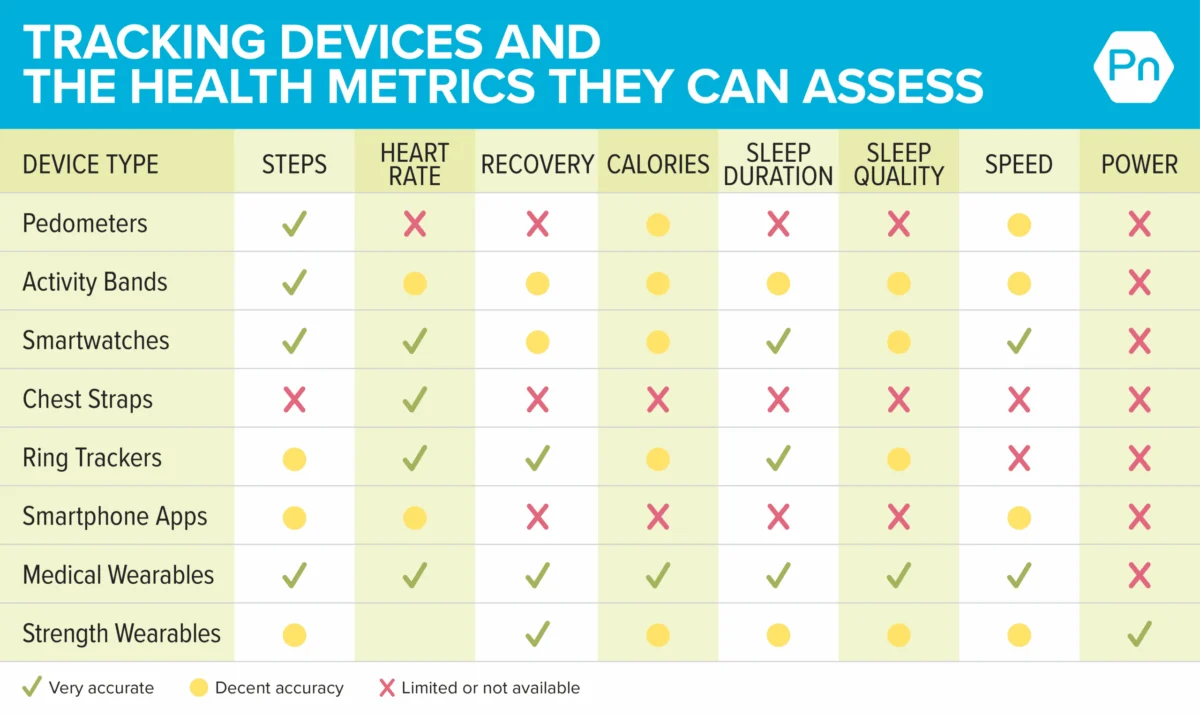
For millennia, our ancestors navigated the complexities of health and survival by relying on their internal compass: a primal, sensory awareness of hunger, fatigue, recovery, and exertion. Today, that internal barometer is increasingly being supplanted by a digital one. From heart-rate-monitoring rings to smartwatches that track everything from blood oxygen levels to sleep architecture, we are living in the era of the "Quantified Self."
While these sleek devices offer a bridge between subjective experience and objective reality, they also present a modern paradox. We have more data than ever before, yet we are arguably less confident in our ability to interpret our own biological signals. As we integrate technology into our health journeys, we must ask: Are these tools making us healthier, or are they simply distracting us from the wisdom of our own bodies?
The Rise of the Data-Driven Lifestyle: A Brief History
The trajectory of wearable technology has been nothing short of meteoric. While the history of tracking fitness dates back to the 1960s with the invention of the manpo-kei (the "10,000 steps" pedometer) in Japan, the modern era truly began with the emergence of consumer-grade heart rate monitors in the 1980s.
By the early 2010s, companies like Fitbit and Garmin moved tracking from the fringes of professional athletics to the wrists of the general public. The shift was seismic: for the first time, an average person could track their caloric burn, sleep stages, and movement velocity with a level of granularity previously reserved for elite athletes. Today, we are seeing the integration of clinical-grade tech—such as continuous glucose monitors (CGMs) and advanced sleep-stage analysis—into the daily routines of non-diabetic, non-professional users.
The Accuracy Paradox: When Data Becomes Noise
One of the most pressing questions in digital health is the reliability of the data itself. It is a fundamental truth of the tech industry: not all data is created equal. While heart rate and step-count sensors have reached a high level of technical maturity, other metrics remain notoriously speculative.
The Margin of Error
Many consumer-grade devices struggle with complex calculations like "calories burned" or "movement power." These are often proprietary algorithms based on population averages rather than real-time biological measurement. If a device estimates your caloric expenditure based on a generic formula, and you are an outlier in terms of muscle mass or metabolic rate, the data can be misleading.
As the old saying in data science goes: "Garbage in, garbage out." When users base their nutritional intake on inaccurate "calories burned" estimates, they risk metabolic confusion. A colleague once shared that he believed he was maintaining a strict caloric deficit, only to realize he was consuming 500 extra calories a day through "hidden" sources like barbecue sauce. Technology can reveal these blind spots, but only if the data provided is accurate.

The Inverted U-Curve of Decision Making
Computer scientist Samantha Kleinberg, a leading voice in human-computer interaction, suggests that there is a "sweet spot" for information. Too little data leaves us guessing; too much leads to "analysis paralysis." This relationship follows an inverted U-shaped curve.
When you have too much data—hundreds of sleep metrics, HRV scores, and minute-by-minute exertion graphs—you stop making decisions based on your well-being and start making decisions to appease the algorithm. The challenge is to identify the threshold where data stops informing your choices and starts clouding your judgment.
The Three Pillars of Helpful Tracking
How can you tell if your device is a tool or a crutch? We can evaluate the utility of tracking through three distinct signs.
1. Validation and Stress Reduction
For many, tracking is a form of reassurance. Consider the high-performing athlete who refuses to believe they are training hard enough. When they see a resting heart rate trending downward or recovery metrics improving, it provides the "permission" they need to trust the process. In this context, data acts as a safety net, confirming that their efforts are yielding results even when their internal perception is skewed by high standards.
2. Behavioral Prompting
For behavioral change to occur, three elements must be present: motivation, ability, and a prompt. Trackers are the ultimate "prompt" machines. For a client who drinks wine every night believing it aids sleep, a tracker showing the objective degradation of their sleep architecture acts as a powerful, undeniable prompt. The data forces a connection between cause and effect that was previously invisible.
3. Self-Discovery and Calibration
Perhaps the most powerful use of tracking is the ability to calibrate one’s internal senses. When you track your RPE (Rate of Perceived Exertion) and compare it to your heart rate data, you are essentially training your nervous system. Over time, you begin to know what a Zone 2 run feels like without needing to glance at your watch. You have successfully mapped your subjective feeling to an objective metric.
When Data Becomes a Hindrance
The "bad omen" of tracking is an over-reliance that leads to sensory dissociation. We have all seen the "Great MyFitnessPal Blackout" scenario—individuals who panic because they cannot log a meal and therefore don’t know if they are "allowed" to eat.

When the app goes down, if you feel lost, you have lost touch with your own interoceptive signals—your ability to perceive your own hunger, fullness, and energy levels. If you find yourself checking your wrist before checking in with your body, you are no longer the pilot; you are merely a passenger to your device.
Reclaiming the Body: A Practical Framework
To use technology wisely, one must remain the master of the data, not the subject. Here is a three-step protocol for healthy integration:
Step 1: The "Pre-Check" Protocol
Before you look at your tracker, guess the metric. Ask yourself: How do I feel? How much energy do I have? How hard was that set? Only after you have articulated your own assessment should you look at the screen. This creates a calibration loop that sharpens your intuition over time.
Step 2: Utilize "Sensory Shortcuts"
Coaches often use RPE to gauge intensity. You don’t need a blood lactate sensor to know you are near failure; you need to be able to answer, "If my life depended on it, could I do three more reps?" This is a mental shortcut that is often more accurate than a device-driven velocity metric. Practice these intuitive estimations, and use the device only as an occasional "truth-teller" to check your calibration.
Step 3: Honor the Biological Network
Remember that your body is a sophisticated sensory machine. You have proprioception (awareness of movement), interoception (awareness of internal states), and a vast network of chemical signals that have evolved over millions of years. No sensor on the market can replicate the complexity of your own nervous system.
Implications for the Future of Wellness
As we move forward, the goal of technology should not be to replace our senses, but to serve as a training wheels for them. The future of health coaching is not in providing more data, but in helping individuals interpret their own biological feedback.
Whether you are an athlete looking to break a record or an individual simply trying to maintain a balanced life, remember that the goal is not to be a perfect data point. The goal is to be a healthy, vibrant human being. Use the data to learn, to adjust, and to grow—but never at the expense of the connection you have with your own body. When the numbers conflict with how you truly feel, always remember that you are the primary source of truth. Your feelings, your energy, and your lived experience are the most important metrics of all.


 Asro

 Rifan Muazin

