

 Nana Wu

 Dwi Wanna

 Suro Senen

 Evan Lee Salim

 Nila Kartika Wati
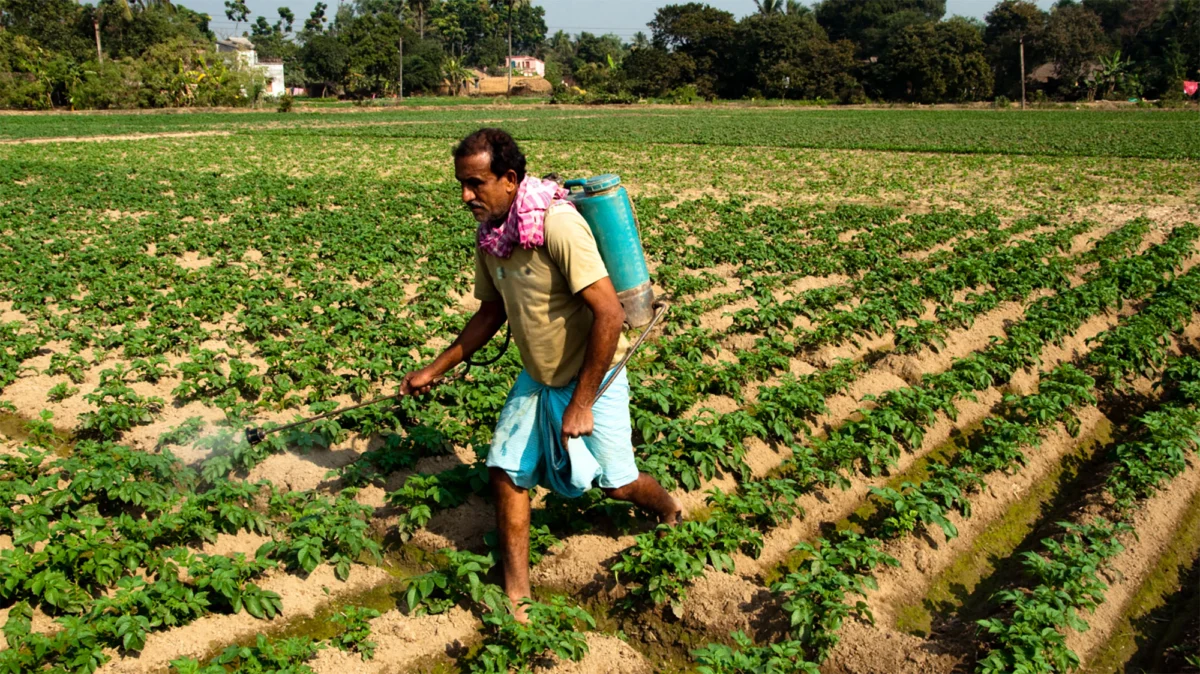
In a staggering revelation that exposes the human cost of modern industrial agriculture, a comprehensive new study has determined that approximately 46% of the world’s 934 million farmers and agricultural workers suffer from acute pesticide poisoning every single year. The research, published in the journal Frontiers in Public Health, paints a grim portrait of a global food system reliant on chemical inputs that are inflicting a massive, yet largely ignored, toll on the people responsible for feeding the planet.
Main Facts: The Scope of the Poisoning Pandemic
The study, commissioned by the Pesticide Action Network (PAN) and utilizing an extensive dataset spanning from 2006 to 2023, estimates that between 402 million and 433 million cases of unintentional acute pesticide poisoning occur annually. This figure represents an alarming, systemic health crisis.
"Acute pesticide poisoning" is defined by the study as any adverse health effect or illness occurring shortly after exposure to chemical agents. These symptoms range from immediate respiratory distress, skin irritation, and severe nausea to neurological impairment. While the report focuses on short-term acute effects, it implicitly highlights the broader, often hidden, crisis of chronic exposure that remains poorly tracked globally.
The geographical distribution of these poisonings is heavily skewed toward the Global South. Southern Asia, Southeast Asia, and East Africa emerge as the regions with the highest incidence rates. On a national level, Burkina Faso stands out as a focal point of the crisis, with a staggering 84% of its agricultural workforce reporting instances of poisoning.
Chronological Development of a Global Threat
To understand how the world reached this juncture, one must examine the rapid acceleration of chemical reliance in farming over the past three decades.
- 1990: Global pesticide use began a period of sustained, rapid growth as industrial farming practices prioritized yield maximization through chemical inputs.
- 2006–2023: This timeframe served as the primary observation window for the study. During these seventeen years, the researchers tracked public health data to correlate agricultural chemical application with human poisoning reports.
- 2023: By this year, total global pesticide application reached 3.8 million metric tons—a figure that represents a doubling of chemical usage since 1990, despite decades of international discourse regarding environmental and health safety.
- September 2026: The findings were formally published in Frontiers in Public Health, serving as a clarion call for international regulatory bodies to abandon voluntary guidelines in favor of mandatory, strict phase-outs of highly hazardous pesticides (HHPs).
Supporting Data and Regional Disparities
The study’s methodology, which synthesized years of disparate public health records, reveals that the sheer volume of pesticides currently in circulation is outpacing the safety infrastructure designed to protect those who handle them.
The Mortality Toll
Beyond the hundreds of millions of non-fatal poisonings, the study confirms that approximately 11,000 deaths are attributable to pesticide poisoning every year. Of these fatalities, nearly 60% are concentrated in India. This statistic highlights the intersection of high chemical application rates, limited access to protective equipment (PPE), and a lack of standardized safety training for rural labor forces.
The Exposure Mechanism
Farmers are primarily exposed during three phases: the mixing and preparation of chemical agents, the application process itself, and the post-application phase, which involves physical contact with treated crops, contaminated clothing, or uncleaned equipment. Because these tasks are often performed in hot, humid climates—particularly in regions like West Africa and South Asia—the use of heavy protective gear is often neglected or physically impossible, leading to high rates of skin absorption and inhalation.
Official Responses and Calls for Reform
The international community has reacted with significant concern, as the sheer scale of the findings makes it difficult for policymakers to continue ignoring the data.
Jayakumar Chelaton, the executive director of Pesticide Action Network India, characterized the report as a "crisis that can no longer be ignored." His sentiment is shared by Dr. Sheila Willis, head of international programs at PAN UK, who emphasizes that the burden of safety cannot rest solely on the shoulders of the farmers. "Now that the scale of suffering has been revealed, farmers must be supported to access safer alternatives to protect their health and that of their families," Willis stated.
The researchers are now putting forward a unified demand: the global implementation of the United Nations’ recommendation to phase out highly hazardous pesticides. This is not merely a suggestion, they argue, but an urgent necessity for global public health.
The Long-Term Implications: Beyond Acute Poisoning
While the study is the most robust of its kind to date, it acknowledges significant limitations that suggest the true situation may be even worse. The researchers noted that they did not account for the 84 million children currently engaged in agricultural labor, nor did they conduct a deep dive into the chronic, long-term health implications of low-level, recurring exposure.
The Parkinson’s Connection
Perhaps the most harrowing implication of the study is the growing link between agricultural chemicals and neurodegenerative diseases. Hélène Nicora, director general of Parkinson’s Europe, cited "overwhelming evidence" that suggests Parkinson’s is increasingly an environmentally driven disease.
The link between pesticides and Parkinson’s is no longer speculative. France, Germany, and Italy have already taken the legislative step of recognizing Parkinson’s disease as an occupational illness for farmers—a move that effectively acknowledges the causal link between chemical exposure and the progressive destruction of the brain’s movement-regulating centers.
The testimony of individuals like Rendert Algra, a former Dutch farmer who developed Parkinson’s after years of spraying pesticides on his family’s land, brings a human face to these clinical findings. His experience as the primary sprayer on his farm reflects the reality for millions of agricultural workers who have been systematically exposed to neurotoxic substances in the pursuit of agricultural efficiency.
The Need for Standardized Surveillance
A major takeaway from the report is the profound inadequacy of current global reporting protocols. Because different countries track (or fail to track) poisonings in wildly different ways, the global picture is currently a mosaic of fragmented data. The authors of the study have issued a call for the creation of standardized, transparent surveillance protocols. Without this, the international community lacks the basic information required to hold agrochemical manufacturers accountable or to implement targeted public health interventions.
Conclusion: A Paradigm Shift Required
The report published in Frontiers in Public Health serves as a sobering indictment of the status quo. For decades, the global agricultural industry has been permitted to operate under the assumption that the benefits of chemical intensification—namely, higher yields—outweigh the risks to human health.
However, with 46% of the world’s farmers suffering from acute poisoning annually, it is clear that the "cost" of these yields is being paid in the health and lives of the very people who grow our food. As the world faces the dual challenges of climate change and food insecurity, the findings suggest that the path forward cannot involve a continued reliance on toxic chemistry. Instead, it must involve a rapid, state-supported transition to regenerative, safer alternatives.
The crisis is not just a regulatory failure; it is a profound ethical challenge. Until the international community mandates the phase-out of the most hazardous substances and provides farmers with the resources to transition to safer practices, the cycle of poisoning will continue, casting a long, dark shadow over the future of global agriculture. The evidence is now public, the scale is documented, and the need for immediate action has never been more urgent.

 Asep Darmawan

 Layla Zulfa

