
 Suro Senen
 Nila Kartika Wati
 Asro
Asro
 Layla Zulfa
 Evan Lee Salim
 Sagoh
Sagoh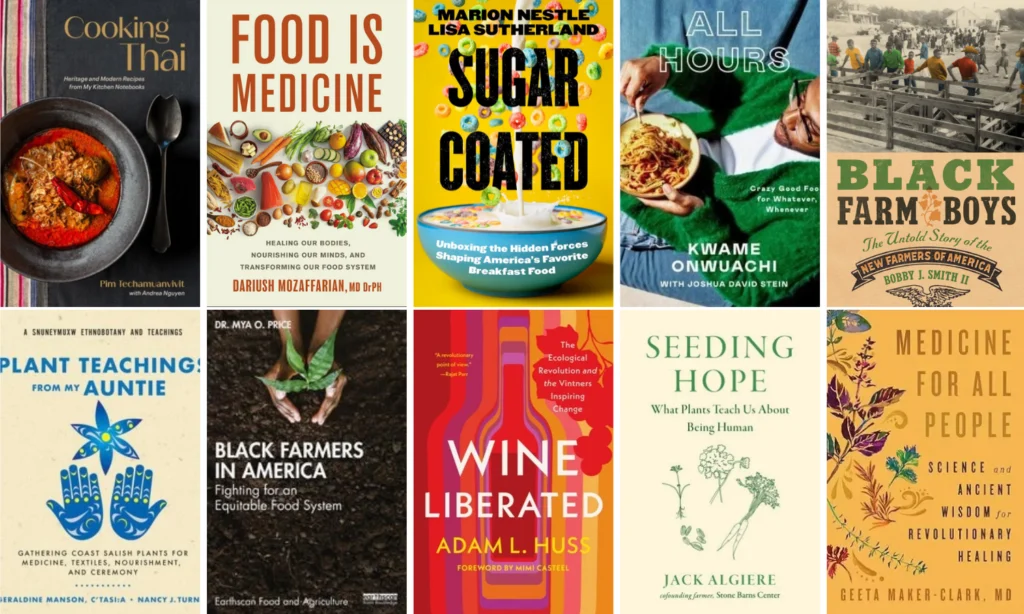
As the autumn season unfolds, Food Tank has curated an essential reading list of 24 titles that serve as both a mirror to our current food landscape and a roadmap for a more sustainable, equitable future. These books—ranging from investigative journalism and academic inquiry to culinary memoirs—collectively argue that food is the nexus where our communities, cultural heritage, and the natural world intersect.
From the halls of government policy to the intimate spaces of our home kitchens, these authors tackle the most pressing questions of our time: How do we fix a broken food system? How do we reclaim our health? And how do we restore the dignity of those who grow, process, and prepare our sustenance?
The Landscape of Modern Food: Main Facts and Themes
The current global food system is at a crossroads. As cardiologist Dariush Mozaffarian notes in his upcoming book, Food Is Medicine, the state of health in modern America has become an "anomaly," where chronic disease is increasingly linked to systemic failures in nutrition and food policy.
This year’s selection highlights four primary pillars of transformation:
- Systemic Reform: Challenging the influence of corporate entities on public health and agricultural policy.
- Equity and Justice: Unearthing the overlooked histories of Black farmers and addressing the structural violence within institutional food systems like prisons.
- Ecological Stewardship: Reimagining agriculture as a tool for climate resilience, seed diversity, and land connection.
- Culinary Empowerment: Using food as a medium for cultural preservation and individual mental well-being.
A Chronological Perspective: From Past Struggles to Future Possibilities
The evolution of our food systems is a history of both displacement and resilience. Several featured books provide critical historical context to understand today’s challenges.
- The Erasure of History: In Black Farm Boys, sociologist Bobby J. Smith II chronicles the rise and decline of the New Farmers of America (NFA). At its peak, the NFA served 55,000 Black students in segregated schools, providing them with agricultural training and community. Its subsequent decline and absorption into the white-dominated Future Farmers of America represents a significant, often forgotten, loss of Black agricultural agency.
- The Industrialization of the Heartland: Ronald L. Rosmann, in A Practical Farmer’s Journey, traces the trajectory of Iowa’s farmland. He highlights the shift from family-centered, diverse agricultural models to the current reality where over 60 percent of Iowa’s land is restricted to corn and soybean monocultures.
- The Global Scope of Famine: R. Douglas Hurt’s Famine in World History provides a long-view analysis, demonstrating that famine is rarely just a natural disaster; it is a byproduct of policy, war, and systemic environmental mismanagement.
Supporting Data: The Forces Shaping What We Eat
The narrative around food is often dominated by marketing and corporate lobbying. Sugar Coated, co-authored by renowned nutritionist Marion Nestle and former executive Lisa Sutherland, pulls back the curtain on the breakfast cereal industry. The authors expose how companies have successfully framed vitamin-fortified, high-sugar products as essential health foods for children, thereby influencing public health policy for decades.
Similarly, Captive Consumers by Chin Jou utilizes archival research and prison newspapers to document the dire state of food within American correctional facilities. By analyzing the intersection of chronic hunger and institutional violence, the book provides data-driven evidence that our current prison food systems fail to meet basic human needs, demanding a shift toward models centered on dignity.
Expert Insights and Official Perspectives
The experts behind these titles are not merely observers; they are active participants in a global movement for change.
On Nutrition and Health
"Being a healthy American adult is an anomaly," says Dariush Mozaffarian. His work emphasizes that we are capable of a "nutrition revolution" if we align our policies with clinical reality. Christopher Gardner, in Food Sense, adds a layer of clarity to the often-confusing world of dietary advice, helping readers move past the "noise" of seed oil debates and protein trends to focus on sustainable, long-term health.
On Healing and Culture
Dr. Geeta Maker-Clark, author of Medicine for All People, critiques the medical field for its historic exclusion of nutrition from professional education. She advocates for a "kitchen apothecary" approach, blending science with ancestral wisdom. This theme of ancestral knowledge is mirrored in Plant Teachings from My Auntie, where Snuneymuxw Elder Geraldine Manson (C’tasi:a) and Nancy Turner document 65 species of plants, asserting that ecological responsibility is inseparable from cultural preservation.
On Culinary Innovation
Chefs like Pim Techamuanvivit (Cooking Thai) and Kwame Onwuachi (All Hours) use their platforms to reclaim and redefine culinary narratives. Techamuanvivit’s work challenges the "one-note" stereotypes often applied to Thai cuisine in the U.S., while Onwuachi, heralded by the San Francisco Chronicle as one of the most important chefs in America, uses his recipes to bridge cultural gaps through unexpected flavor profiles.
Implications for a More Equitable Future
What happens when we apply the principles found in these books to our daily lives? The implications are profound.
The Shift Toward Agroecology
Books like Saved by Seeds by Chris Smith and Sustainable Agriculture in Ukraine by Pimenow et al. demonstrate that our future depends on biodiversity and resilient systems. Smith argues that seed saving is a radical act of future-proofing our food, while the Pimenow team offers a roadmap for post-war recovery that prioritizes ecological health over resource-intensive, extractive farming.
The Power of Advocacy
For those looking to dismantle harmful systems, Michael Marx’s Reining in the Bulls serves as a tactical handbook. He provides actionable strategies for advocates to challenge corporate abuse, ensuring that the interests of the public—not the corporation—dictate the future of our food supply.
A New Ethic of Consumption
Finally, books like Sonali Menezes’ Depression Cooking and Alexis Nikole Nelson’s Happy Snacking, Don’t Die! shift the focus back to the individual. Whether it is learning to nourish oneself during a mental health crisis or foraging for wild foods in one’s own neighborhood, these authors emphasize that our relationship with food is a personal, political, and spiritual act.
Conclusion: A Call to Action
The 24 titles highlighted by Food Tank this fall do more than educate; they provide a toolkit for transformation. From the urban agriculture models described in Mya O. Price’s Black Farmers in America to the scientific explorations found in Nik Sharma’s Fundamentals of Flavor, the overarching message is clear: the path to a sustainable future is paved with intentionality.
As we look toward the coming year, these books offer an invitation to participate in the "nutrition revolution." Whether by supporting local seed banks, challenging corporate food policy, or simply rethinking the ingredients we choose for our next meal, we are all active agents in the story of our food.
Articles like the one you just read are made possible through the generosity of Food Tank members. The movement for a better, more equitable food system requires collective action. We invite you to contribute to this mission by becoming a member today. Join us in the fight for a healthier, more sustainable world.

 Siti Muinah
 Nana Muazin