
 Jia Lissa

 Raul Delapena Setiawan

 Asro

 Layla Zulfa
 Sagoh

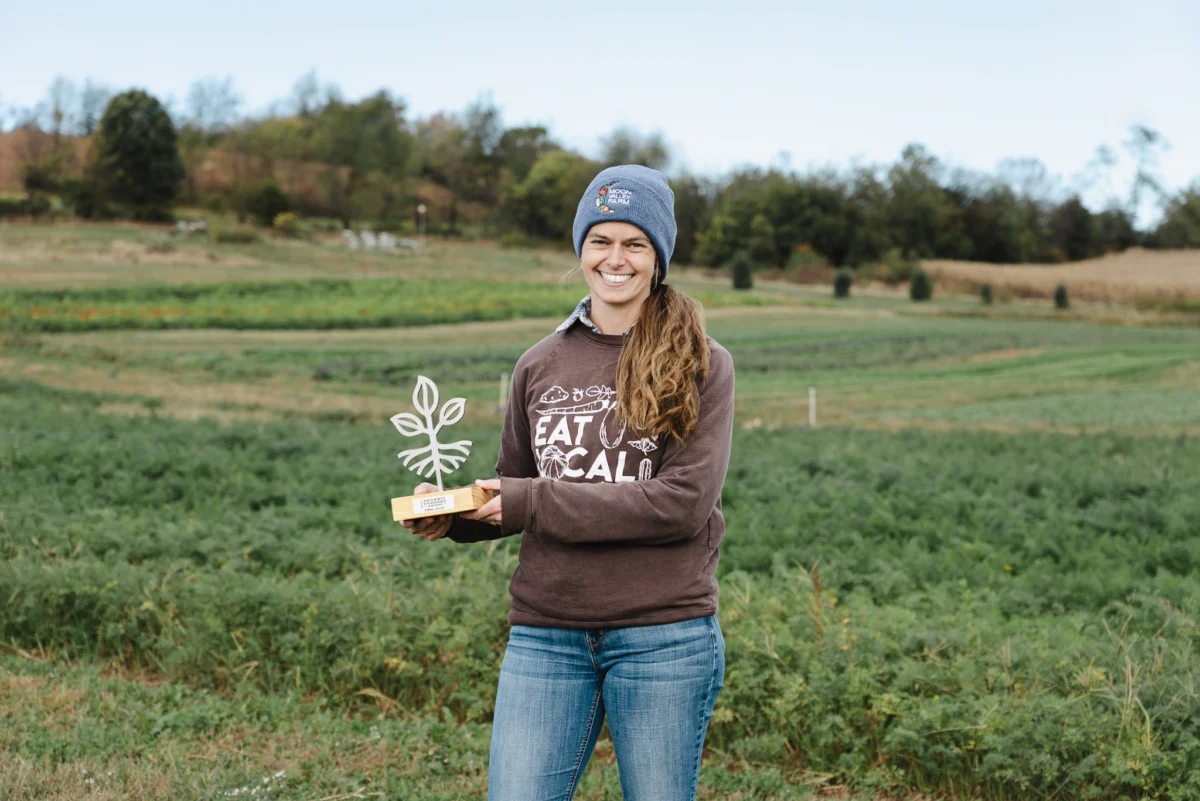
For over two decades, the economic and social landscape of Arizona has been quietly but profoundly reshaped by a singular vision. It is a vision that rejects the traditional, extractive models of growth in favor of something more durable: a "local-first" philosophy that treats community self-reliance as the ultimate hedge against uncertainty. Today, that vision receives national recognition as Edible Communities—a prestigious network of over 75 hyper-local food and drink publications—announces that Kimber Lanning, founder and CEO of Local First Arizona (LFA), is the recipient of the 2026 Edible Communities Sustainability Award.
The award, which honors individuals and organizations demonstrating exceptional impact in food systems, economic resilience, and environmental stewardship, serves as a capstone to Lanning’s twenty-three-year tenure as an advocate for the Grand Canyon State. Nominated by Edible Phoenix, Lanning was selected by a national committee that evaluated candidates based on the scale of their community impact and the integration of sustainability into their core mission.
A Legacy of Necessary Action: The Chronology of Local First Arizona
To understand the weight of this honor, one must look back to 2003. At the time, the concept of "buying local" was often viewed through a boutique, consumer-choice lens rather than as a pillar of economic policy. Lanning, a native Arizonan, recognized that the state’s rapid growth was coming at the expense of its independent business ecosystem. She founded Local First Arizona not as an academic exercise, but as a direct response to a mounting crisis of identity and economic vulnerability.
2003–2010: Planting the Seeds
In its infancy, LFA functioned as a grassroots movement, educating Arizonans on the "multiplier effect"—the economic principle that money spent at locally owned businesses stays within the community, circulating to create jobs and tax revenue. Lanning’s early efforts were focused on shifting public perception, making the act of shopping local a civic duty rather than a mere preference.
2011–2018: Institutionalizing Impact
As the organization matured, it moved beyond advocacy and into infrastructure. Lanning recognized that for small businesses and farms to compete in a globalized market, they needed institutional support. During this period, LFA expanded its scope to include the Rural Development Council, positioning the organization as a vital partner for tribal nations and small towns that had long been overlooked by major economic development agencies.
2019–Present: Scaling for Equity
The last seven years have seen LFA transform into a statewide powerhouse with a staff of over 60 professionals. The organization’s mandate broadened to address the root causes of food insecurity, rural economic decline, and the digital divide. By bridging the gap between urban centers like Phoenix and the most remote corners of the state, Lanning has effectively turned LFA into an economic engine that prioritizes equity, ensuring that opportunity is not confined to wealthy zip codes.
The Pillars of Sustainability: Data and Delivery
The Edible Communities Sustainability Award is not merely a recognition of intent; it is a validation of the tangible metrics Lanning has championed. For LFA, sustainability is a multi-faceted discipline involving food security, business incubation, and policy advocacy.
Food Systems and the "Good Food" Mandate
LFA treats food access as a fundamental right. Through the Good Food Finder AZ, the organization has created a digital clearinghouse that connects consumers directly to regional producers, effectively shortening the supply chain. This is not just a directory; it is an economic tool that bypasses the friction of traditional retail, allowing small-scale farmers to thrive.
The impact is best illustrated by the LFA Community Kitchen network. With four locations in Maricopa County, these hubs provide a lifeline for emerging food entrepreneurs. The numbers speak to the program’s efficacy:
- Waste Diversion: In 2025 alone, LFA programs rescued over 2,700 pounds of food that would have otherwise ended up in landfills.
- Business Survival: 75% of the small food businesses that graduated from the Community Kitchen Incubator Program remain active and profitable today.
Empowering the Rural Frontier
As the state’s federally designated Rural Development Council, LFA has navigated the complexities of regional economic disparities. The organization acts as a neutral facilitator, bringing together disparate stakeholders—tribal leaders, mayors, federal agencies, and small business owners—to solve localized problems.
The Rural Policy Forum, now entering its 19th year, stands as the crown jewel of this effort. It serves as a laboratory for policy innovation, tackling issues such as disaster readiness, healthy food deserts, and grant-writing capacity. By providing the administrative infrastructure that many rural communities lack, LFA has enabled millions of dollars in investment to flow into areas that previously had little voice in state economic planning.
Cultivating the Next Generation of Farmers
Sustainability is often an intergenerational challenge. Through the Ag Business Boot Camp, Lanning’s team is addressing the "graying" of the agricultural workforce. By teaching farmers the fundamentals of business, marketing, and supply chain management, LFA is ensuring that Arizona’s agricultural future is built on a foundation of profitability. The 2025 cohort alone saw the launch of 28 new farming businesses, a testament to the program’s ability to turn passion into enterprise.
Official Perspectives: The Vision Behind the Work
The selection of Lanning for this award was met with universal praise from the Edible network. Shannan Perciballi, publisher and editor of Edible Phoenix, noted that Lanning’s work is characterized by a "deeply practical and profoundly visionary" approach.
"Kimber has spent twenty years proving that you don’t have to choose between a thriving economy and a healthy community," says Perciballi. "She has built the bridge between the farmer in Camp Verde and the consumer in Phoenix, and she has done it with a relentless focus on the people who are often left behind by traditional market forces."
Lanning herself has consistently deflected the credit, framing the award as a win for the movement rather than the individual. In her recent reflections on the honor, she emphasized that sustainability is not a destination, but a "daily practice."
"We are building infrastructure that outlives us," Lanning stated during the announcement. "Whether it is through a kitchen, a grant, or a policy change, the goal has always been the same: to create an Arizona where every person has the agency to feed their family and the opportunity to build a business that serves their neighbors."
The Broader Implications: A Model for the American West
The recognition of Kimber Lanning by Edible Communities signals a shift in the national conversation regarding what it means to be "sustainable." For years, the term was largely associated with environmental conservation or carbon footprint reduction. Lanning’s work has successfully expanded that definition to include economic sustainability.
The Power of Place-Based Economics
By focusing on place-based development, LFA offers a blueprint for other states struggling with the homogenization of their economies. In an era where big-box retail and consolidated supply chains dominate, LFA’s success in fostering thousands of independent businesses provides a compelling counter-narrative. The organization proves that when you anchor an economy in local ownership, it becomes significantly more resilient to the shocks of global market volatility.
Bridging the Urban-Rural Divide
Perhaps the most significant implication of Lanning’s work is the reduction of the political and economic friction between urban and rural populations. By bringing tribal nations into the fold as equal partners in economic development, LFA has fostered a level of regional cooperation that is rare in the current political climate. The 2026 Sustainability Award acknowledges that true sustainability is impossible without inclusivity.
Conclusion: A Future Worth Fighting For
As we look toward the remainder of the decade, the challenges facing Arizona—from water scarcity to the rising cost of living—will require the exact kind of collaborative, community-driven leadership that Lanning has provided since 2003.
The 2026 Edible Communities Sustainability Award is more than a trophy on a shelf; it is a recognition that the work of building a resilient society is the most important labor of our time. Kimber Lanning and the team at Local First Arizona have demonstrated that when you invest in the capacity of people to support one another, the result is not just a more sustainable economy, but a more vibrant, equitable, and human-centered state.
For those who wish to support this work or learn more about the initiatives mentioned, the path forward is clear: engage with local food systems, support the businesses in your backyard, and advocate for policies that prioritize the longevity of our communities. As Lanning has shown us for twenty-three years, the future is not something that happens to us—it is something we build, kitchen by kitchen, and community by community.


 Nila Kartika Wati

 Dwi Wanna