 Jia Lissa

 Raul Delapena Setiawan

 Asro

 Layla Zulfa
 Sagoh
While Washington, D.C. remains paralyzed by partisan gridlock and corporate influence, a quiet revolution in food safety is taking root in the halls of the California State Capitol. As federal agencies falter and high-profile political figures struggle to translate rhetoric into regulatory reality, California Assemblyman Jesse Gabriel has emerged as the nation’s unlikely, de facto food safety czar.
By leveraging the massive economic weight of the California market, Gabriel has successfully pioneered a legislative model that is now being exported across the country. In doing so, he has proven that food safety—long dismissed as a niche, “woo-woo” concern—is actually a powerful, bipartisan political force capable of transcending the deep divisions of the Trump-era political landscape.
The Catalyst: A Wake-Up Call in Sacramento
Jesse Gabriel’s foray into the world of food chemistry was entirely unintentional. A third-term Democratic assemblyman from Los Angeles, Gabriel built his reputation on traditional progressive priorities: gun violence prevention, constitutional law, and civil rights. In 2023, when the nonprofit Environmental Working Group (EWG) approached him about sponsoring a bill to ban five hazardous food additives, he was initially skeptical.
“I always assumed there was someone in Washington, DC, watching my back,” Gabriel remarked, reflecting on the moment he first read the memo detailing the “Generally Recognized as Safe” (GRAS) loophole. The revelation that nearly 99 percent of new chemicals entering the U.S. food supply effectively bypass formal FDA review was, in his words, “mind-blowing.”
This realization sparked the introduction of the California Food Safety Act. Despite fierce resistance from the $2.5 trillion food industry, which deployed heavy lobbying efforts and warnings of “nanny-state” overreach, the bill passed in October 2023. It effectively banned four of the five original chemicals, including Red No. 3 and potassium bromate—substances already prohibited in the European Union, China, and Brazil. The move signaled a tectonic shift: for the first time in decades, a state had successfully stood up to the industrial food complex.

A Chronology of Legislative Reform
The success of the California Food Safety Act provided a blueprint for subsequent policy victories. The timeline of Gabriel’s legislative impact reveals a consistent strategy of building consensus through education rather than partisan combat:
- 2023: Introduction and passage of the California Food Safety Act, targeting five high-risk chemical additives.
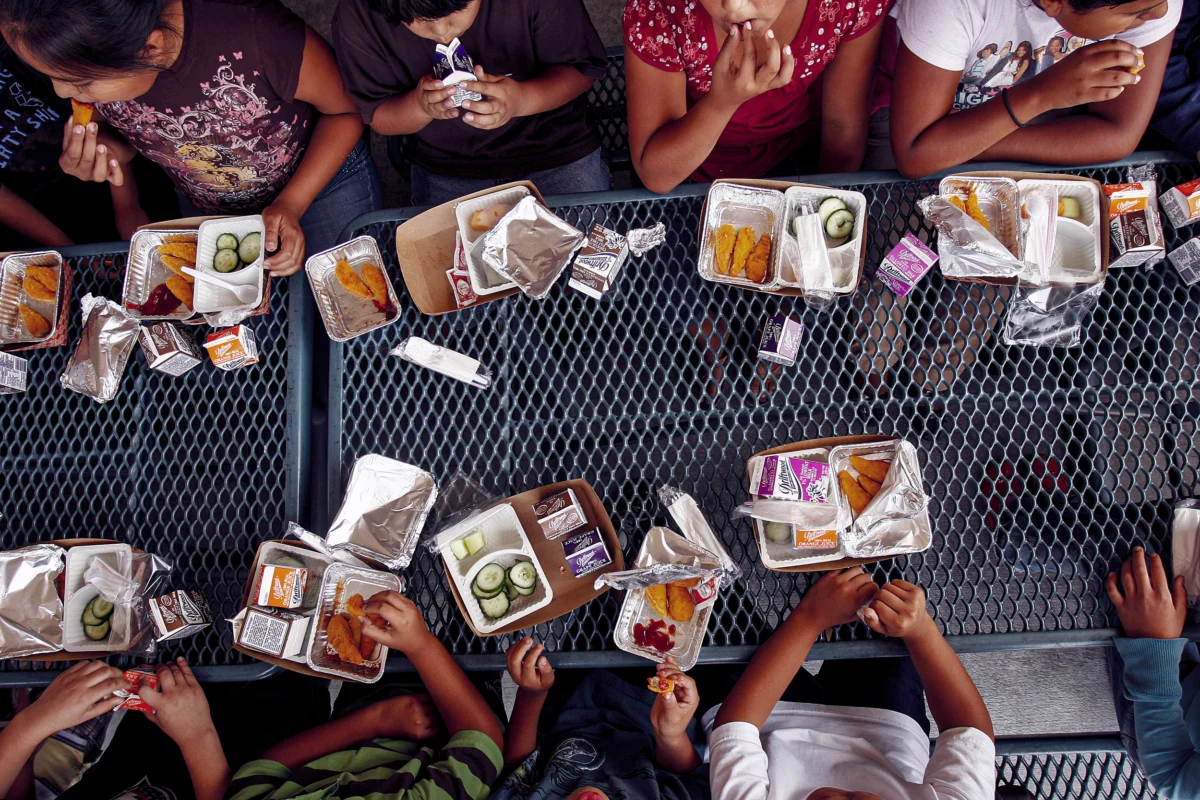
- 2024: Introduction of the California School Food Safety Act, which prohibits public schools from serving meals containing six synthetic dyes linked to neurobehavioral issues in children.
- 2025: Passage of the Real Food, Healthy Kids Act. This landmark legislation established the first legal definition of "ultraprocessed foods" in the United States and created a regulatory framework to remove specific, low-nutrient products from school vending machines and lunch trays.
- 2026: The enactment of a voluntary labeling law designed to help consumers identify minimally processed, whole-food products, signaling a move from restriction to transparency.
Supporting Data: Why States are Taking the Lead
The necessity for state-level action is underscored by a staggering lack of federal oversight. According to recent polling from the progressive firm Navigator Research, 84 percent of Americans believe it is the government’s fundamental responsibility to ensure the food supply is free from harmful chemicals. Yet, less than half of the population believes federal agencies are meeting that mandate.
The scientific justification for these state laws is equally compelling. For instance, a 2021 study by the California Office of Environmental Health Hazard Assessment (OEHHA) found a direct correlation between synthetic food dyes and increased neurobehavioral problems in children, including ADHD. With ADHD diagnoses among children climbing nearly 70 percent over the last two decades, Gabriel’s focus on school lunches was not just a political stance—it was a data-driven public health intervention.
Furthermore, the "California Effect" is real. Because it is logistically and financially impractical for food manufacturers to create different formulations for different states, California’s bans often function as a de facto national standard. To date, 43 states have introduced food policy legislation modeled after California’s initiatives, with 15 successfully signing such bills into law.
The MAHA-MAGA Alliance and the Federal Failure
The political landscape surrounding food safety became significantly more complicated in 2024 when Robert F. Kennedy Jr. aligned with the Donald Trump administration. The "Make America Healthy Again" (MAHA) movement brought intense, populist focus to the dangers of ultraprocessed foods. However, the transition from campaign trail rhetoric to executive branch action has been underwhelming.

While Kennedy, as Secretary of Health and Human Services, initially promised a crusade against corporate capture, the resulting policy changes have been largely cosmetic. In August, the HHS unveiled a "GRAS reform" proposal that merely requires companies to inform the FDA when they designate a new chemical as safe. This is a far cry from the rigorous, proactive regulation that food safety advocates had hoped for.
Gabriel, meanwhile, has been careful to maintain a distance from the MAHA movement. He avoids the conspiratorial tone and inflammatory rhetoric often associated with the group, preferring the language of "common sense" and "science-based policy." By framing his work as a moderate, bipartisan effort, he has insulated his legislative successes from the volatility of the MAHA-MAGA alliance.
Official Responses and Industry Resistance
The food industry’s response to these developments has been a mix of intense lobbying and strategic retreat. Industry giants, including the Consumer Brands Association and the National Confectioners Association, have argued that state-by-state regulation creates a "patchwork" of conflicting laws that disrupt the supply chain.
However, Gabriel’s ability to bring unlikely allies to the table—including Republican legislators from agricultural districts—has weakened this narrative. Heath Flora, a Republican assemblyman, noted that his support for Gabriel’s bills stems from a pragmatic, agricultural perspective: "Jesse is one of those guys that is willing to look at things from an agricultural perspective… he gave us a seat at the table."
This inclusive approach has forced industry groups to negotiate rather than obstruct. When the Real Food, Healthy Kids Act reached the floor, it passed the Senate unanimously and the Assembly with a 79–1 vote, proving that when the issue is framed around child health and transparent labeling, the industry’s traditional lobbying tactics struggle to find a foothold.

Implications: The Future of American Food Policy
The most significant threat to this progress is the possibility of federal "preemption"—a legislative tactic that would allow the federal government to override state-level food safety laws. In 2025 and 2026, various legislative efforts, including the proposed "FRESH Act" in the U.S. House, attempted to establish a weaker federal standard that would strip states of their ability to regulate additives.
Gabriel has been a vocal opponent of these "Trojan horse" measures. He argues that if the federal government has been "asleep at the switch" for decades, it has no business obstructing the states that have finally taken up the mantle of protection.
As the midterm elections approach, the success of the "California model" offers a lesson for political strategists across the spectrum. In a country where voters are deeply polarized, the safety of the food supply is one of the few issues that maintains high, broad-based approval.
"Eighty percent of Democrats and Republicans in Washington don’t agree on what day of the week it is," Gabriel remarked. "When it comes to food safety, it’s fairly unprecedented, the depth of the support and the depth of the response."
By prioritizing tangible, incremental improvements over grandstanding, Gabriel has not only improved the safety of the American pantry—he has provided a roadmap for how to govern in an era of gridlock. While he modestly declines the title of "nation’s shadow food safety chief," his record suggests that the real work of protecting the American public is no longer happening in the halls of the FDA, but in the state houses of the nation, one bill at a time.


 Nila Kartika Wati

 Dwi Wanna