
 Lina Hope

 Jia Lissa

 Pevita Pearce

 Ammar Sabilarrohman

 Dwi Wanna
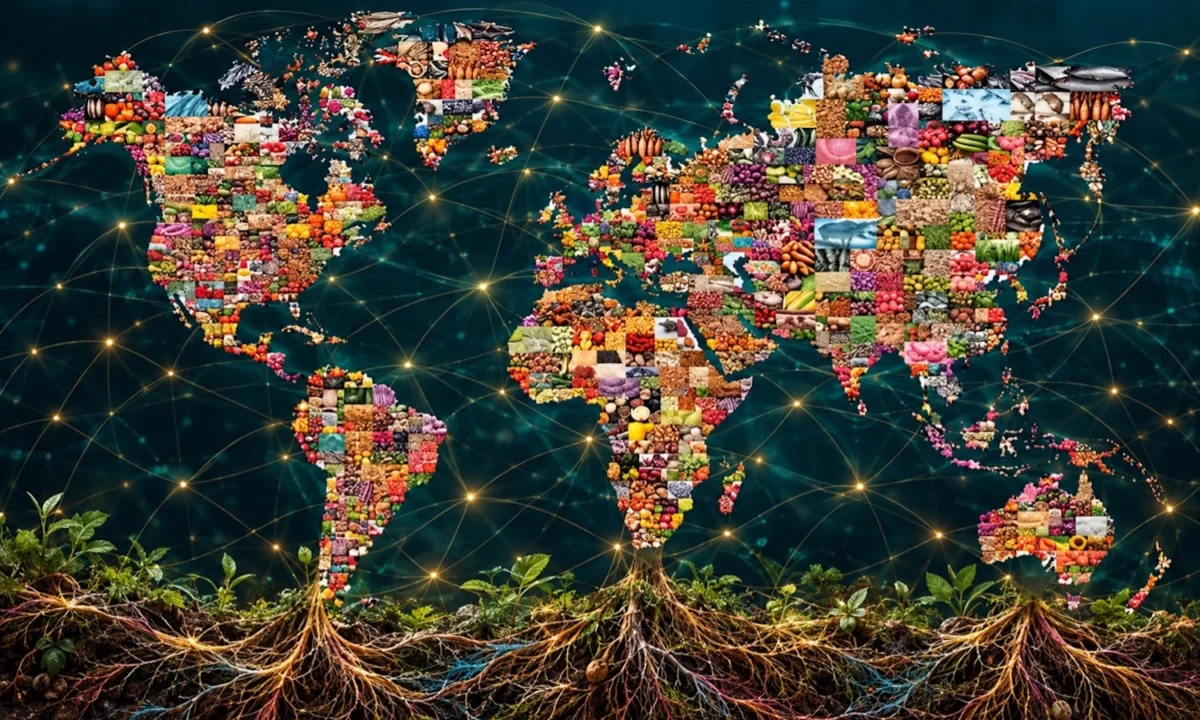
Can we alter the trajectory of human health and environmental stability simply by recalibrating our language? The words we choose serve as the architectural blueprints for our collective mindset. When we pivot from the binary goal of "surviving" to the expansive ambition of "thriving," or from the defensive stance of "conserving" to the proactive strategy of "regenerating," we change the very nature of what is possible. As we move through this pivotal decade, the global food discourse is undergoing a fundamental metamorphosis: we are shifting our focus from the quantitative task of "feeding the world" to the qualitative, systemic imperative of "nourishing it."
The Evolution of a Global Ambition
For generations, the international community has been united under the banner of "feeding the world." This mandate has driven agricultural revolutions, spurred international trade, and provided a lifeline to billions. However, as the world stands at the intersection of climate instability, demographic shifts, and a looming epidemic of diet-related diseases, this traditional goal is increasingly viewed as incomplete.
While hundreds of millions continue to suffer from acute hunger—making the provision of basic calories a non-negotiable priority—the complexity of modern existence demands a more sophisticated objective. The United Nations now projects that the global population will peak later this century, moving away from the Malthusian fears of the past. With this stabilization comes a new reality: we have achieved the capacity to produce enough calories, yet we are simultaneously failing to deliver the nutrients required for human and planetary health.
A Chronology of the "Nourishment" Movement
- 2016: The movement gained academic weight when Lawrence Haddad and his colleagues published a landmark call for a global research agenda, formally proposing the shift from "feeding" to "nourishing" as the primary target for food systems.
- 2021: U.N. Secretary-General António Guterres elevated "Nourish All People" to a central pillar of the global food systems transformation agenda.
- 2024–2025: High-level discourse at the U.N. General Assembly and Climate Week NYC solidified the consensus that food systems must be measured by their ability to provide healthy, sustainable diets rather than mere caloric volume.
- World Food Day 2025: Under the theme "Innovate today. Nourish tomorrow," the global community recognized that science, traditional knowledge, and AI-driven data are the new engines for this transformation.
The Metrics of Nourishment: Why Quality Matters
If the old paradigm was built on yield-per-hectare and total caloric output, the new paradigm of "nourishment" requires a multidimensional framework. Food quality, in this modern context, is a holistic measure. It encompasses the molecular composition of the food, the nutrient density, the biological activity, and even the sensory qualities that dictate whether a meal is culturally desirable and accessible.
Nourishment is the ultimate synthesis of agriculture, environmental stewardship, and public health. It asks: How was the soil treated? What is the dignity of the laborer? Does this food foster healthspan—the period of life spent in good health—rather than merely extending the lifespan of a person burdened by chronic illness?
The "Food Intelligence" Economy
The transition to nourishment is not an incremental change; it is a structural one. We are seeing the emergence of a "Food Intelligence" economy. Through initiatives like the Periodic Table of Food Initiative (PTFI), researchers are working to map the molecular composition of the world’s biodiversity. By leveraging AI-enabled molecular modeling, scientists are now able to hypothesize how specific food molecules interact with human biology, moving toward a future where nutrition is personalized, precise, and evidence-based.
Implications for Global Systems
The implications of this shift are profound, affecting policy, economics, and traditional agricultural practices.
1. Rethinking Incentives and Policy
Current agricultural subsidies are often tied to bulk commodity production—crops like corn, soy, and wheat that are efficient at providing calories but often insufficient in delivering the diverse micronutrients required for optimal health. A shift to a "nourishment" framework would require governments to reward farmers not just for the tonnage of their harvest, but for the ecological services they provide, such as carbon sequestration, water retention, and the cultivation of nutrient-dense, biodiverse crops.
2. The Resilience of Interconnectedness
In a recent commentary in Nature Food, researchers drew an analogy between our food systems and the mangrove forest. A mangrove is not a single entity; its survival is predicated on a complex, interconnected root system. Similarly, our food systems are dependent on the health of our economies, governance, and agricultural landscapes. If we prioritize yield at the expense of biodiversity, we weaken the root system. If we prioritize "nourishment," we cultivate a system that is resilient to climate shocks and economic volatility.
3. Valuing Traditional and Indigenous Knowledge
The push for modernization and molecular data must not come at the expense of local expertise. The history of food is rooted in the ingenuity of communities, such as Mumbai’s dabbawalas, who have maintained a sophisticated, hyper-efficient delivery system for generations. Any transition to a global nourishment strategy must uphold Indigenous Data Sovereignty and the principles of Access and Benefit Sharing (ABS). We must ensure that the intellectual property of traditional food knowledge is protected and that the communities that have stewarded this biodiversity for centuries are the primary beneficiaries of new innovation.
The Vision: A Future of Flourishing
Imagine a landscape in 2050 where agricultural success is redefined. In this vision, biodiversity flourishes alongside high-productivity farms. In this future:
- Health Costs Decline: By moving toward diets that are culturally meaningful and nutrient-dense, we mitigate the trillions of dollars currently lost to the global economy due to diet-related metabolic diseases.
- Waste is Eliminated: Nourishment-based systems emphasize the value of the food produced, naturally discouraging the profligate waste currently embedded in our global supply chains.
- Innovation Flourishes: Molecular evidence creates a new frontier for food products that are not only sustainable but also biologically optimized to help humans reach their full potential.
Conclusion: The Power of Language and Action
The shift from "feeding" to "nourishing" is more than a rhetorical exercise; it is an invitation to redesign the human experience on this planet. As we integrate molecular science with ecological wisdom, we move closer to a state where the food on our plates serves as a bridge between our own biology and the health of the biosphere.
This World Food Day serves as a reminder that our current systems were designed for a different era. To meet the challenges of the 21st century, we must be bold enough to change our metrics. We must demand that our food systems be judged by the quality of the health they provide and the vitality of the ecosystems they regenerate.
As we look toward the next century, we must recognize that the world of 2100 will require even more evolution. The process of nourishing the world is not a destination, but a continuous practice of cultivation. By mobilizing creative capital—both financial and intellectual—and committing to the radical transparency of data, we can ensure that the future of food is one where every person, in every community, is empowered to flourish.
Words have the power to define our limits, but they also have the power to expand our reach. From surviving to thriving, from conserving to regenerating, and from feeding to nourishing: the journey to a healthier world begins with the ambition we set today.

 Asep Darmawan

 Layla Zulfa