

 Nana Wu

 Dwi Wanna

 Suro Senen

 Evan Lee Salim

 Iffa Jayyana
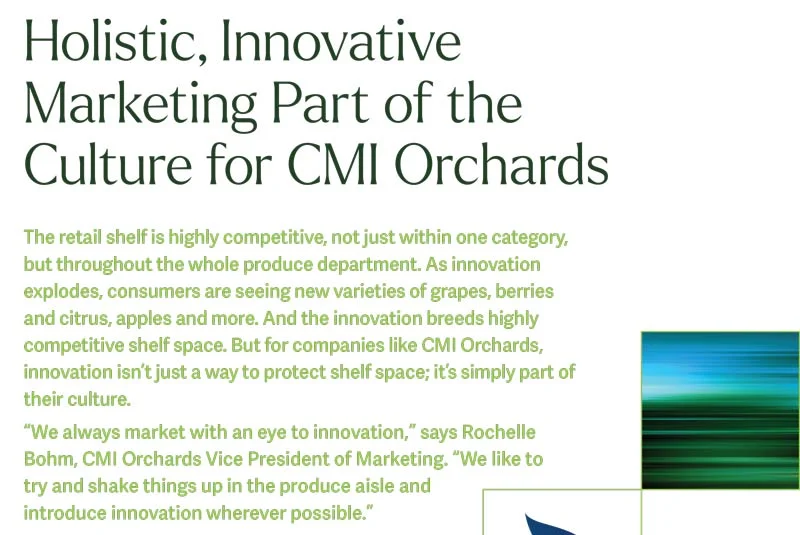
In the fast-paced world of consumer packaged goods (CPG), the produce aisle has historically been viewed as a traditional, static environment. However, CMI Orchards is challenging this perception by infusing the sector with a culture of high-tech innovation, digital fluency, and a consumer-centric mindset. By leveraging data-driven insights and embracing a "guinea pig" mentality for new marketing tactics, the Washington-based fruit giant is rewriting the rulebook on how fresh produce reaches the modern consumer.
The Paradigm Shift: Why Innovation Matters in Produce
"We always market with an eye to innovation," explains Rochelle Bohm, Vice President of Marketing at CMI Orchards. "We like to try and shake things up in the produce aisle and introduce innovation wherever possible."
This philosophy is not merely a branding exercise; it is a strategic response to a demographic sea change. With Gen Z and Millennials now representing more than half of the population, the traditional, one-size-fits-all corporate marketing approach is losing its efficacy. These cohorts demand hyper-personalization, digital interaction, and transparency.
To bridge the gap between the orchard and the digital-native consumer, CMI Orchards has pivoted toward interactive technology. A primary example of this is the "Apple Crush" app—a gamified experience that functions as a "dating app for apples." By transforming the selection process into an interactive, personalized discovery, CMI Orchards is fostering deeper engagement with its products, turning a routine grocery trip into an experience.
A Programmatic Approach to Retail Success
One of the most significant challenges in the produce industry is the logistical difficulty of changing inventory at the retail level. Retailers are often hesitant to disrupt established planograms. To address this, CMI Orchards has moved away from selling individual products to selling comprehensive "marketing programs."
"We understand that it’s tough for retailers to switch things out," Bohm notes. "It’s an easier sell if we can come to them with a program that says, ‘Take this structure, and we will slot in varieties based on seasonality and regional flavor preferences.’"
This programmatic approach—exemplified by initiatives like American Dream® and Flavors of the World®—allows retailers to maintain a consistent, branded presence while providing the flexibility to cycle in different apple, pear, and cherry varieties throughout the year. This ensures that the marketing remains fresh and relevant without requiring a total overhaul of the retailer’s operational flow.
The Cross-Industry Influence: Borrowing from Beauty and Spirits
CMI Orchards operates under a unique philosophy: they are not just competing with other fruit growers; they are competing for "share of mind" against every other item in the store. Recognizing that their budgets in produce are smaller than those of global CPG giants in the beauty or beverage industries, the team adopts a "scrappy" but sophisticated approach.
"We look at what’s working in cosmetics, perfume, wine, or beer, and we ask, ‘How can we adapt that to produce and keep it fresh?’" Bohm says. By analyzing the high-conversion tactics used by luxury brands and distilling them for the produce aisle, CMI Orchards has successfully implemented high-end marketing strategies on a smaller, more focused scale. This cross-pollination of ideas is what keeps their messaging ahead of industry curves.
Chronology of a Holistic Media Strategy
CMI Orchards’ marketing evolution can be viewed through its long-term partnership with media entities like The Packer and events such as the West Coast Produce Expo (WCPE). Over the past decade, the company has transitioned from traditional print-based advertising to a multi-channel, holistic strategy.
- Pre-Event Teasing: Weeks before a trade show, the campaign begins. Customers are engaged via digital newsletters, targeted social media, and direct outreach.
- Print Integration: The strategy is reinforced with print placements in industry publications, ensuring the CMI brand is visible on the desks of key decision-makers.
- Experiential Show Presence: When the event arrives, the strategy culminates in high-engagement activations. Whether it’s a Ferris wheel, interactive music games, or collaborative networking spaces, CMI Orchards prioritizes experiences over traditional booths.
- Post-Show Follow-up: The feedback loop is closed by synthesizing anecdotal evidence and quantitative data collected during the show to inform the next quarter’s strategy.
Supporting Data: Why "Fun" Drives Business Results
While the company values metrics, they also place a high premium on "grassroots" and anecdotal feedback. In an era where data can sometimes become cold and dehumanized, CMI Orchards trains its staff to act as a human sensor network. By listening to the word-of-mouth chatter on the trade show floor and the direct feedback from retail buyers, the marketing team gains qualitative insights that spreadsheets often miss.
The success of these initiatives is evident in the company’s growth and its reputation as an industry leader in creativity. By positioning themselves as a "guinea pig" for new marketing tools—whether it is a new digital platform or a novel event activation—they build brand equity that transcends the physical product.
Official Perspectives: The Philosophy of Curiosity
The driving force behind CMI Orchards’ success is an intentional corporate culture. According to Bohm, the company actively seeks out "curious people." This internal culture ensures that the desire to innovate is not top-down but is instead woven into the fabric of every department.
"We’re just curious people trying to keep abreast of trends any way we can," says Bohm. This curiosity translates into a willingness to take "calculated risks." The company recognizes that in a market saturated with choices, stagnation is the biggest threat. By constantly testing new hooks and embracing the complexity of modern media tools, they have successfully carved out a niche as an agile, forward-thinking partner.
Implications for the Future of Agribusiness
The implications of CMI Orchards’ strategy are clear: the future of produce marketing lies in the integration of the digital and physical worlds. As the grocery landscape continues to evolve, companies that rely solely on price-point competition will likely struggle. Conversely, those that invest in branding, interactive consumer experiences, and programmatic retail partnerships will be the ones that define the next generation of agriculture.
Key Takeaways for Industry Peers:
- Embrace Digital Fluency: Use gamification and apps to meet consumers where they are.
- Think Programmatically: Simplify the retail experience by offering flexible, seasonal programs rather than individual product pushes.
- Cross-Pollinate: Do not limit your marketing research to the produce industry; look to fashion, tech, and CPG for inspiration.
- Listen to the Grassroots: Balance high-tech data analytics with real-world, anecdotal feedback from partners and consumers.
- Cultivate Curiosity: Build a team that is not afraid to test new, "risky" tools and ideas.
As CMI Orchards continues to scale its operations, the company serves as a blueprint for how traditional agribusiness can thrive in the digital age. By refusing to settle for the status quo and consistently "shaking things up," they are not only selling fruit—they are selling a vision of what the future of food can look like.

 Nila Kartika Wati

 Layla Zulfa

