

 Nana Wu

 Dwi Wanna

 Suro Senen

 Evan Lee Salim

 Lina Hope
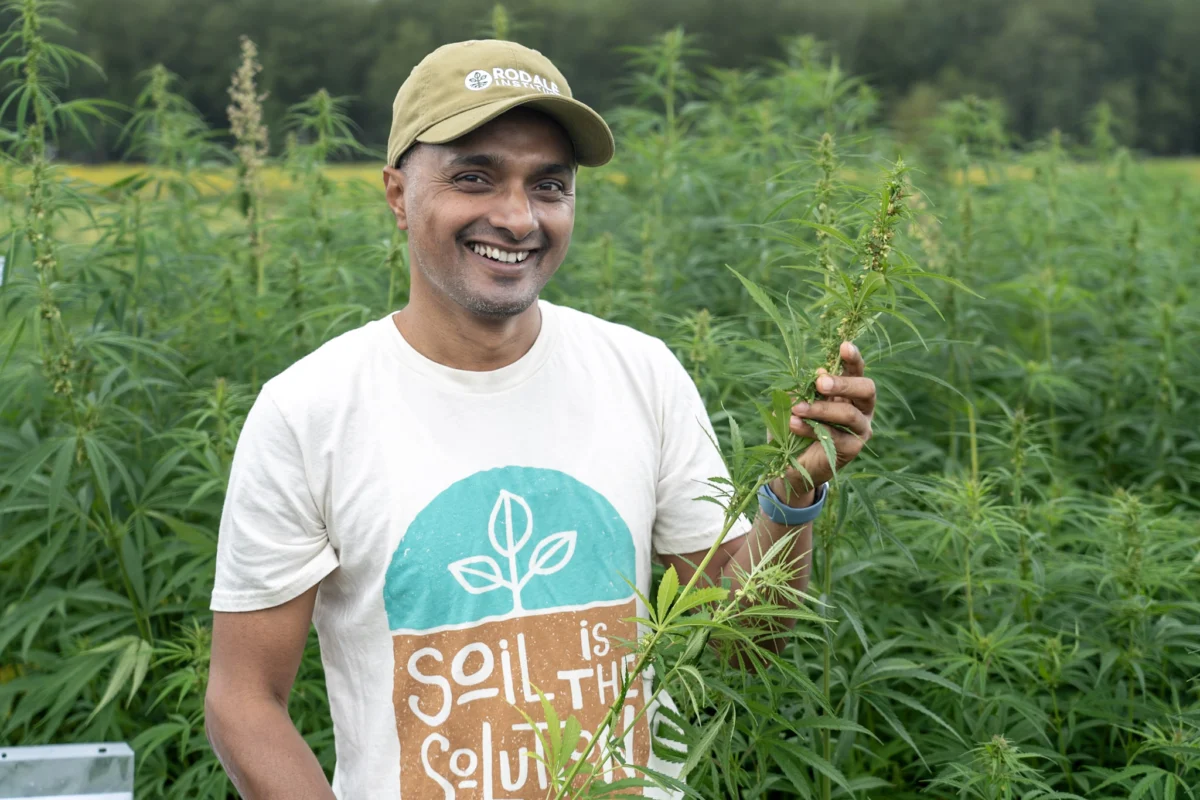
KUTZTOWN, PA – As global markets pivot toward sustainable textiles and biobased manufacturing, a quiet revolution is taking root in the fields of Pennsylvania. Industrial hemp, once a foundational crop of the American colonial economy, is experiencing a robust resurgence. However, for Pennsylvania farmers, the transition from niche experimentation to a viable, high-quality fiber commodity depends on more than just market demand; it requires a scientific mastery of soil health and planting precision.
Recognizing this, the Rodale Institute has launched a comprehensive, two-year research initiative aimed at refining the agronomic practices essential for fiber hemp production. By investigating the synergistic relationship between cover crop selection and optimal planting windows, the Institute aims to provide the foundational data necessary for Pennsylvania growers to compete in the burgeoning sustainable materials market.
Main Facts: The Intersection of Soil and Success
The premise of the new research project is rooted in a fundamental agricultural reality: fiber hemp is a sensitive crop, particularly in the cooler, higher-elevation climates characteristic of much of Pennsylvania. Unlike seed or floral hemp, which are managed for specific oil or cannabinoid profiles, fiber hemp is managed for vegetative biomass. This requires uniform, dense stands that maximize stalk length and diameter while minimizing branching.
The Rodale Institute’s research posits that the "success or failure" of a hemp harvest is largely determined before the first true leaf even unfurls. Soil temperature, moisture retention, and the physical architecture of the seedbed are the primary gatekeepers of seedling vigor. When these factors are mismanaged, the results manifest at harvest as stunted growth, thin stands, and fibers of insufficient tensile strength—a costly outcome for farmers operating on thin margins.
The project, funded by the Commonwealth Specialty Crop Block Grant Program through the Pennsylvania Department of Agriculture, focuses on three primary treatment variables:
- Cereal Rye Monocultures: Valued for reliable winter coverage and aggressive weed suppression.
- Cereal Rye-Hairy Vetch Mixtures: A strategic blend designed to marry the structural benefits of rye with the nitrogen-fixing capabilities of legumes.
- Tilled Fallow (Control): The traditional baseline against which regenerative practices are measured.
Chronology of Innovation: Building the Knowledge Base
The current project is not an isolated experiment but the latest chapter in a multi-year effort to demystify hemp production in the Northeast.
- 2023–2024 (Foundational Phase): Rodale Institute began building a rigorous knowledge base, focusing on the basics of industrial hemp: variety trials, nitrogen management, and optimal row spacing. These early studies highlighted a critical finding: fiber quality was frequently decoupled from heavy synthetic fertilizer inputs.
- 2025 (Scientific Validation): A feature in CSA News summarized years of northeast-centric research, establishing that early-season soil conditions exert a more profound influence on final outcomes than mid-season nutrient supplementation. This provided the "why" for the new study.
- 2026 (The Current Frontier): A study published in Crops & Soils solidified the argument for no-till systems. The data indicated that incorporating cover crops with minimal nitrogen outperformed conventional tillage in both fiber quality and structural integrity.
- 2026–2027 (On-Farm Implementation): The current initiative moved from controlled observation to field-scale trials at the Rodale Institute’s Main Campus in Kutztown. This phase is designed to translate the previous findings into actionable, plug-and-play advice for the average Pennsylvania grower.
Supporting Data: Why Cover Crops Matter
The complexity of hemp production lies in the "Goldilocks" nature of the planting window. If a grower plants too early in cold, damp soil, seeds rot or fail to emerge. If they plant too late, the plant misses the window for optimal biomass accumulation before the day length triggers the reproductive stage (flowering), which halts vegetative growth and causes fiber quality to degrade.
The research team is monitoring the interplay between cover crop residue and thermal regulation. Cereal rye is excellent for soil protection, but its dense, carbon-rich residue can create a physical and chemical barrier that "smothers" emerging hemp if it is not terminated correctly. Conversely, hairy vetch offers essential nitrogen, but in the heavy, cold soils of the Northeast, it can be fickle.
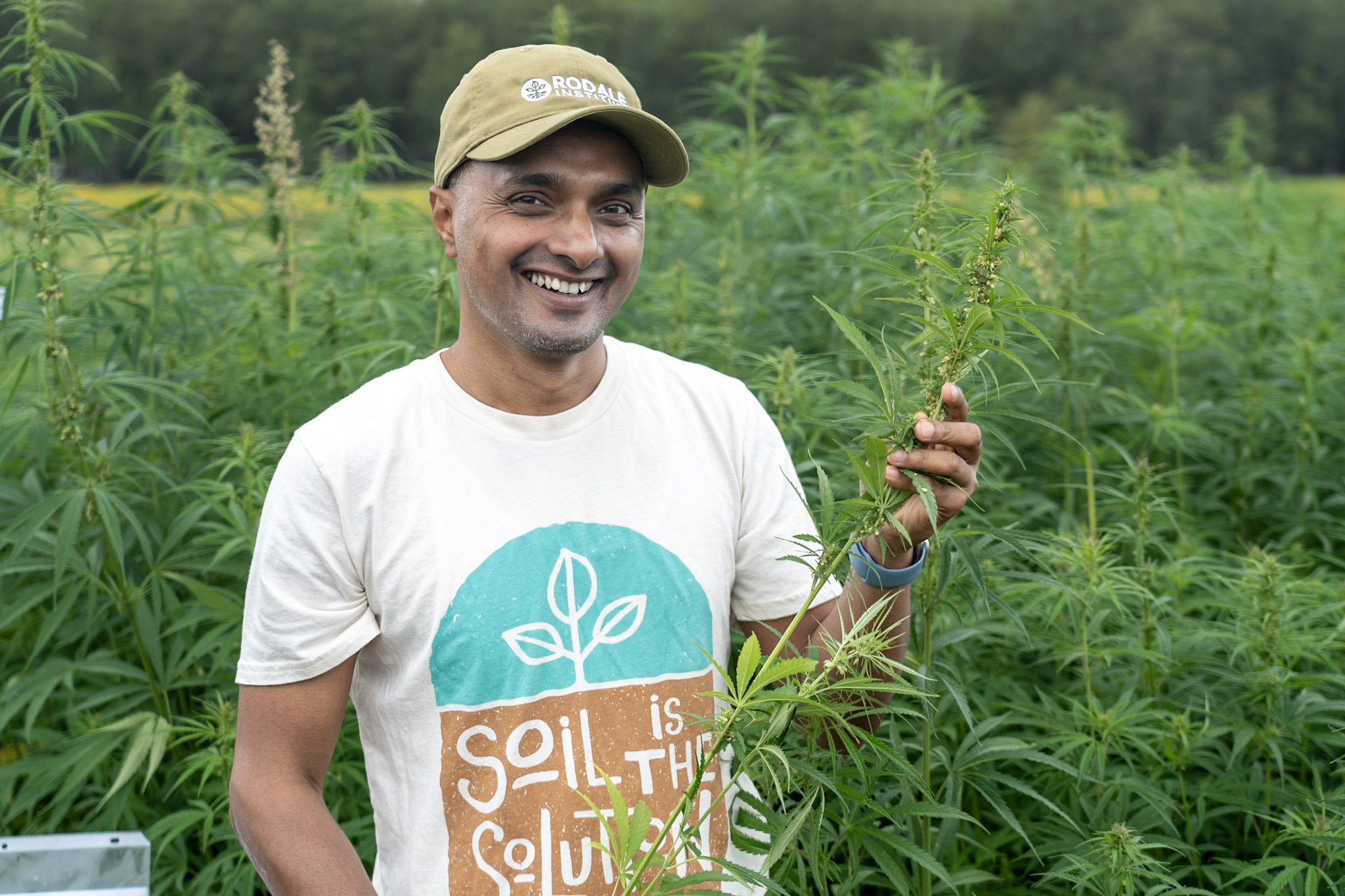
By testing these covers against two distinct planting windows—mid-May and early June—researchers are gathering data on:
- Seedling Emergence Rates: Counting the success of stand establishment.
- Weed Pressure Indices: Measuring how effectively the cover crop residue suppresses competitive biomass.
- Nitrogen Dynamics: Using leaf nitrogen levels to determine if the vetch-rye mix reduces the need for supplemental fertilization.
- Soil Health Indicators: Assessing organic matter, water-stable aggregates, and infiltration rates, which act as a proxy for the long-term resilience of the farm’s ecosystem.
Official Responses and Stakeholder Perspectives
The project is a collaborative effort involving soil scientists, agronomists, and local farmers. For those at the Rodale Institute, the goal is to bridge the gap between academic research and the practical realities of a working farm.
"We are moving toward a model where the farmer doesn’t have to choose between productivity and sustainability," says a spokesperson for the project. "The data consistently shows that by working with the soil—using cover crops to manage moisture and nitrogen—we are producing a higher-quality stalk that is more attractive to textile processors. We aren’t just growing hemp; we are growing a superior fiber."
The Pennsylvania Department of Agriculture, in supporting this work, emphasizes the economic implications. With the state looking to diversify its agricultural portfolio, establishing a robust supply chain for industrial hemp could revitalize rural infrastructure. By providing farmers with science-based guidance, the state is effectively lowering the barrier to entry for growers who might otherwise be wary of the risks associated with an "unpredictable" specialty crop.
Implications: The Future of Pennsylvania Hemp
The implications of this research extend far beyond the borders of the Kutztown experimental plots. For the estimated 400 growers and stakeholders targeted by this outreach program, the findings could fundamentally alter the economics of fiber hemp.
1. Achieving Consistency
The greatest hurdle for any new industry is the lack of a standardized product. By identifying the exact planting window and cover crop management strategy that yields the most uniform fiber, the Rodale Institute is helping Pennsylvania farmers create a consistent, reliable supply of raw material for manufacturers.
2. Economic Resilience
The reliance on heavy fertilizer inputs is a major drain on farm profitability. If researchers can prove that cover crops provide the necessary nitrogen and soil structure to produce high-quality fiber, farmers can significantly reduce their input costs. This increases the profit margin per acre, making hemp a more attractive crop compared to traditional corn or soy rotations.
3. Regenerative Agriculture as a Standard
The shift toward no-till systems and cover-cropping isn’t just about hemp; it’s about the health of Pennsylvania’s soil. By proving that fiber hemp can be grown using regenerative techniques, the project positions Pennsylvania as a leader in sustainable agriculture. As brands in the fashion and construction industries seek out "climate-smart" materials, Pennsylvania-grown hemp will have a distinct market advantage.
4. Knowledge Dissemination
The project’s commitment to outreach is the final piece of the puzzle. Through field days, webinars, and peer-reviewed fact sheets, the Institute is ensuring that the knowledge generated in the lab does not stay there. By the conclusion of the 2027 season, growers will have a comprehensive toolkit—a "field guide" to successful fiber hemp production that accounts for the nuances of their local environment.
Conclusion
As the project moves into its final phases, the message is clear: the future of Pennsylvania agriculture lies in the careful stewardship of the land. By treating the soil as a living system and respecting the biological timing of the crop, Pennsylvania’s fiber hemp farmers are positioning themselves at the forefront of a global shift toward sustainable manufacturing. With the guidance of the Rodale Institute and the support of the Commonwealth, the hemp stalks currently rising in Kutztown may very well be the foundation of a new, resilient, and profitable agricultural era.

 Nila Kartika Wati
 Layla Zulfa

