

 Nana Wu

 Dwi Wanna

 Suro Senen

 Evan Lee Salim

 Siti Muinah
By Coral Beach, Managing Editor
Updated October 23, 2026
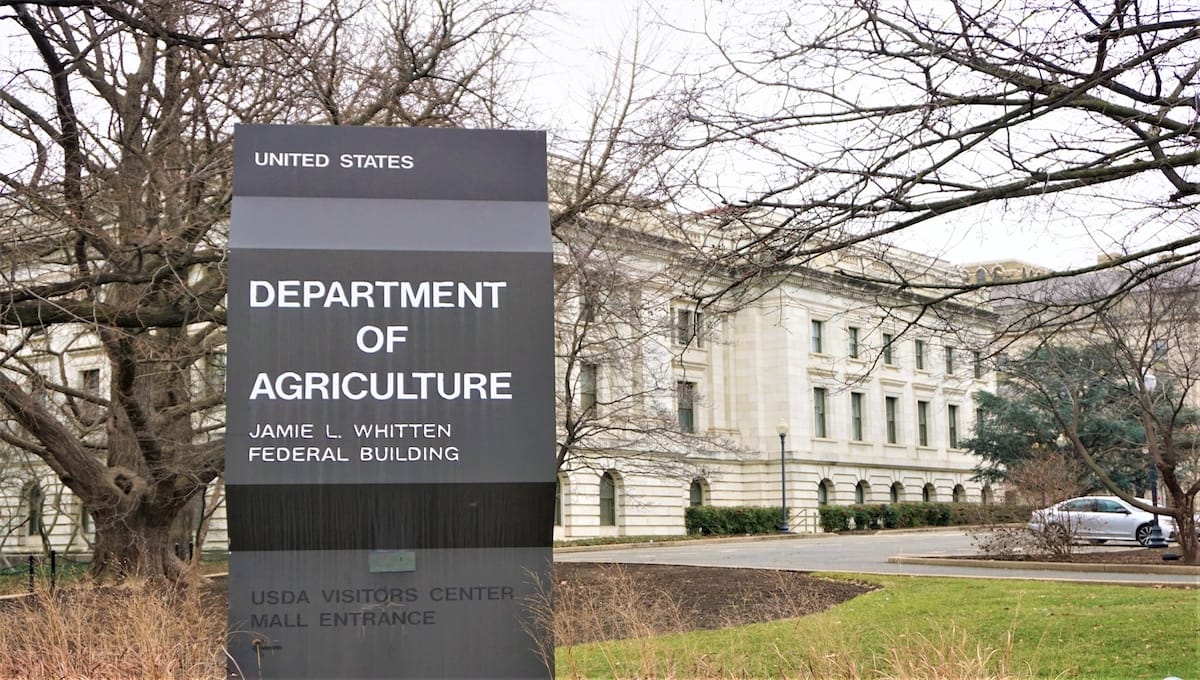
A federal judge in the Northern District of California has issued a temporary injunction halting the U.S. Department of Agriculture’s (USDA) controversial reorganization plan. The ruling effectively prevents the agency from closing regional offices, terminating staff, or proceeding with mandatory employee relocations for at least two months. This legal intervention marks a significant victory for government employee unions, who have long argued that the department’s efforts to restructure its internal operations circumvent congressional authority and threaten the stability of vital public health and research initiatives.
The court’s decision, which remains in effect through December 1, 2026, aligns with the expiration date of the current continuing resolution passed by the U.S. House of Representatives to maintain federal funding. As the deadline approaches, the USDA faces a narrowing window to justify its restructuring objectives before a skeptical Congress.
The Core Conflict: Legislative Authority vs. Executive Action
At the heart of the litigation is a fundamental dispute over the separation of powers. The lawsuit, brought forward by unions representing thousands of government employees, asserts that the USDA’s reorganization plans rely on the illegal reprogramming of congressional appropriations.
"Congress did not contemplate the USDA using its appropriated funds to shut down offices or relocate employees," the unions stated in their motion. "To the contrary, Congress was actively working to restrict the agency’s ability to do so."
The plaintiffs argue that by diverting funds earmarked for specific departmental operations into a massive, multi-year reorganization project, the USDA has essentially bypassed the power of the purse held exclusively by the legislative branch. Under the U.S. Constitution, federal agencies are restricted to spending taxpayer funds in accordance with the specific directives and limitations set by Congress. The union claims that the USDA’s actions represent an overreach that prioritizes administrative consolidation over the agency’s primary mandate of serving the American public and maintaining a safe food supply.
A Chronology of Controversy: From Planning to Injunction
The path to this federal injunction has been marked by mounting friction between USDA leadership and its workforce. The controversy dates back to July 2025, when the department first unveiled its intent to fundamentally alter its operational footprint.
- July 2025: The USDA announces its initial vision for departmental reorganization, citing a need for improved efficiency and better service delivery.
- Early 2026: Throughout the spring, reports surface regarding the mass exodus of veteran staff. Research and data analytics units under the Research, Education, and Economics (REE) umbrella show signs of significant attrition.
- April 2026: The department releases updated, more granular plans for the closure of regional offices and the forced relocation of hundreds of employees from Washington, D.C., to various facilities across the country.
- Summer 2026: The nation experiences its largest-ever Cyclospora outbreak. The crisis exposes potential vulnerabilities in the Agricultural Research Center (BARC), as critics point out that the facility’s research capabilities had been severely hampered by the department’s ongoing reorganization efforts.
- October 2026: A federal judge in the Northern District of California grants a stay on the reorganization, citing the ongoing litigation regarding the unauthorized use of congressional appropriations. The stay is set to expire on December 1.
Impact on Public Health: The Cyclospora Precedent
One of the most damning pieces of evidence presented by critics of the reorganization is the timing of the summer’s historic Cyclospora outbreak. The Agricultural Research Service’s (ARS) research center in Beltsville, MD, had been in the process of scaling down its operations and relocating key staff when the outbreak occurred.
Public health experts and union representatives have argued that the degradation of specialized research capacity directly hampered the federal government’s ability to respond to the spike in cases. By breaking up established teams and forcing senior scientists to choose between relocating to new, untested facilities or resigning, the USDA inadvertently created a "brain drain" at the exact moment the public needed expert analysis.
The Cyclospora incident has become a focal point for lawmakers who argue that the USDA’s reorganization is not merely an administrative exercise, but a policy shift that endangers food safety. Critics emphasize that once institutional knowledge is lost through the resignation of experienced personnel, it cannot be easily replaced.
Detailed Structural Changes: The "New" USDA
The USDA’s reorganization plan is expansive, targeting some of the most critical arms of the federal government. The proposed restructuring includes:
The Food Safety and Inspection Service (FSIS)
The department plans to move the headquarters of the FSIS to a new National Food Safety Center in Urbandale, Iowa. While proponents suggest that moving the agency closer to the heart of American agricultural production will improve oversight, critics contend that distancing the regulatory arm from the policymaking hubs in Washington will isolate the agency and reduce its political and operational effectiveness.
The Research, Education, and Economics (REE) Umbrella
The reorganization targets several high-profile agencies under the REE umbrella, including:
- The National Institute of Food and Agriculture (NIFA)
- The Economic Research Service (ERS)
- The National Agricultural Statistics Service (NASS)
These agencies are slated for relocation, a move the USDA claims will reduce costs. However, opponents note that these agencies provide the backbone for agricultural economic policy. The plan also includes the redistribution of programs from the Beltsville Agricultural Research Center to various locations, including a new science center in Athens, Georgia.

Supporting Data: The Cost of Attrition
The debate over the reorganization is happening against the backdrop of a massive loss of federal expertise. According to federal employment data, the USDA has experienced a significant decline in its workforce since the start of the current administration.
In fiscal year 2025 and the first quarter of fiscal year 2026 alone, the department lost more than 20,000 staffers. Many of those who departed were not administrative clerks, but veterans with advanced degrees and decades of technical expertise in fields ranging from food safety to agricultural economics.
Legislators have voiced grave concerns that the loss of this human capital, combined with the logistical chaos of the proposed relocations, will result in a long-term deterioration of the USDA’s capacity to conduct rigorous research. When a scientist with 20 years of experience leaves the agency, the loss is measured not just in salary savings, but in the lost ability to manage complex, multi-year research projects that ensure the safety of the U.S. food supply.
Implications for the Future
As the December 1 deadline approaches, the USDA finds itself in a precarious position. When the current continuing resolution expires, the department will be required to negotiate with a Congress that has shown increasing resistance to its restructuring goals.
The federal court’s injunction serves as a temporary shield for the workforce, but it also highlights the systemic tension between the executive branch’s desire for administrative control and the legislative branch’s role in oversight. If the reorganization continues after the December deadline, it will likely be under the shadow of intense congressional scrutiny and continued legal challenges.
For now, the thousands of employees slated for relocation or termination have received a reprieve. However, the future of the USDA’s operational structure—and its ability to protect public health—remains a subject of intense national debate. Whether the agency can convince lawmakers that its reorganization plan is a necessary evolution, or whether it will be forced to return to its previous structure, will be determined in the halls of Congress in the coming weeks.
Food Safety News is a nonprofit, reader-funded organization. Your tax-free gifts ensure that we can continue to provide in-depth, independent reporting on food safety, public health, and government accountability. Please consider supporting our work.


