
 Jia Lissa
 Raul Delapena Setiawan

 Asro

 Layla Zulfa

 Sagoh
 Muslim

In a move that marks a watershed moment for the circular economy, outdoor apparel titan Patagonia has officially dismantled the digital walls separating its new collections from its pre-owned inventory. After nine years of maintaining "Worn Wear" as a standalone website, the company has integrated its secondhand marketplace directly into its primary e-commerce platform.
This strategic shift means that customers browsing for a new jacket or pair of trousers will now see pre-owned options listed side-by-side with brand-new inventory. Shoppers can compare prices, materials, and availability in real-time, adding both new and used items to the same digital shopping cart. Perhaps most significantly, the company has unified the post-purchase experience, ensuring that both categories of apparel are fully backed by Patagonia’s industry-leading Ironclad Guarantee warranty.
For an industry that has historically kept secondhand goods sequestered in "boutique" silos, Patagonia’s transition represents a radical departure from the status quo. While other major fashion brands, such as Eileen Fisher with its "Renew" collection, continue to operate distinct, separate web addresses for their resale efforts, Patagonia is betting that true sustainability requires normalization—not segregation.
The Evolution of Worn Wear: A Chronological Journey
The integration of Worn Wear is not a sudden pivot but the culmination of nearly a decade of experimentation and infrastructure building.
- 2015–2017: The Proof of Concept: Patagonia launched the Worn Wear initiative as a bold experiment to encourage customers to repair their gear rather than replace it. Initially, the program focused heavily on education and pop-up repair events, establishing a cultural beachhead for the brand’s anti-consumerist ethos.
- 2018–2022: Scaling the Secondary Market: As consumer interest in sustainable fashion surged, Patagonia expanded Worn Wear into a full-scale e-commerce operation. During this phase, the company relied heavily on external partnerships—most notably with Trove, a software company that managed the complex logistics of individual, one-of-a-kind inventory.
- 2023–2025: The Infrastructure Overhaul: Recognizing that a separate site created friction for the average consumer, leadership began a multiyear IT transformation. This phase involved re-engineering the company’s internal systems for inventory management, merchandising, and pricing to handle the unique complexities of resale.
- 2026 and Beyond: The Unified Front: With the recent site migration, Patagonia has moved into the era of "unified commerce," where the distinction between "new" and "pre-loved" is treated as a simple filter rather than a separate shopping destination.
The Logistics of "Units of One"
The transition to a unified site was far from a simple design tweak. It was, as Sam Brown, head of resale at Patagonia, describes it, a "massive internal effort" that required the company to build entirely new operational muscles.
Unlike new clothing, where a company might have 5,000 units of a single SKU (Stock Keeping Unit), used clothing involves "units of one." Every item is unique—varying in wear, tear, and repair history. Integrating this into a standard e-commerce flow required the company to overhaul its IT stack to accommodate:
- Dynamic Pricing Logic: Developing proprietary rules for how the condition of a garment affects its retail value.
- Discontinued Inventory Tracking: Finding ways to surface older, legacy items alongside current seasonal collections.
- Cross-Platform Merchandising: Harmonizing the creative design and user experience so that the shopping journey feels consistent regardless of the item’s origin.
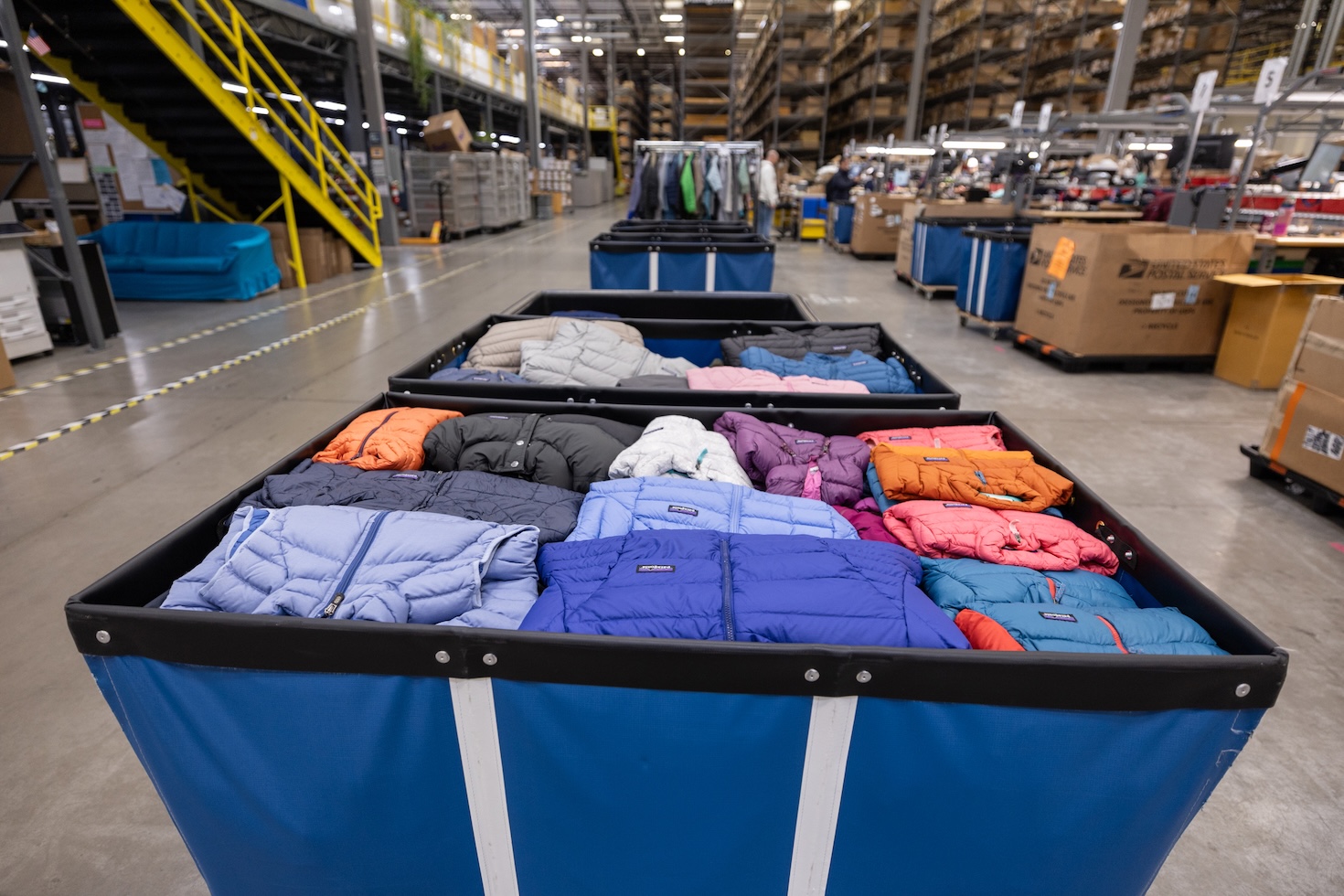
These functions were previously managed by third-party partner Trove, but by bringing these capabilities in-house, Patagonia has gained total control over its circular ecosystem. The result is a seamless digital interface that obscures the massive logistical complexity happening behind the scenes in Reno, Nevada.
Data-Driven Sustainability: The Impact of Scale
The rationale for this integration is rooted in both philosophy and hard data. Patagonia has identified that the raw materials used to create its apparel are the single largest contributor to its greenhouse gas emissions. By extending the life of every garment, the company directly mitigates the need for new raw material extraction.
The scale of this operation is significant. In fiscal year 2026, Patagonia verified and sold nearly 160,000 secondhand items, generating approximately $13 million in revenue. This is not merely a "green marketing" exercise; it is a burgeoning revenue stream that competes effectively with new apparel sales.
The logistics center in Reno serves as the beating heart of this operation. With a dedicated team of over 40 Worn Wear associates, the company processed roughly 230,000 pieces of clothing in 2025 alone. Approximately 80 percent of those items passed the rigorous verification process to be deemed fit for resale, a testament to the durability of the brand’s original manufacturing.
Expert Perspectives: The Courage of Integration
Ken Pucker, a professor of practice in sustainability at The Fletcher School at Tufts University, views Patagonia’s move as a litmus test for the retail industry.
"Most brands have been slow to integrate secondhand apparel into existing inventory for many reasons," Pucker explains. "They fear cannibalizing the sales of their new, high-margin collections. They are intimidated by the unpredictability of supply, and they are paralyzed by the complex work of pricing ‘units of one.’"
According to Pucker, this fear is why most competitors prefer to outsource their resale operations to third-party marketplaces. By keeping the entire process under its own roof, Patagonia is making a statement about brand integrity. "What Patagonia is doing is courageous," Pucker notes. "It forces the company to confront the total lifecycle of its products rather than just the initial sale."
Implications for the Future of Retail
The implications of this move extend far beyond Patagonia’s balance sheet. By exposing pre-owned items to the broad, mainstream customer base that visits the main website, Patagonia is actively normalizing the purchase of used goods.
"Our goal is to put this in front of more eyeballs and create a more normalized experience where the choices are more seamless," says Sam Brown.
This strategy targets the "sustainability-curious" shopper—the customer who might not have gone out of their way to visit a dedicated resale site but who is more than happy to purchase a pre-owned item if it appears as an affordable, high-quality option in their primary shopping cart.
Key Challenges and Opportunities
- Cannibalization vs. Retention: While some retail analysts worry that selling used goods will eat into new sales, Patagonia’s data suggests the opposite: it builds long-term brand loyalty. A customer who buys a pre-owned Patagonia jacket is more likely to trust the brand’s quality and return for future purchases.
- Operational Complexity: The "massive internal effort" cited by Brown serves as a warning to other retailers. Re-tooling inventory systems to treat used and new products as peers is a monumental task that requires long-term capital investment.
- Circular Economy Leadership: By proving that it can scale its internal resale operations, Patagonia has set a new benchmark for corporate responsibility. It challenges the fashion industry to stop viewing sustainability as a "separate department" or a "side project" and start treating it as a core component of digital merchandising.
Conclusion: A New Standard
Patagonia’s decision to sunset the standalone Worn Wear website is a signal that the company has moved past the "experimental" phase of the circular economy. By merging its new and used offerings, the company is effectively saying that in a world of climate crisis, the most sustainable item is the one that is already made.
For the consumer, the transition is a win: lower price points, a wider variety of options, and the peace of mind that comes with the brand’s warranty. For the retail industry, however, it is a challenge. Patagonia has cleared the path for how to manage, price, and sell reclaimed inventory at scale. Whether other brands have the courage—and the IT infrastructure—to follow suit remains the defining question of the next decade in fashion.
As Patagonia continues to process hundreds of thousands of garments in Reno, the message is clear: the future of retail is not just about what is new, but about what lasts. Through this integration, Patagonia isn’t just selling clothes; it is curating a circular legacy that prioritizes the planet alongside profit.


 Nila Kartika Wati

 Dwi Wanna