

 Nana Wu

 Dwi Wanna

 Suro Senen

 Evan Lee Salim

 Iffa Jayyana
Introduction: A Universal Rhythm
“She carries a gun to fight off snakes and hyenas,” the Somali taxi driver remarked as he navigated the morning traffic toward Madrid airport. He was describing his 90-year-old grandmother, a nomadic pastoralist who manages a herd of 2,000 camels, goats, sheep, and cows, traversing 45 kilometers of arid terrain to find fresh grazing.
It was a serendipitous encounter, underscoring the enduring, global relevance of pastoralism. I was traveling to Spain to immerse myself in transhumance—the seasonal movement of livestock between mountain and lowland pastures. While modern industrial agriculture relies on heavy machinery and carbon-intensive supply chains, transhumance offers a radically different paradigm: a food system shaped by place, dictated by the seasons, and strictly bound by ecological limits. In an era defined by intensifying drought, catastrophic wildfires, and systemic food insecurity, these age-old systems are not mere relics; they are blueprints for future resilience.
Main Facts: The Los Apisquillos Collective
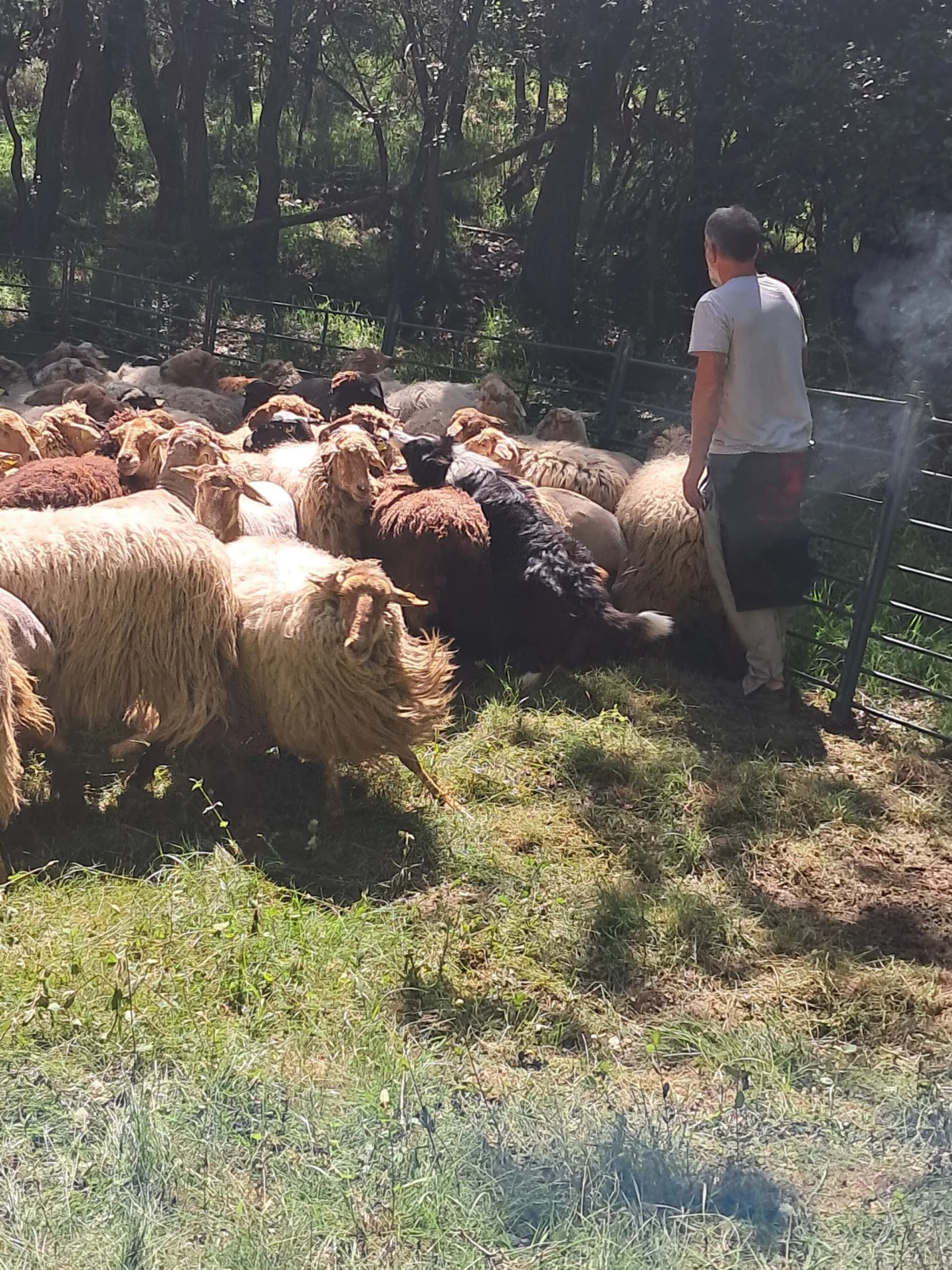
My destination was the Sierra del Rincón in the mountains northeast of Madrid. Here, I joined the Los Apisquillos Collective, an organization established 26 years ago in the village of Puebla de la Sierra. Their mission is as much about cultural preservation as it is about food production.
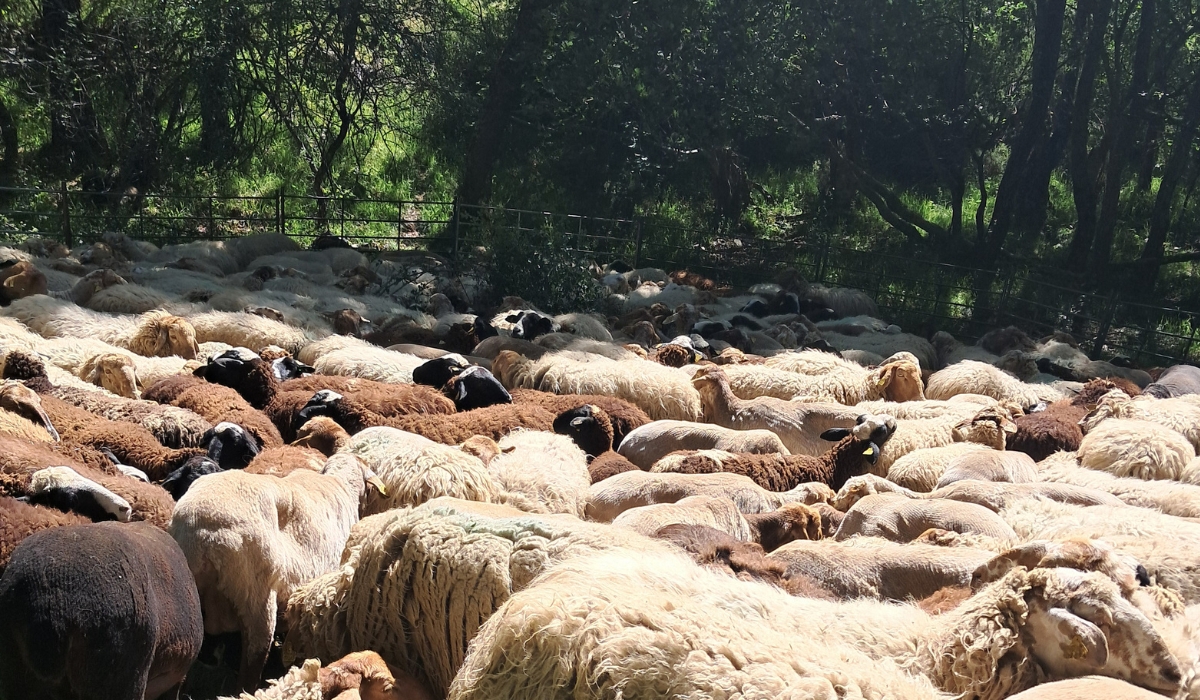
The collective manages a flock of roughly 500 sheep and goats, focusing on rare, native breeds like the Rubia de El Molar and Negra Castellana. These animals are not just sources of high-quality meat and dairy; they serve as living, breathing environmental managers. By grazing mountain pastures and forest fringes, they perform a critical service: the maintenance of fire-resilient landscapes.
Chronology: From King Alfonso X to Modern Festivals
The history of Spanish transhumance is written into the very geography of the Iberian Peninsula. Its formal recognition dates back to 1273, when King Alfonso X, known as “The Wise,” established the Honrado Concejo de la Mesta. This association of transhumant farmers was granted significant legal and political power to protect the cañadas—the 125,000-kilometer network of livestock trails that crisscross the country.
- 1273: King Alfonso X institutionalizes the Mesta, protecting the rights of migratory shepherds.
- 20th Century: The rise of motorized transport and industrialization leads to the decline of walking livestock. Traditional routes fall into disrepair or are blocked by urban sprawl.
- 1998: The Los Apisquillos Collective is founded to revive traditional pastoral practices in the Madrid mountains.
- Annual Cycle: Every autumn, the collective leads their flock on a two-week, 240km trek to Casa de Campo, the largest public park in Madrid. The sheep graze the park through the winter, allowing the high-altitude mountain pastures to recover.
- Spring: Following the lambing season in the safety of the park, the flock returns to the mountains, where the cycle of shearing and pasture management begins anew.
Supporting Data: The Ecological Highway
The cañadas are more than just dirt paths; they are "ecological highways" that facilitate the movement of biodiversity across the peninsula. Lawrence Sudlow, an environmental consultant and advisor for the advocacy group Trashumancia y Naturaleza, emphasizes that these routes are essential for genetic diversity and ecosystem health.
The contrast between industrial livestock transport and traditional walking is stark. Today, most shepherds rely on lorries to move their animals. While this is marketed as "efficient," the data tells a different story. When livestock stop walking the trails, the routes become overgrown with brush. This biomass, no longer consumed or trampled by animals, becomes a tinderbox.
Manuel Bahíllo, secretary for Trashumancia y Naturaleza, explains the danger clearly: “Transhumance controls the overgrowth of scrubland. If it ceases, all that biomass remains in the landscape, acting as fuel that only needs a spark to ignite.”
This is not just theory. Javier, a farmer from Sanabria, notes, “Fires can be stopped; that has been proven time and again. The fire’s intensity is directly correlated to the amount of forest fuel it encounters.” By neglecting the cañadas, we are essentially abandoning a natural fire-prevention system that has functioned for centuries.
Official Responses and Perspectives
The movement to reinstate transhumance is gaining momentum, championed by figures like Juan García of Ecologists in Action. García is a fierce defender of both the ancestral culture and the physical infrastructure of the livestock trails.
“It is the right thing to do,” says Lawrence Sudlow, dismissing the argument that modern economic models render walking livestock obsolete. He views transhumance as a cultural right that provides ecosystem services far more valuable than the short-term cost savings of trucking animals.
This sentiment is echoed at the annual shearing festival in Puebla de la Sierra. The event is a joyous, communal affair. While the actual shearing of the sheep seems to operate on "shepherd’s time"—relaxed and unhurried—the festival is a hive of learning. Participants use traditional carding machines and improvised drop spindles, learning to value the raw wool that is so often treated as a waste product in modern markets. It is here that one truly understands the "formidable team" of García, Sudlow, and Álvaro, a founder of the collective whose quiet, steady leadership grounds the entire project.
Implications: A Model for the Future
The implications of this work extend far beyond the borders of Spain. As we face a changing climate, we must ask: what makes a food system resilient?
1. Fire Management and Climate Adaptation
The "scrubbing up" of the Spanish landscape is a microcosm of a global problem. As rural populations decline and traditional land management fades, forests become neglected and wildfire risk skyrockets. Transhumance offers a decentralized, carbon-neutral solution to fuel management.
2. Biodiversity and Soil Health
The migration of herds mimics the natural movement of wild ungulates, preventing the overgrazing of specific patches and encouraging the spread of seeds and nutrients across vast distances. This maintains high-value ecosystems that cannot be replicated by sedentary, intensive farming.
3. Cultural and Psychological Well-being
There is something undeniably restorative about the pace of transhumance. As the saying goes, “Solvitur ambulando”—it is solved by walking. The act of moving through the landscape connects the shepherd, the animal, and the consumer in a way that industrial supply chains never can. It satisfies a primitive, ancestral pull toward a slower, more connected way of existence.
4. Food Security
By relying on seasonal pulses of grass rather than fossil-fuel-dependent grain imports, transhumant pastoralism is inherently more secure. It is a system that adapts to the constraints of the land rather than attempting to conquer them. Whether it is a 90-year-old Somali woman moving her camels or the Los Apisquillos Collective heading toward Madrid, the lesson is the same: resilience comes from mobility and respect for the cycles of the Earth.
Conclusion: The Path Forward
The story of Spain’s transhumance is a call to action. We must protect the cañadas not just as historical artifacts, but as essential infrastructure for a sustainable future. We need to invest in the rural populations who are willing to do the hard, necessary work of shepherding.
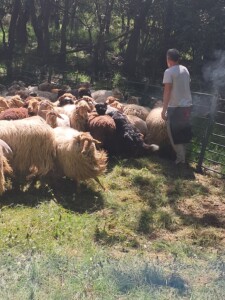
As I watched the flock of Los Apisquillos gather, I realized that the most "modern" solution to our current crises might be one of our oldest traditions. By supporting the restoration of these ancient routes, we aren’t just saving a way of life—we are preserving the very land that sustains us. We must choose to walk alongside these traditions, because as the shepherds know, when you move with the seasons, you find a rhythm that can endure even the harshest of climates.
For those interested in exploring this further, Juan García’s insights on wildfire management offer a deep dive into the science of grazing, while the Sustainable Food Trust’s reports on UK grazing provide a complementary look at how these principles can be adapted to different regional contexts.

 Asep Darmawan

 Layla Zulfa

