Nana Wu

 Dwi Wanna

 Suro Senen

 Evan Lee Salim

As the global technology sector pivots toward an increasingly autonomous future, the impending public listing of Anthropic—the San Francisco-based powerhouse behind the Claude AI series—stands as the defining financial event of 2026. With market analysts projecting a staggering valuation of up to $2 trillion, the company is poised to shatter records, transforming early-stage venture capital firms and strategic individual investors into multi-billionaires overnight.
While the IPO is the primary focus of market speculation, the current private market valuation of $965 billion already paints a picture of unprecedented wealth creation. According to recent data shared by Bloomberg, the cap table of Anthropic has become a who’s-who of Silicon Valley royalty and institutional heavyweights. From former Google leadership to legendary venture firms, the stakes in this leading AI lab have generated returns that were once considered mathematically impossible in the private markets.
The Chronology of an AI Titan
To understand how Anthropic reached a near-trillion-dollar valuation, one must trace its trajectory from an ambitious research laboratory to a global infrastructure necessity.
2021: The Seed and Series A
Anthropic began as a safety-focused research venture. When Eric Schmidt participated in the 2021 Series A round, the startup was valued at a modest $461 million. At the time, generative AI was still considered a nascent academic pursuit rather than a commercial juggernaut.
2023: The Scaling Phase
As the generative AI boom accelerated following the release of foundational large language models (LLMs), Anthropic moved into high gear. The 2023 Series C round marked a pivotal moment, attracting significant capital from firms like Spark Capital and Sound Ventures. At this stage, the valuation climbed to $5 billion—a significant jump, yet a fraction of its current standing.
2024–2025: The Hyper-Growth Era
The influx of massive, multi-billion-dollar commitments from institutional investors and the scaling of Claude’s enterprise capabilities saw valuations jump from $183 billion to $380 billion, and eventually toward the $1 trillion mark. This period was defined by the "arms race" mentality, where firms scrambled to secure equity in the few companies capable of challenging the incumbents in the AI space.
Supporting Data: A Breakdown of the Stakeholders
The sheer scale of the returns on Anthropic is difficult to reconcile with traditional investment cycles. Here is how the key players currently stand, based on their most recent valuations:
Eric Schmidt: The Early Visionary
The former Google CEO demonstrated prescience in 2021. Today, holding approximately 1% of the company, his early investment has matured into a nearly $10 billion position. His involvement highlights the "insider effect," where industry veterans identified the potential for AGI (Artificial General Intelligence) long before the broader public markets caught on.
Iconiq: The Late-Stage Powerhouse
Iconiq’s entry in 2025—a $6 billion check written when the company was already valued at $183 billion—was a bold bet on long-term terminal value. That investment has already appreciated to $17 billion. Analysts suggest that if the IPO hits the $2 trillion mark, this single position could yield a total gain that rivals the entire annual revenue of some Fortune 500 companies.
Menlo Ventures: The Series D Leader
As the lead for the Series D round, Menlo Ventures cemented its status as a premier AI investor. Having funneled over $1 billion into the company, their position is currently valued at $14 billion. This underscores the strategy of "doubling down"—a hallmark of successful venture capital firms that identify winners early and defend their ownership stakes through multiple funding rounds.
Sequoia: The Institutional Giant
Sequoia’s entry earlier this year, at a $380 billion valuation, serves as a testament to the continued belief in Anthropic’s growth ceiling. Despite entering when the company was already a "decacorn" many times over, their $3 billion investment has already more than doubled in value, proving that even at the "late" stage of AI development, significant alpha remains available.

Sound Ventures: The Star-Powered Bet
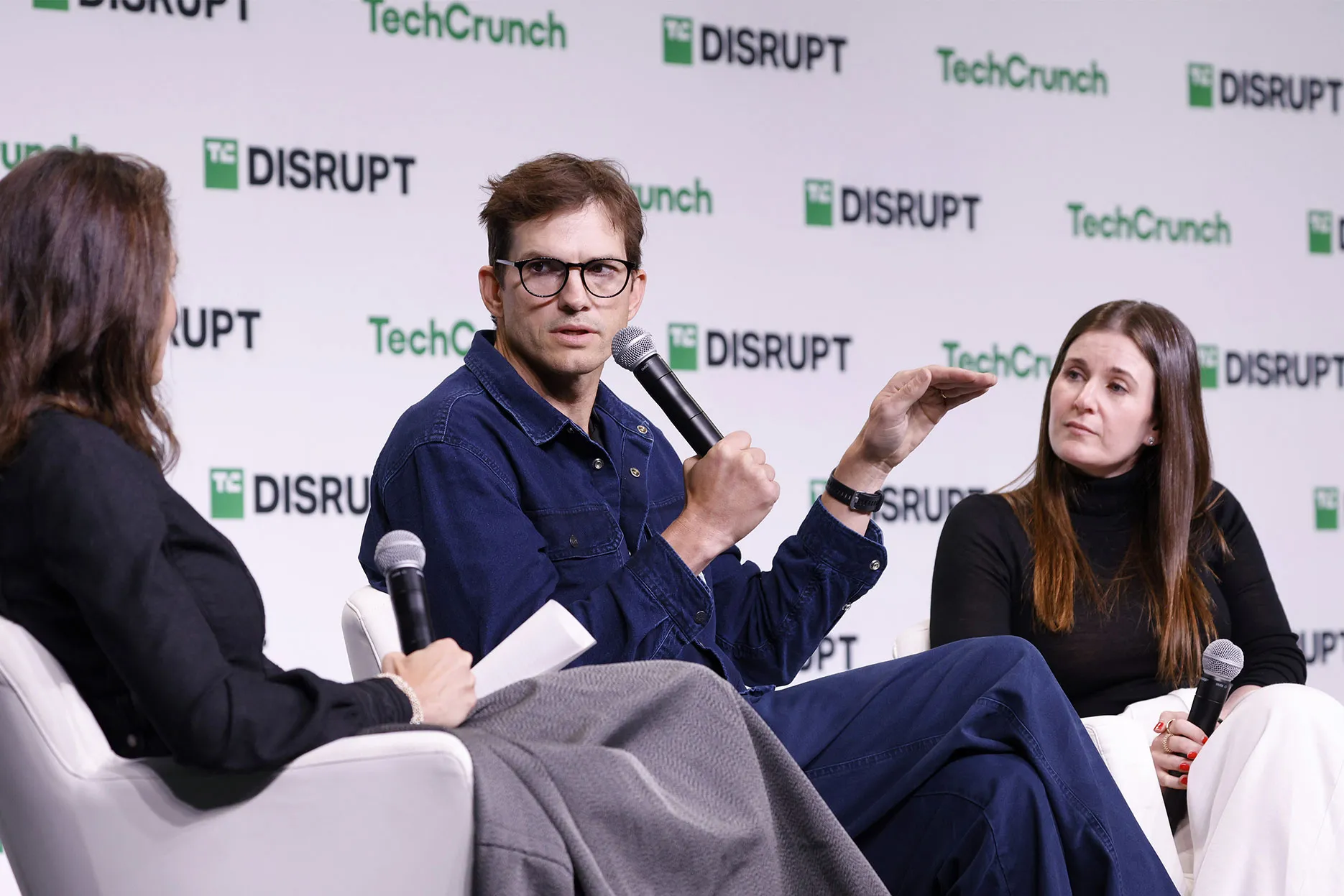
The firm co-founded by actor Ashton Kutcher and Guy Oseary has been a major player in the Anthropic story. Starting with $35 million in 2023 and adding $400 million in follow-on capital, Sound Ventures is currently sitting on billions in value. While Kutcher’s recent departure to start his own firm marks a transition in his professional career, the legacy of his Sound Ventures strategy remains one of the most successful media-VC crossover stories in history.
Spark Capital: The Boardroom Influence
Perhaps the most impressive return belongs to Spark Capital. With a $75 million investment during the 2023 Series C round, their stake has grown more than 90-fold to $7 billion. As the only VC firm currently holding a board seat, their influence on the company’s trajectory—and their financial windfall—is unparalleled.
Official Responses and Market Sentiment
While the firms involved have largely remained quiet, citing SEC regulations regarding pre-IPO communication, the sentiment among analysts is one of profound optimism.
"We are witnessing the creation of the most valuable private company in the history of the modern internet," says one senior analyst at a major investment bank. "The transition from a research-focused lab to a global enterprise utility has been managed with a level of capital efficiency that is rare in the AI sector."
Anthropic leadership has consistently emphasized their "Constitutional AI" approach, focusing on safety and reliability. This narrative of responsible development has made them a preferred partner for enterprises and governments alike, which in turn has bolstered the confidence of their primary investors.
The Broader Implications
The Anthropic IPO is not merely a financial event; it is a signal of the broader economic shift toward an AI-integrated economy. The implications are three-fold:
1. The Validation of the "AI Infrastructure" Thesis
The massive valuations of Anthropic, OpenAI, and other competitors suggest that the market is valuing "intelligence as a service" on par with, or even above, physical industrial infrastructure. The ability of these firms to absorb and productively utilize billions of dollars in capital has proven that the AI industry is no longer in a "vaporware" phase.
2. The Shift in Venture Capital Strategy
The success of early backers in Anthropic is forcing a rethink of venture capital timelines. Historically, VCs expected 7-to-10-year horizons. The rapid appreciation of Anthropic’s equity suggests that, in the AI era, value is being captured at a much higher velocity. This is likely to lead to more aggressive "growth-stage" investing and a potential increase in private equity firms competing for space on AI cap tables.
3. The Regulatory Landscape
As Anthropic prepares for the public markets, it will face increased scrutiny regarding its safety protocols, its partnerships with cloud providers, and its competitive stance against other tech giants. A $2 trillion valuation brings with it the weight of immense public responsibility. Investors are not just betting on a software company; they are betting on the company that might define the ethical and operational standards for the future of artificial intelligence.
Conclusion
As we look toward the final quarter of 2026, all eyes are on the regulatory filings that will precede the Anthropic IPO. The numbers—the $10 billion stakes, the 90-fold returns, and the multi-trillion-dollar valuations—are staggering. Yet, beyond the headlines and the massive wealth accumulation, the story of Anthropic remains one of the most significant technological migrations in human history. Whether the market sustains these valuations remains to be seen, but for the backers who dared to write the checks when the technology was still in its infancy, the rewards have been nothing short of transformative.


 Pevita Pearce