

 Nana Wu

 Dwi Wanna

 Suro Senen

 Evan Lee Salim

 Asro
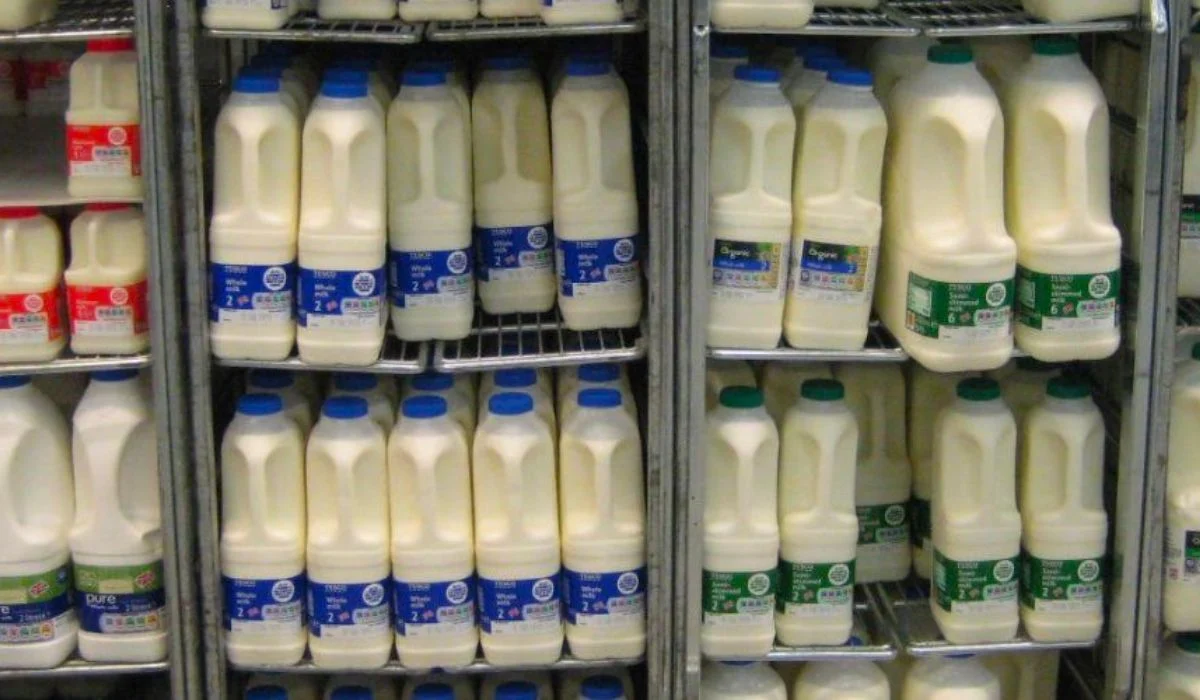
At a time when governments are once again championing productivity, technological advancement, and agricultural intensification, a critical question is being overlooked: Are we mistaking high output for resilience? As the British dairy sector undergoes a seismic shift—marked by the consolidation of farms and a surge in “mega dairies”—the Sustainable Food Trust (SFT) warns that the push for efficiency may be creating a dangerously brittle food system.
Robert Barbour, Senior Research Manager at the SFT, argues that by tethering our food security to intensive, high-input models, the UK is increasingly vulnerable to global instability, climate breakdown, and ecological degradation.
Main Facts: The Consolidation Crisis
The British dairy landscape is experiencing a contraction that is as rapid as it is profound. Two recent developments have crystallized this trend. First, an investigation by Andrew Wasley for The Bureau of Investigative Journalism revealed that the number of "mega dairies"—operations housing hundreds or even thousands of cows in permanent indoor confinement—has doubled over the last decade.
Simultaneously, data indicates that the total number of dairy farms in Great Britain has plummeted, falling below 7,000 for the first time in history. To put this in perspective, there are now less than half the number of dairy farms operating compared to the early 2000s.
This is not merely a change in farm size; it is a fundamental shift in the philosophy of production. These mega-facilities rely on a "high-input, high-output" model that necessitates constant imports of synthetic fertilizers, energy, and grain-based feed. While supporters argue this is the inevitable march of agricultural modernization, critics view it as an industrial trap that prioritizes short-term profit margins over the long-term viability of the land and the nation.
Chronology: From Diversified Farming to Industrial Monoculture
The trajectory of the British dairy sector can be categorized into three distinct phases over the last twenty-five years:
- The Era of Stability (Early 2000s): The UK maintained over 14,000 dairy farms. These operations were largely decentralized, with a greater emphasis on grazing and local resource utilization.
- The Squeeze (2005–2015): A decade defined by stagnating milk prices and rising costs for fuel and imported inputs. Farmers faced a binary choice: scale up or exit the industry. This period saw the first significant wave of farm closures and the rise of larger, more capital-intensive enterprises.
- The Industrial Surge (2016–Present): Despite record volatility in global commodity markets, the drive for "mega" operations intensified. Recent years have seen the proliferation of indoor-housed systems, driven by the perceived need for total environmental control. However, this period has also coincided with the most extreme climate events in modern British history, exposing the fragility of these controlled environments.
Supporting Data: The Case for Resilience
The argument for "agroecological" livestock farming—often dismissed by policymakers as "unrealistic"—is gaining renewed scientific validity as global supply chains falter.
The Fertilizer Dependency
A significant portion of global nitrogen fertilizer is transported through the Straits of Hormuz. Recent geopolitical tensions in this region served as a stark reminder of how dependent UK intensive agriculture is on global trade routes. Low-input, pasture-based systems offer a hedge against this volatility; they utilize the dung of grazing animals and nitrogen-fixing plants like clover, decoupling food production from fossil-fuel-intensive imports.
The Land Use Paradox
Critics of intensive farming often cite the "yield gap," claiming that smaller farms cannot feed the population. However, research from Wageningen University suggests otherwise. In a global food system where livestock are fed entirely on human-inedible feeds (grass, forage, and byproducts), land use could be optimized more efficiently. Feeding cattle on pasture requires only a fraction of the arable land currently dedicated to growing grain for feed, potentially freeing up space for more resilient, diverse crop production.
The Climate Reality
The Climate Change Committee’s latest report offers a grim forecast:
- Land Degradation: Without adaptation, "high-quality" farmland in England and Wales could shrink from 38% to just 11% by 2050 under a 2°C warming scenario.
- Yield Declines: Soil erosion is expected to increase by 15%.
- Weather Extremes: England has experienced three of its five worst harvests on record in the last decade, pushing the five-year average below the 20-year average—an unprecedented reversal in agricultural productivity.
Official Responses and Strategic Perspectives
The government’s stance remains caught between the desire for global market competitiveness and the necessity of national security. A government security assessment published earlier this year concluded that the UK would likely be unable to "maintain food security if ecosystem collapse drives geopolitical competition for food."
Despite this, current agricultural policy continues to reward narrow definitions of efficiency. By focusing on product-level footprints, the government inadvertently incentivizes intensive systems, which often appear more efficient on a per-liter basis but ignore the system-wide environmental and social costs.
Patrick Holden, CEO of the Sustainable Food Trust and a working dairy farmer, argues that we must redefine "efficiency." In his view, a truly efficient farm is one that operates within the ecological limits of its land. "The long-term future of livestock farming should not be judged solely by how much it produces," Holden notes, "but by whether it works within the ecological limits of the land while supporting food security, farmer livelihoods, animal welfare, and environmental health."
Implications: The Path Forward
The rise of Big Dairy is a symptom of a broader, deeper malaise: the commodification of food at the expense of ecological stability. The implications for the future of British agriculture are significant:
1. The Death of Rural Diversity
The loss of thousands of family-run farms represents more than just a change in employment; it is the loss of "eyes on the land." Small and medium-sized farms are the stewards of rural biodiversity. When they are replaced by monolithic mega-dairies, we lose the nuanced management that sustains healthy soil and wildlife.
2. A Shift in Diet is Inevitable
Transitioning to an agroecological model requires a shift in how we eat. A move toward pasture-based systems will likely result in lower total volumes of meat and dairy. However, this production would be of higher quality and, crucially, would complement our croplands rather than competing with them. Smaller quantities of high-nutrient animal products, consumed as part of a diverse, plant-rich diet, represent a more sustainable path to health and food security.
3. Redefining Success
If the UK continues to measure agricultural success purely by output, it risks accelerating the collapse of the very foundations—soil, climate, and community—upon which it depends. The "era of permanent stress," as identified by experts monitoring global food chains, necessitates a move toward systems that are designed to fail-safe, rather than fail-catastrophically.
Conclusion
As the UK stands at a crossroads, the temptation to double down on industrial intensification will be strong. But as the data shows, the path to true food security lies not in bigger, more intensive farms, but in smarter, more integrated, and more resilient landscapes.
We must ask ourselves: do we want a food system that is designed for the best-case scenario of stable global markets, or one that is prepared for the reality of a changing climate and a fractured geopolitical landscape? The answer, according to the Sustainable Food Trust, is clear. We must shift our focus from "how much" to "how," ensuring that the future of British farming is rooted in the health of the land, the dignity of the farmer, and the resilience of the nation.
Read more about the SFT’s vision for the future of farming and their ongoing advocacy during London Climate Week at SustainableFoodTrust.org.

 Nila Kartika Wati
 Layla Zulfa

