
 Dwi Wanna
 Nana Wu
 Muslim
 Reynand Wu
 Ammar Sabilarrohman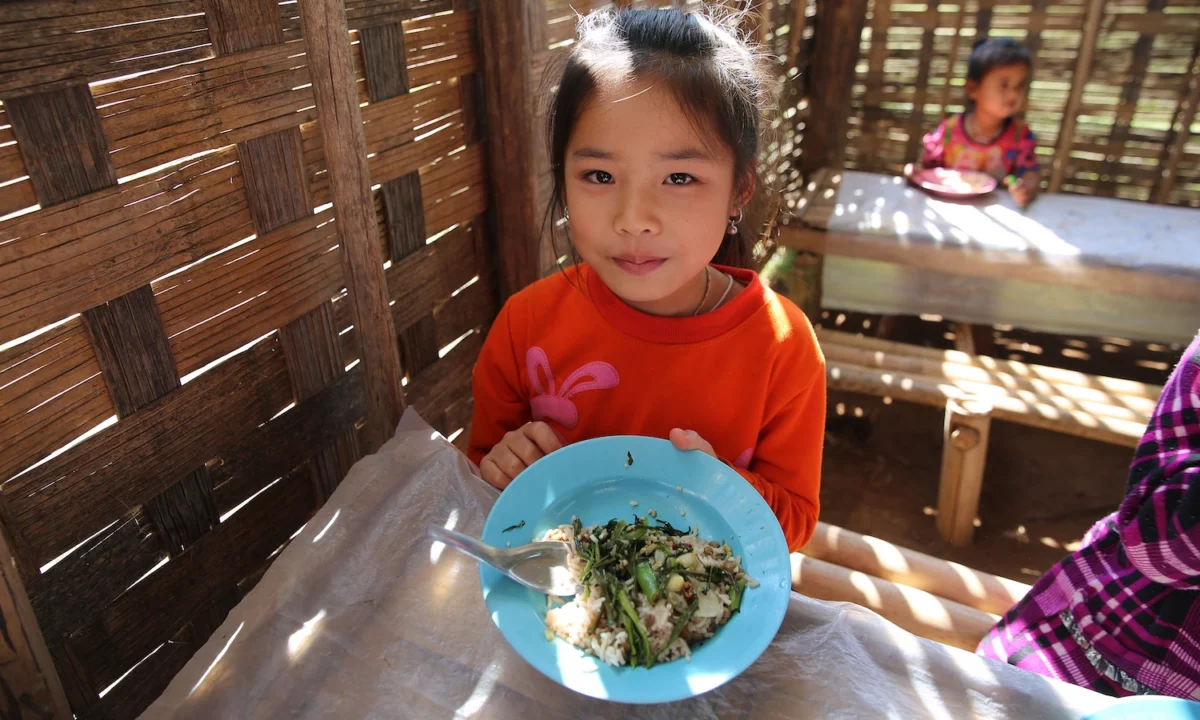
In the complex landscape of global development, the most profound solution to our systemic food crises may not be found in high-tech laboratories or legislative chambers, but on the plastic trays of school lunchrooms. As nations grapple with climate change, economic volatility, and rising rates of childhood malnutrition, school meal programs have emerged as a cornerstone of public policy—a vital investment that serves as a bridge between education, health, and sustainable agriculture.
According to the World Food Programme (WFP), the world is witnessing an "unprecedented expansion" of these programs. In 2024, school meals reached a staggering 466 million children worldwide, marking an increase of 80 million students served in just four years. Yet, despite this momentum, a significant gap persists: The Rockefeller Foundation estimates that 300 million school-aged children still go without a reliable, nutritious meal on any given day. As the world aims to close this gap, the focus is shifting from simple calorie provision to a "regenerative" model that nourishes children while revitalizing local ecosystems.
The Evolution of School Feeding: A Brief Chronology
The trajectory of school feeding has transformed from a localized charity effort into a sophisticated, multi-national economic strategy.
- Mid-20th Century: Early iterations of school feeding were largely humanitarian, designed as short-term relief in post-conflict or famine-prone regions.
- The 2010s: Nations like Brazil began pioneering the "Home-Grown School Feeding" (HGSF) model, which explicitly linked government procurement to local smallholder farmers, moving away from imported food aid.
- 2021–2022: The formation of the School Meals Coalition marked a turning point, gathering governments and NGOs to commit to universal access to nutritious meals by 2030.
- 2023–2024: The era of the "Regenerative Transition." Recent partnerships, including the expansion of the WFP’s work with the Novo Nordisk Foundation and the Grundfos Foundation, have moved beyond just feeding children to focusing on climate-resilient kitchens, agroecology, and soil health.
The Economic and Nutritional Case: Supporting Data
The argument for universal school feeding is backed by compelling data. Analysts with The Rockefeller Foundation suggest that transitioning to regenerative, locally-sourced meal programs could unlock as much as US$3 trillion in global economic productivity. This figure is derived from the long-term benefits of improved cognitive development, reduced healthcare costs, and the stimulation of rural economies.
When a school chooses to buy its carrots, beans, and grains from a neighboring farm rather than a global distributor, the "multiplier effect" kicks in. Smallholder farmers gain a guaranteed, predictable market for their goods. In Brazil, the National School Feeding Program has set a mandate that 45 percent of all food procured must come from smallholder farmers. Similarly, Guatemala has successfully sourced 70 percent of its school food from family farms since 2017.
These programs are not merely charity; they are essential infrastructure. In Angola, 30 percent of the national school feeding budget is now ring-fenced specifically for small-scale local producers. This fiscal policy shifts the school from being a consumer of global commodities to an anchor institution for local agricultural development.
Official Perspectives: The Push for Systemic Change
Leaders in the global food sector emphasize that the value of these meals extends far beyond the cafeteria.
"School meals are one of the best investments a government can make in a nation’s future," says Cindy McCain, Executive Director of the WFP. Her organization is currently scaling up its efforts, most notably through Phase III of its partnership with the Novo Nordisk and Grundfos Foundations. This initiative, which focuses on Rwanda, Uganda, Kenya, and Ethiopia, targets 366,000 additional children and supports over 57,000 smallholder farmers.
The shift toward "regenerative" feeding is a deliberate attempt to combat climate change. Sara Farley, Vice President of the Food Portfolio at The Rockefeller Foundation, notes, "A regenerative school meal really starts with the farmers. The regenerative or agroecological transition is about building the climate resilience of those that would feed all of humanity."
Farley’s vision is that the school lunch tray becomes a catalyst for biodiversity, water conservation, and soil health. By prioritizing crops grown through agroecological practices, schools are essentially voting with their procurement budgets, incentivizing farmers to adopt methods that sequester carbon and protect the environment.
Global Case Studies in Innovation
The implementation of these programs varies by geography, but the trend toward localized, tech-enabled, and sustainable systems is universal.
The Digital Bridge: Luxembourg
In Europe, Luxembourg has introduced "Supply4Future," a digital platform that serves as a marketplace connecting schools directly with local producers. By removing middlemen, the platform ensures that farmers receive a fair price while schools gain access to fresher, seasonal produce.
Holistic Integration: Kenya
Kenya’s approach is perhaps the most comprehensive. As the country ramps up toward universal school meals by 2030, its program does not stop at the kitchen door. It integrates clean cooking technologies—reducing indoor air pollution—with school gardens and rigorous support for smallholder farmers, creating a closed-loop system that teaches children about agriculture while feeding them.
The Power of Coalitions
The School Meals Coalition acts as the nerve center for this global movement. With 113 national governments, 6 regional bodies, and over 150 partner organizations, the coalition provides the technical assistance, policy research, and procurement support that smaller nations need to launch or upgrade their programs. It is an example of what happens when international silos are broken down in favor of a shared, measurable goal.
Implications: The Path Toward 2030
As we look toward the 2030 deadline for the Sustainable Development Goals, the implications of these programs are profound.
1. Nutrition Security
The primary goal remains the eradication of childhood hunger. However, the definition of success has evolved from "food security" (calories) to "nutrition security" (nutrient density). By sourcing locally, schools can provide fresher, more diverse foods that are culturally appropriate and nutritionally superior.
2. Climate Resilience
Schools are among the largest public purchasers of food. By adopting "green procurement" policies, they can significantly reduce the carbon footprint of the food supply chain. This includes the use of school gardens as educational tools to teach the next generation about the importance of soil health and biodiversity.
3. Economic Stability
For many smallholder farmers, particularly women who make up a large portion of the agricultural workforce, selling to schools provides a stable income that allows them to invest in their own farms. This stability ripples outward, reducing poverty and improving living standards in rural communities.
4. Year-Round Continuity
A persistent challenge, particularly in the United States and other developed nations, is the "summer slide"—the period when schools are closed and children who rely on these meals lose their primary source of nutrition. The next phase of global policy must address this gap, ensuring that the infrastructure built during the school year remains active through community centers, summer camps, or home-delivery programs.
Conclusion: A Model for the Future
The progress documented by the World Food Programme, The Rockefeller Foundation, and their partners proves that collaborative investment works. When public funds are coupled with private-sector innovation and grounded in the needs of local farmers, the result is a powerful, self-sustaining ecosystem.
The school lunch tray has become a symbol of our collective priorities. Every time a government or a donor chooses to invest in a school meal program, they are doing more than feeding a child; they are educating a student, empowering a farmer, and healing a landscape. As the global community moves forward, the "regenerative school meal" stands as a primary vehicle for transforming the global food system into one that is truly equitable, resilient, and life-sustaining.
The work is far from finished, but the blueprint is clear. By continuing to prioritize the nutritional and economic health of our youngest generation, we are building a foundation for a future where no child goes hungry, and where the act of eating is, in itself, an act of restoration for the planet.

 Azzam Bilal Chamdy
 Ali Ikhwan