

 Nana Wu

 Dwi Wanna

 Suro Senen

 Evan Lee Salim

 Asro
Introduction
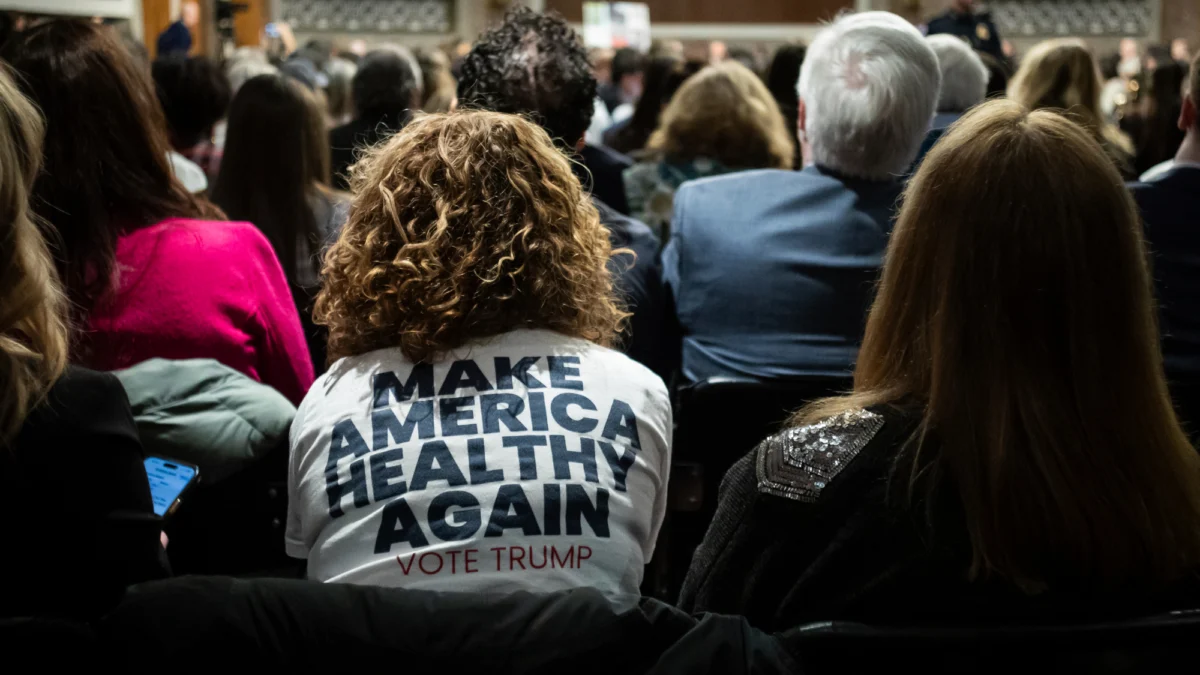
The "Make America Healthy Again" (MAHA) movement, spearheaded by Health and Human Services Secretary Robert F. Kennedy Jr., served as a potent rallying cry during the 2024 presidential campaign. By tapping into deep-seated frustrations with the American food system, the pharmaceutical industry, and perceived institutional failures, the platform secured the fervent backing of rural America—a demographic that delivered a resounding mandate for the Trump administration.
However, a new, comprehensive survey conducted by the Associated Press and KFF reveals a striking paradox: while the ideological alignment between rural voters and the MAHA agenda remains strong, the practical, on-the-ground reality is telling a different story. According to the poll of 2,241 rural residents, a vast majority believe these high-profile policy shifts have failed to improve the health outcomes of their local communities. As the administration enters a critical phase of its tenure, this data suggests that the "health revolution" promised to the heartland is encountering a significant implementation gap.
The Core Data: A Statistical Reality Check
The AP/KFF findings present a complex picture of modern rural sentiment. While nearly half of rural voters express general support for the principles championed by Kennedy and his allies, the metrics regarding tangible community impact are starkly negative.
The Breakdown of Sentiment
- The Disconnect: Approximately 80 percent of rural voters surveyed stated that the administration’s healthcare platform has had either a "negative effect" or "no impact" on the health of the people in their specific regions.
- The Supporter Paradox: Perhaps most telling is the response from those who self-identify as MAHA supporters. Even within this core base, 68 percent admitted that despite their ideological support for Kennedy’s vision, they have not witnessed any personal or community-level improvements in health.
- The Political Context: This skepticism exists in a landscape where 7 out of 10 rural voters cast their ballots for Donald Trump in 2024. The data suggests that rural loyalty to the political brand remains, even as the efficacy of its signature health initiatives is increasingly called into question by those living under them.
Chronology of a Movement: From Campaign Rhetoric to Policy Implementation
To understand the current frustration, one must trace the rapid evolution of the MAHA platform from a populist slogan to federal mandate.
Phase 1: The Campaign (Early 2024 – Nov 2024)
During the campaign, the MAHA platform focused on identifying "villains" in the American health crisis: ultra-processed food conglomerates, the CDC’s vaccine recommendations, and the influence of "Big Pharma" and "Big Ag" on federal dietary guidelines. The messaging was simple, visceral, and highly effective at connecting with voters who felt ignored by mainstream health institutions.
Phase 2: The Confirmation (Jan 2025)
In January 2025, the Senate confirmation hearings for Robert F. Kennedy Jr. became a focal point for the movement. Thousands of supporters gathered in Washington, D.C., signaling a high-water mark for the administration’s populist energy. The hearings emphasized a total overhaul of the nation’s health bureaucracy, promising a return to "natural health" and a departure from chronic disease management.
Phase 3: The Implementation (Mid-2025 – Present)
Post-confirmation, the administration moved quickly to alter the landscape. This included:
- Vaccine Policy Reversals: A shift away from traditional, long-standing immunization guidelines.
- Dietary Pivot: The promotion of a diet heavily centered on red meat and animal protein, explicitly moving away from previous USDA-aligned dietary pyramids.
- Food Industry Confrontation: High-profile public criticism of ultra-processed food manufacturers, aiming to shift the national palate toward "whole foods."
The Policy Pillars and Their Rural Implications
The MAHA platform is not monolithic; it is a collection of specific, often controversial, interventions. Each carries distinct implications for rural economies and public health.
The War on Ultra-Processed Foods
The administration’s crusade against ultra-processed foods (UPFs) has been a cornerstone of their rhetoric. While proponents argue that reducing UPFs is essential for curbing obesity and diabetes, rural communities—which often face "food deserts" where fresh produce is expensive and less accessible—are finding it difficult to translate these federal directives into their daily shopping habits. Without structural economic support, the rhetoric is often viewed as disconnected from the realities of rural grocery store shelves.
The Red-Meat-Heavy Diet
The administration has aggressively promoted a diet rich in red meat, framing it as a return to traditional, ancestral eating. While this resonates with the cattle-ranching culture of many rural states, nutritionists have raised alarms regarding the cardiovascular implications of such a shift. The poll suggests that rural voters are noticing this mismatch, as the "health benefits" promised by this diet change remain elusive to the average citizen.
Questioning Vaccine Mandates
The administration’s skepticism toward traditional vaccine policies has been a major draw for the base. However, as public health officials have warned, the long-term impact of these policy shifts on community immunity levels is a subject of intense debate. The survey data implies that even for those who support this skepticism, the absence of a viable alternative or a clear improvement in overall community wellness has left a vacuum that is starting to erode confidence.
Official Responses and Political Repercussions
The White House and the Department of Health and Human Services (HHS) have largely framed the negative polling data as a result of "entrenched interests" fighting back against necessary change.
"We are in the early stages of a generational transformation," a spokesperson for the HHS stated in response to the AP/KFF findings. "The status quo of the last forty years has left rural America behind. It takes time for the dismantling of corrupt systems to translate into improved health outcomes at the dinner table."
However, political analysts argue that the administration is playing a dangerous game. By tying their political fate to the success of these health policies, they have created a "high-stakes" environment where tangible results are expected. If the metrics—which include everything from life expectancy and chronic disease rates to healthcare costs—do not move in a positive direction, the administration risks alienating the very demographic that acted as the cornerstone of their 2024 victory.
Implications: The Future of the Populist Health Movement
The fractures in the MAHA movement are becoming impossible to ignore. As reported by Mother Jones in partnership with the Food & Environment Reporting Network, the initial excitement surrounding the MAHA movement is increasingly being tempered by the harsh reality of stagnant health metrics.
1. The Risk of Populist Fatigue
If the MAHA platform continues to underperform, there is a risk of "populist fatigue." Voters who feel that their health outcomes have not improved—or have worsened—may begin to view the rhetoric as empty. The movement has effectively dismantled the previous consensus, but it has yet to build a functional, widely accepted alternative.
2. The Economic Factor
Many rural voters are discovering that "healthy" eating is a luxury. Without federal subsidies or economic policies that make whole foods more affordable than processed goods, the administration’s dietary goals will likely remain a lifestyle choice for the affluent rather than a public health success for the rural poor.
3. The 2026/2028 Political Calculus
As the midterm elections approach, the MAHA platform will likely become a primary litmus test for congressional candidates. If the current trend in the AP/KFF data continues, the administration may find itself defending a record that is failing to improve the daily lives of its most loyal supporters.
Conclusion
The MAHA movement represents one of the most radical shifts in American public health policy in decades. It has successfully mobilized millions by questioning the foundations of the modern health-industrial complex. Yet, as the recent AP/KFF data underscores, political fervor is not a substitute for effective policy. For the rural voters who supported this change, the promise of a "healthier America" is currently stuck between an ambitious vision and a lack of tangible results. Unless the administration can bridge the gap between its rhetoric and the reality of rural healthcare, the very movement that helped secure their power may become the source of their greatest political vulnerability.
For more in-depth reporting on the intersection of food policy, environmental justice, and the evolving political landscape, continue to follow our ongoing series produced in partnership with the Food & Environment Reporting Network.

 Asep Darmawan

 Layla Zulfa

