

 Nana Wu

 Dwi Wanna

 Suro Senen

 Evan Lee Salim

 Laily UPN
By Editorial Staff
In an era defined by climate instability and a growing public disconnect from the origins of our nourishment, the call for agricultural reform has never been more urgent. For Patrick Holden, CEO and Founder of the Sustainable Food Trust (SFT), the last month has served as a profound microcosm of this global awakening. From the verdant fields of Ireland to the policy halls of Scotland, the boardrooms of New York, and the bustling squares of Turin, Holden’s recent travels illustrate a singular, surging reality: the transition toward sustainable, regenerative, and organic food systems is no longer a niche interest—it is a global imperative.
The Rising Tide: A New Generation Reclaims the Land
The journey began in Ballymaloe, Ireland, a location synonymous with the intersection of culinary excellence and agricultural integrity. Invited by Darina Allen to speak at the inaugural six-week Food and Farming course, Holden found himself addressing a demographic that challenges the narrative of an aging farming population.
The cohort, primarily composed of individuals in their 20s and 30s, represents a significant shift in career trajectories. These students are not merely studying agriculture as an academic pursuit; they are driven by a visceral desire to engage in direct food production. The existence of a lengthy waiting list for this course is a potent indicator of a broader trend: young people are increasingly seeking to "get back to the land," viewing farming not as a relic of the past, but as a critical profession for the future. For the SFT, this engagement is vital, as the longevity of the food system depends entirely on a new generation of stewards willing to manage the soil with foresight and ecological sensitivity.
Harmony in Food and Farming: Bridging the Policy Gap
Following his time in Ireland, Holden traveled to Scotland for a high-level summit co-hosted by The King’s Foundation, the SFT, and the Circular Bioeconomy Alliance (CBA). The event, themed "Harmony in Food and Farming," served as a critical nexus for policy makers and industry leaders.
Among the attendees were Angela Eagle, the Defra Secretary of State, and Chris van Tulleken, the author of Ultra-Processed People. Van Tulleken’s work has been instrumental in shifting public discourse, moving the focus from simple calorie counting to the systemic dangers of ultra-processed food consumption. His presence highlighted the growing recognition that the health of the planet and the health of the population are inextricably linked.
Crucially, the summit included senior representatives from major food companies and retailers. These organizations, often criticized for their slow adoption of sustainable practices, are now signaling a strategic pivot. There is a palpable awareness within the retail sector that consumer demand is shifting toward nature-friendly production. However, as the discussions revealed, this transition is fraught with ambiguity.
The "Regenerative" Conundrum: Defining the Future
A recurring theme throughout the month’s events was the conceptual haze surrounding the term "regenerative farming." While the term has become a buzzword in corporate sustainability reports, its practical application remains inconsistent.
Holden points to a troubling discrepancy in the UK: many farms now market themselves as "regenerative" while continuing to rely heavily on synthetic fertilizers and pesticides, including the regular application of glyphosate. This leads to a fundamental question of consumer trust: if a farm claims to be part of the solution but continues to utilize industrial-era inputs, is the label "regenerative" a meaningful indicator or merely a sophisticated form of greenwashing?
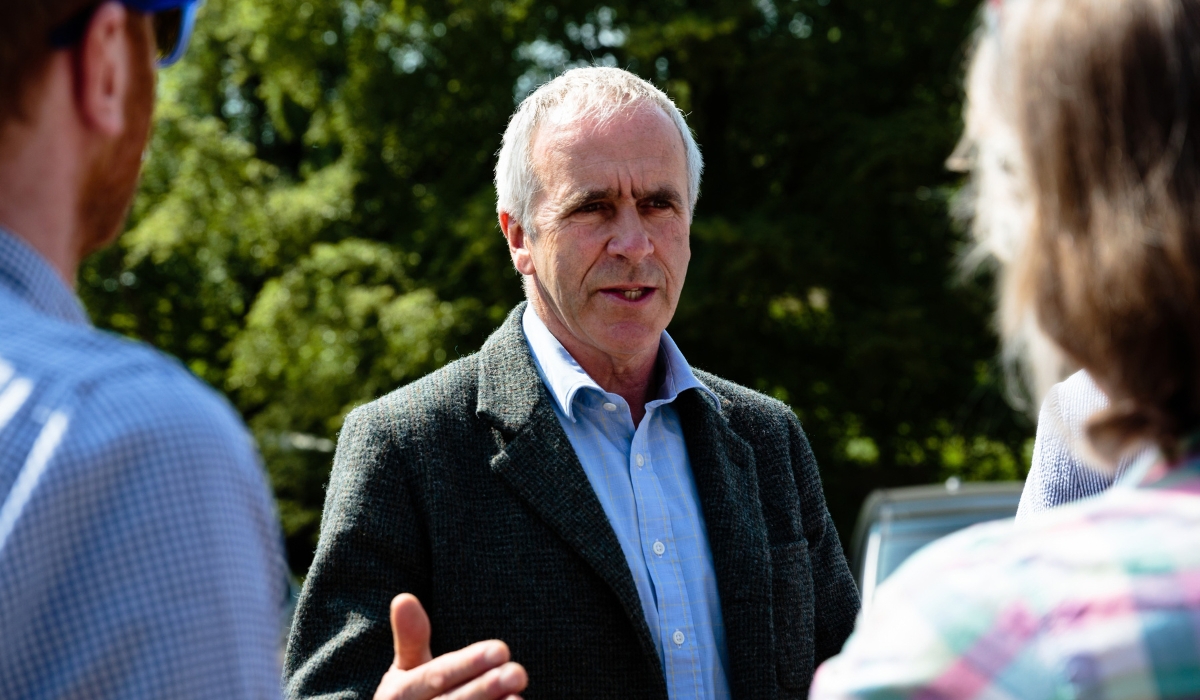
"What matters," Holden argues, "is that the people who buy their products have a right to know exactly what they’re paying for." The lack of a standardized, rigorous definition threatens to dilute the impact of truly regenerative practices. Without transparency, the term risks becoming an empty marketing slogan rather than a verifiable commitment to soil health and biodiversity.
Measurement as the Universal Language
Transitioning from the Scottish Highlands to the Real Organic Conference in upstate New York, the conversation deepened. Sharing a stage with Eliot Coleman, a pillar of the US organic horticultural movement, the panel tackled the tension between the established organic certification and the emerging regenerative movement.
The core concern: should regenerative farming be viewed as a threat to the organic movement, or as its logical evolution?
For Holden, the solution lies in a shift toward outcome-based metrics. The SFT’s primary contribution to this challenge is the Global Farm Metric (GFM). The logic is straightforward: if all agricultural initiatives—regardless of their specific philosophy—agreed to measure their impacts on climate, nature, and social health using a common framework, the entire industry could communicate using a single, transparent language.
By standardizing how we measure sustainability, the agricultural sector could provide the public with the clarity they need to make informed purchasing decisions. This would effectively strip away the ambiguity of marketing labels, replacing them with hard data regarding the environmental footprint of our food.
Expanding the Beacon: The US Initiative
In New York, during Climate Week, the focus shifted to the scalability of successful pilot projects. At a convening hosted by the Sustainable Markets Initiative (SMI), Holden highlighted the "Beacon Farms" project.
Beacon Farms are designed to be centers of excellence—working, profitable farms that demonstrate the economic and environmental viability of sustainable practices. Having successfully established roughly 50 such farms in the UK and expanding the project into Ireland earlier this year, the SFT is now setting its sights on the United States.
The initiative aims to partner with US organizations that share the SFT’s commitment to reconnecting the public with the land. By creating a transatlantic network of Beacon Farms, the project intends to provide a tangible blueprint for farmers looking to transition away from extractive models. This expansion represents a significant scaling of the SFT’s mission, moving from theoretical advocacy to on-the-ground implementation across diverse climates and agricultural landscapes.
Terra Madre and the Global Call for Biodiversity
The month concluded in Turin, Italy, at Terra Madre, the world’s premier gathering for the Slow Food movement. The event, which brings together thousands of farmers, food producers, and activists, served as a stark reminder of the sheer scale of the global sustainable food movement.
The atmosphere in Turin was one of mourning and resolve. The passing of Carlo Petrini, the visionary founder of Slow Food, cast a shadow over the event, marked by a poignant message of condolence from King Charles. Yet, the energy of the participants—numbering in the hundreds of thousands—was electric.
Walking through the streets of Turin, one could witness the diversity of the movement: small-scale indigenous farmers, innovative agro-ecologists, and policy advocates all converging under a shared vision of biodiversity, peace, and dialogue. It was a powerful demonstration that the "sustainable food movement" is not a monolithic entity, but a vibrant, polycentric global network.
Implications for the Future of Farming
The implications of these recent events are clear. The agricultural sector is at a crossroads. The combination of legislative pressure, shifting consumer preferences, and the undeniable reality of climate change is forcing a confrontation with the limitations of the current industrial food system.
However, the path forward is complex. As Holden’s travels have shown, there is a danger that the transition will be hijacked by corporate interests that prioritize superficial changes over fundamental systemic shifts. The "regenerative" label is currently the primary battleground for this struggle.
To ensure the success of this transition, three pillars must be prioritized:
- Standardization of Metrics: As advocated by the GFM, we must move toward an objective, common framework for measuring environmental and social outcomes.
- Radical Transparency: Consumers must have the right to know how their food is produced, moving beyond vague labels to verifiable data.
- Global Collaboration: The success of initiatives like Beacon Farms in the UK, Ireland, and now the US, demonstrates that shared knowledge and cross-border partnerships are essential for scaling sustainable practices.
Conclusion: A Realizable Ambition
As Patrick Holden returns from his month-long journey, the overarching message remains one of cautious optimism. The passion displayed by students in Ireland, the policy engagement in Scotland, the technical debates in New York, and the grassroots energy in Turin all point to a singular conclusion: the movement is gaining momentum.
A global transition toward truly sustainable, regenerative, and organic food and farming systems is not a utopian dream; it is an achievable, necessary, and increasingly urgent ambition. The work ahead will require rigorous measurement, unflinching transparency, and a steadfast commitment to the land. For those who believe in the future of food, the signal is clear: the time for incremental change has passed. The time for systemic transformation is now.

 Asep Darmawan

 Layla Zulfa

