 Jia Lissa
 Raul Delapena Setiawan

 Asro
 Layla Zulfa

 Sagoh
 Azzam Bilal Chamdy
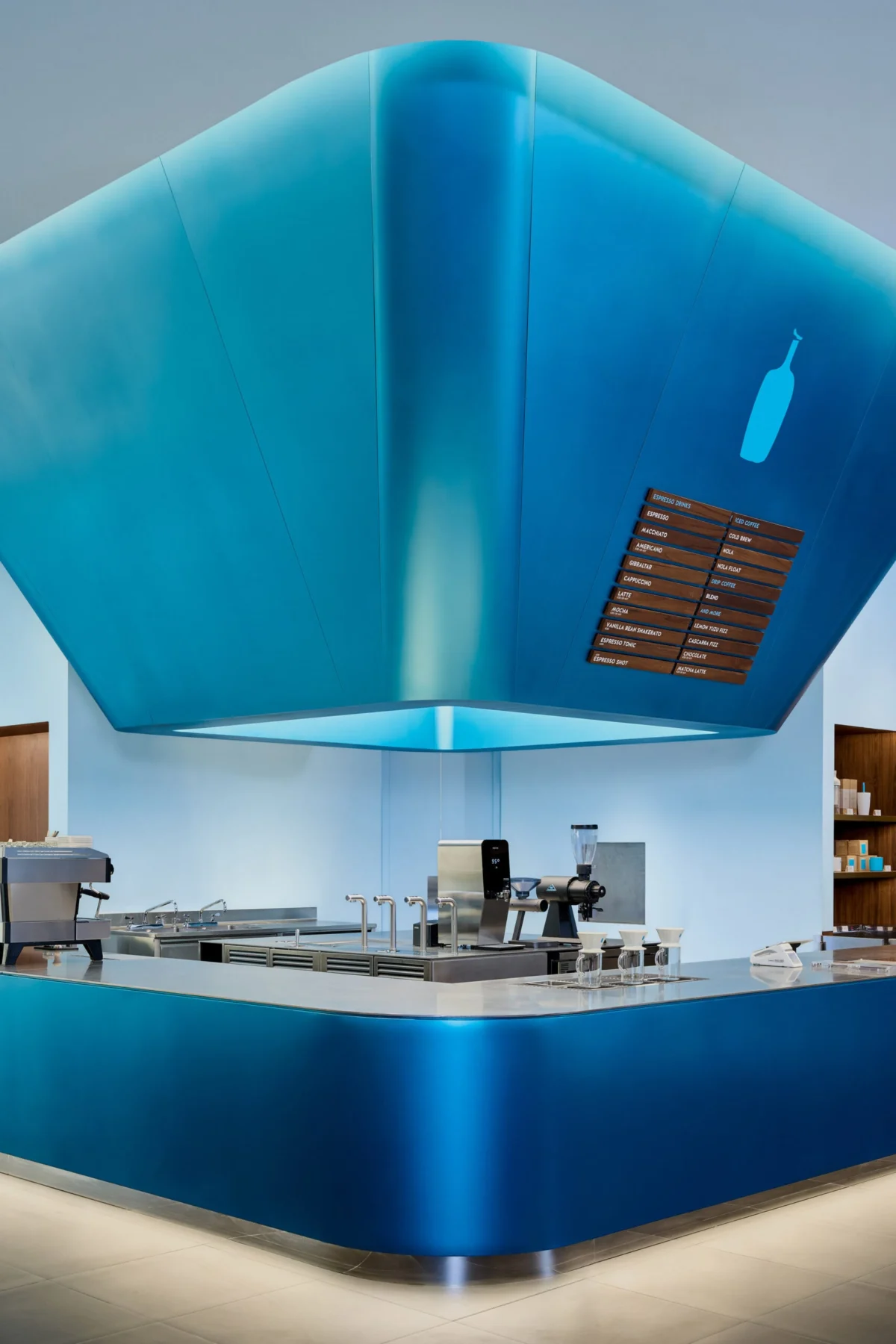
In the heart of Bangkok’s vibrant urban landscape, a new landmark has emerged—not in the form of a skyscraper or a temple, but as a sanctuary for coffee enthusiasts. Japanese design studio I IN has officially unveiled the interior for the first-ever Blue Bottle Coffee location in Thailand. The project is a masterful blend of the brand’s minimalist, global identity and the deep-rooted spiritual and aesthetic traditions of Thai culture.
By integrating the ethereal imagery of traditional lantern festivals with the rich, warm textures of indigenous teak, I IN has created more than just a retail space; they have engineered an immersive atmospheric experience that redefines the intersection of international branding and local heritage.
The Genesis of a Design: Main Facts and Concept
The Bangkok location, spanning 178 square meters, serves as a bridge between the clinical, high-efficiency aesthetic Blue Bottle Coffee is known for and the warm, emotive hospitality characteristic of Thailand.
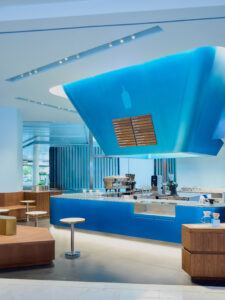
The centerpiece of the interior is the "Blue Lantern," a monumental sculptural installation suspended directly above the coffee drip station. Designed to capture the visual rhythm of thousands of paper lanterns released into the night sky during Thai festivals like Yi Peng, the structure acts as both a functional lighting element and an architectural anchor.
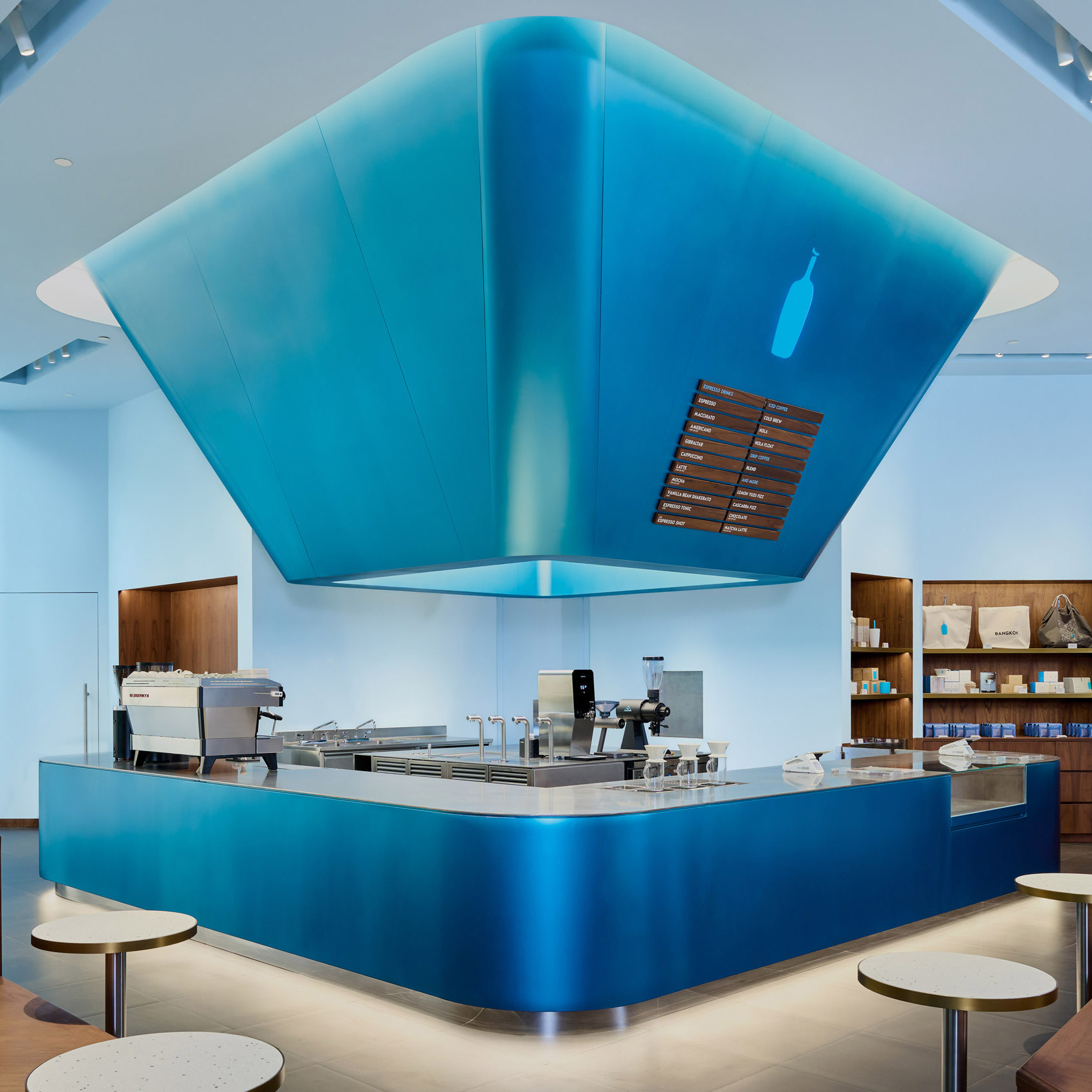
"The main idea came from Thailand’s traditional lantern festival," explains Yohei Terui, co-founder of I IN. "We wanted to capture the feeling of a lantern floating in the sky and bring that into the space in a contemporary way. This became what we call the Blue Lantern, a large sculptural element extending from the ceiling above the drip station."
The design choices were intentional from the outset. By placing the massive, cobalt-hued installation at the threshold of the cafe, the designers ensured that the space would have an immediate, indelible impact on visitors, establishing it as the store’s primary visual identity.
A Chronological Evolution of the Project
The journey to the opening of the Bangkok flagship was one of careful observation and cultural synthesis.
- Initial Site Analysis (Early 2026): I IN began the process by surveying the urban fabric of Bangkok. The designers were struck by the unique juxtaposition of modern city life and the pervasive, shimmering gold accents found in local architecture and street-side shrines.
- Conceptual Development (Mid-2026): During the design phase, the studio pivoted away from a strictly "Japanese" or "Western" aesthetic, opting instead to root the project in local material culture. This led to the selection of teak wood—a material often scrutinized in international design circles due to ecological concerns, but essential to the Northern Thai architectural vernacular.
- Installation and Detailing (Late 2026): The final months saw the integration of the "Blue Lantern" sculpture and the strategic application of gold leaf and brass accents. The goal was to mirror the visual contrast Terui observed during his walks through the city—where the muted, pale blues of the interior meet the "strong gold" flashes of the city’s exterior.
- Grand Opening: The cafe opened to the public in late 2026, marking a significant milestone for Blue Bottle Coffee’s expansion into Southeast Asia.
Materiality and Atmosphere: Supporting Data
The success of the Bangkok interior relies on a sophisticated material palette that balances weight and lightness.
The Teak Debate
The choice of teak wood for the furniture and fixtures was a deliberate, albeit bold, choice. In many Western markets, teak is avoided due to its historical association with illegal logging and deforestation. However, I IN argues for a more nuanced, localized approach to sustainability.
"Every country has their own approach to natural materials, depending on what is locally available and traditionally used," says Terui. By sourcing teak locally, the studio leaned into the material’s longevity and its deep familiarity to Thai residents. This choice creates a tactile warmth that grounds the "sky-like" blue elements of the ceiling, providing a necessary contrast to the cool, ethereal hues of the brand’s signature color.
Chromatic Strategy
The color scheme is an exercise in layering. The "Blue Lantern" and the primary coffee counter serve as deep-blue anchors. The rest of the space is washed in a pale, atmospheric blue, intended to evoke the sensation of standing beneath an open sky. To break the monotony of these cool tones, I IN introduced gold accents—a direct homage to the gold leaf found on Buddha statues and temple architecture throughout Bangkok. This creates a "spark" within the space, preventing the minimalist design from feeling sterile or cold.
Official Perspectives: The Philosophy of I IN
The design philosophy of I IN, helmed by Yohei Terui and his team, is characterized by a "human-first" approach to architecture. Their recent portfolio—which includes the raw, concrete Andersson Bell store in Tokyo and the tile-clad Human Made store in Seoul—shows a studio that refuses to adopt a singular "signature" style, preferring instead to adapt to the narrative of the specific project.
In the case of Blue Bottle Bangkok, the studio was tasked with a difficult challenge: maintaining the brand’s reputation for industrial, high-precision coffee service while ensuring the space did not feel like a foreign transplant.
"We wanted to make it as large and impactful as possible," Terui remarked regarding the lantern installation. "We placed it at the location where customers first enter the cafe, so it would immediately catch their attention and become a symbol of the store."
This strategy highlights a growing trend in luxury retail: the move away from standardizing store designs globally and toward a model of "hyper-localism," where the customer’s experience is inextricably linked to the geography of the store’s location.
Implications for Global Retail Design
The opening of Blue Bottle Bangkok provides several key takeaways for the future of retail architecture:
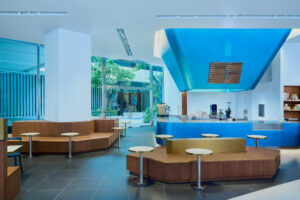
- The Shift to Narrative-Driven Spaces: Brands are moving away from purely functional retail environments. Instead, they are investing in "theatrical" design elements—like the Blue Lantern—that provide social media-worthy moments while simultaneously telling a story about the local culture.
- Cultural Sensitivity as a Competitive Advantage: By engaging with the local tradition of lantern festivals and using indigenous materials like teak, Blue Bottle has positioned itself not as a global chain, but as a thoughtful guest in the Thai market. This builds brand loyalty that a standardized, "cookie-cutter" design could never achieve.
- Reframing Sustainability: The project challenges designers to look beyond global blanket bans on specific materials and consider the carbon footprint of transport versus the cultural and environmental value of using locally sourced, traditional materials.
- The Contrast Principle: The juxtaposition of modern minimalism (Blue Bottle’s hallmark) with traditional, ornate, or "gold-hued" cultural markers is proving to be a highly effective aesthetic strategy in Asian markets. It satisfies the local consumer’s desire for beauty and heritage while meeting the international consumer’s expectation for modern, clean-lined design.
As Blue Bottle Coffee continues to expand, the Bangkok flagship will undoubtedly serve as a case study for future international developments. It proves that when a design studio like I IN is given the freedom to interpret a brand through the lens of local history and sensory experience, the result is more than a cafe—it is a cultural destination.
The interior design does not just house a coffee shop; it invites the city of Bangkok to see its own traditions through a new, filtered light—a blue light, echoing the quiet, meditative ritual of the morning pour-over. In this space, the act of drinking coffee becomes a brief, daily festival, a moment of stillness under a canopy of light.