

 Nana Wu

 Dwi Wanna

 Suro Senen

 Evan Lee Salim

 Jia Lissa
October 19, 2026
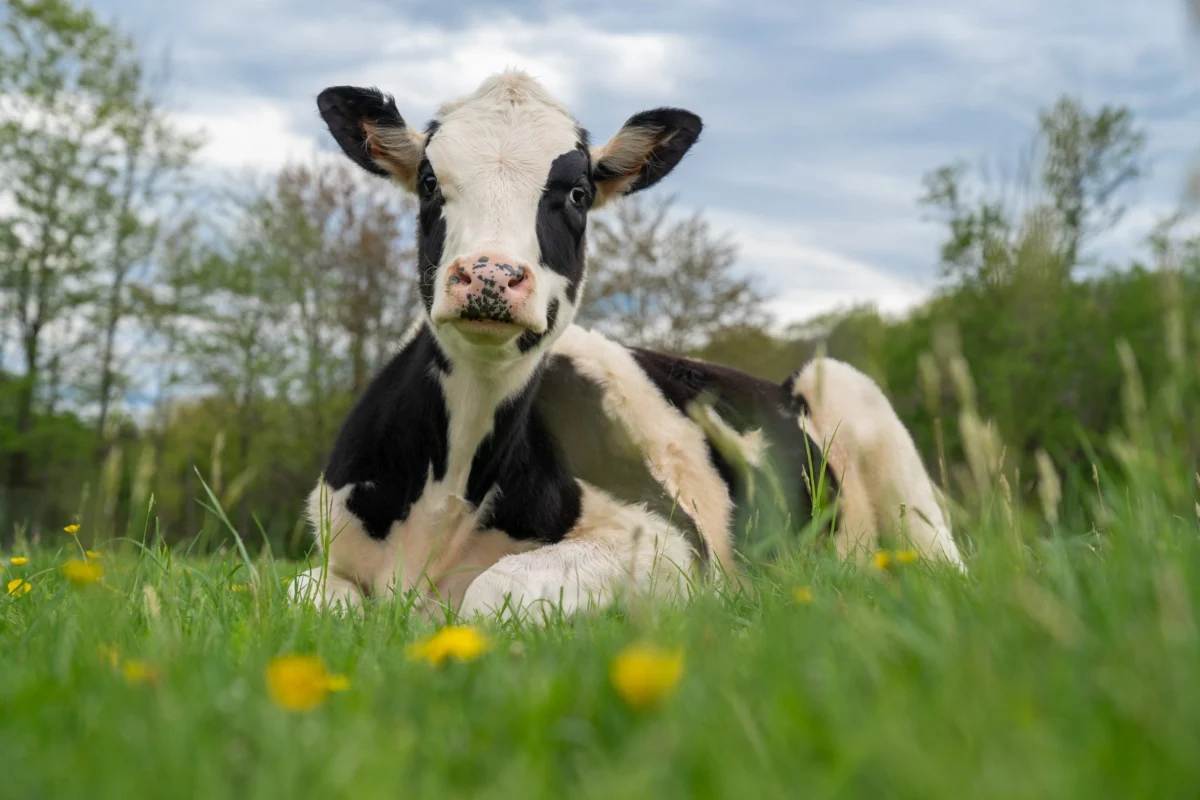
In the quiet pastures of upstate New York, a gentle steer named Pietro basks in the autumn sun, his eyes calm and his demeanor serene. He is, by all accounts, a typical bovine resident of Farm Sanctuary. Yet, his presence here represents a triumph over a system designed to treat him as a mere commodity. Pietro’s story, alongside that of Jessica, a resilient Cornish chicken, serves as a poignant reminder of the billions of lives caught in the machinery of modern industrial agriculture—a system that continues to operate largely out of sight, yet defines the daily reality for 99% of farm animals in the United States.
The Industrial Reality: A System of Efficiency over Sentience
The modern American food system is a marvel of industrial efficiency, but behind the supermarket labels and the sanitized packaging lies a grim reality. "Animal factories"—large-scale facilities designed to optimize output at the lowest possible cost—have become the standard for meat, dairy, and egg production. In these facilities, the biological needs of animals are frequently sacrificed for the sake of volume and margins.
According to industry data, hundreds of thousands of living beings are confined to high-density environments where space is limited and movement is restricted. These facilities rely on standardized practices that have drawn intense scrutiny from animal welfare advocates and the public alike. Despite the proliferation of marketing terms such as "cage-free," "pasture-raised," or "humane," investigations often reveal that such labels can be misleading. Many animals in these systems are subjected to the same chronic stressors—painful physical alterations, lack of natural enrichment, and premature separation from their young—that define traditional factory farming.
Chronology of Survival: From Commodity to Sanctuary
The journey from a factory floor to the safety of a sanctuary is rarely linear; it is often a desperate race against time.
The Case of Pietro
Pietro’s life began on a dairy factory farm, a place where his value was predetermined by his biology. As a male calf, he was effectively an economic byproduct; because he could not produce milk, he was relegated to the veal or beef pipeline. However, fate intervened in the form of a severe injury—a broken leg that rendered him "unprofitable" to the operation. In the cold calculus of industrial agriculture, an animal that cannot be processed efficiently is an immediate liability. Pietro was slated for euthanasia, but his vulnerability caught the attention of a rescuer who recognized a life worth saving. Today, the leg that once marked him for death has healed, and Pietro has grown into a social, affectionate resident who serves as an ambassador for the millions of calves who never make it out of the system.
The Case of Jessica
Jessica’s story is equally harrowing, illustrating the immense danger inherent in the transportation of livestock. Millions of animals perish annually during the long, grueling transit to slaughterhouses. They endure extreme temperature fluctuations and cramped, terrifying conditions. For Jessica, a Cornish chicken bred for rapid growth—a genetic modification that often leaves these birds with heart defects and skeletal pain—the journey was nearly fatal. She and eight others fell from a transport truck onto a public road. While the fall could have easily been the end, it became her salvation. Animal control officers, moved by the plight of these survivors, ensured they were diverted from the slaughterhouse and into the care of Farm Sanctuary.
Supporting Data: The Hidden Costs of Production
The industrialization of agriculture is not merely an animal welfare issue; it is a profound ethical crisis that reflects the values of contemporary society. Public opinion polls consistently indicate that the majority of U.S. consumers oppose the standard, cruel practices used in factory farming. Yet, the disconnect between consumer sentiment and purchasing behavior remains vast.

- The Scale of Confinement: With 99% of farm animals kept in factory farms, the sheer volume of animals subjected to intensive confinement makes individual welfare monitoring virtually impossible.
- Genetic Modification Impacts: Breeds like the Cornish chicken have been engineered to reach slaughter weight in a fraction of the natural time. This accelerated growth often results in debilitating orthopedic issues and cardiovascular stress, requiring constant monitoring by sanctuary staff to ensure the birds can move and eat without suffering.
- The Transportation Gap: Statistics regarding the survival rates of animals in transit are notoriously opaque, but anecdotal evidence from the field suggests that "transport fatalities" are a systemic, albeit largely ignored, feature of the meat supply chain.
The Sanctuary Model: A Lifelong Promise
At the heart of the Farm Sanctuary mission is the rejection of the "disposable" animal model. Unlike the factory system, which values an animal only as long as it is productive, the sanctuary provides a "lifelong promise." This commitment involves individualized care, including high-quality nutrition, specialized veterinary intervention, and, perhaps most importantly, the opportunity to express natural behaviors.
For residents like Jessica, this means a life where she can engage in dustbathing and snuggling with her flock, rather than suffering from the complications of rapid growth. For Pietro, it means living as an individual, receiving chin scratches and affection, and interacting with visitors who come to learn about his life. This model shifts the focus from "production" to "protection," proving that even the most damaged individuals can thrive when provided with basic decency and compassion.
Implications for the Future of Food
The stories of Pietro and Jessica are not just heartwarming anecdotes; they are catalysts for systemic change. Farm Sanctuary utilizes these narratives to educate millions, advocating for a shift toward plant-based agriculture. The implication is clear: if we recognize the individual sentience of a calf or a chicken, the moral justification for the factory system begins to crumble.
Advocacy and Education
The goal of organizations like Farm Sanctuary is to translate individual empathy into broader political and social action. By bringing the public into direct contact with these animals, they bridge the gap between the "product" in the grocery store and the "living being" on the farm. This connection is essential for driving the legislative changes necessary to mandate higher welfare standards or, ultimately, to transition the agricultural sector toward more compassionate, plant-forward practices.
The Role of the Consumer
The power to change the system rests, in part, with the consumer. By opting for plant-based alternatives and supporting organizations that provide lifelong care to survivors, individuals can take a stand against the cruelty of the factory system. As the adoption of plant-based diets continues to rise globally, the influence of these survivors grows. Every person who learns Pietro’s story or follows Jessica’s waddle to the food bowl is a person who may rethink their relationship with the food on their plate.
Conclusion: A Lifetime of Kindness
As we look toward the future, the work at Farm Sanctuary remains a beacon of what is possible. It is a place where the "worthless" are made whole and the "commodities" are given names and futures. While the industrial factory system continues to churn out products at a staggering scale, the presence of these survivors acts as a persistent, living protest.
The promise of sanctuary is a promise of restoration. By sponsoring the care of animals like Pietro and Jessica, supporters are not just funding food and shelter; they are funding a challenge to the status quo. They are participating in a movement that envisions a world where "farm animal" is not a synonym for "suffering," but a term that commands the same respect, protection, and kindness we afford the animals we invite into our homes.
In the end, the survival of Pietro and Jessica proves that compassion is not a finite resource. It is a choice we make every day—a choice to look behind the curtain, recognize the individual, and decide that their life, no matter how small, is worth the effort to save.

 Nila Kartika Wati
 Layla Zulfa

