 Jia Lissa

 Raul Delapena Setiawan

 Asro

 Layla Zulfa

 Sagoh
 Reynand Wu
In an era where consumer demand for "clean label" products—foods free from synthetic additives and preservatives—is at an all-time high, the food industry faces a significant challenge: how to maintain safety and extend shelf life without relying on chemical stabilizers. A breakthrough study published in Applied Food Research offers a compelling solution derived from an unlikely source: agricultural waste.
Researchers from the Pravara Institute of Medical Sciences and Dr. Babasaheb Ambedkar Marathwada University in India have successfully identified and characterized a novel postbiotic peptide, designated "Postbiotin-E8." This peptide, extracted from a strain of Lacticaseibacillus isolated from fruit and vegetable waste soil, has demonstrated remarkable antibacterial and antibiofilm properties, offering a robust new candidate for natural food preservation and surface decontamination.
Main Facts: A New Frontier in Bio-Preservation
The discovery of Postbiotin-E8 marks a significant milestone in the field of food biotechnology. Unlike traditional antibiotics, which often carry the risk of promoting bacterial resistance, postbiotics are non-viable bacterial products or metabolic byproducts that provide physiological benefits to the host or, in this case, a protective effect for food products.
The research team isolated the Lacticaseibacillus sp. E8 strain from soil enriched with organic waste, leveraging the natural competitive environment of soil microbes. In these environments, bacteria often evolve to produce potent antimicrobial peptides (AMPs) to defend their niche. Once isolated, the researchers purified the Postbiotin-E8 peptide and subjected it to rigorous testing against a variety of pathogens that plague the global food supply chain, including Escherichia coli, Bacillus cereus, Staphylococcus aureus, and Salmonella Typhi.
The results were striking. Postbiotin-E8 demonstrated broad-spectrum activity, effectively neutralizing both Gram-positive and Gram-negative bacteria. Furthermore, its ability to inhibit biofilm formation—the protective, slimy layers bacteria create to survive on food-contact surfaces like stainless steel and plastic—suggests that this peptide could play a dual role: as a food ingredient and as a sanitizer for food processing equipment.
Chronology: From Soil to Laboratory Validation
The journey of Postbiotin-E8 from a soil-dwelling microorganism to a validated food preservative followed a systematic scientific progression:
- Isolation and Screening: The researchers first sampled agricultural waste soil to identify Lacticaseibacillus sp. E8. Through preliminary screening, they identified the strain’s ability to inhibit common foodborne pathogens in laboratory cultures.
- Characterization: The team then isolated the bioactive compound—Postbiotin-E8—and analyzed its chemical structure, identifying it as a proteinaceous peptide with high stability.
- In Vitro Efficacy Testing: Over several months, the team conducted disk diffusion assays and minimum inhibitory concentration (MIC) testing. They measured the "zones of inhibition"—clear areas around the peptide where bacterial growth was halted—and determined the exact concentrations required to kill pathogens like S. aureus and S. Typhi.
- Stability Profiling: Recognizing that food processing often involves heat and varying pH levels, the team tested the peptide’s durability. They subjected it to temperatures up to 50°C and a pH range of 4 to 8, discovering that the peptide remained largely functional, which is essential for industrial food applications.
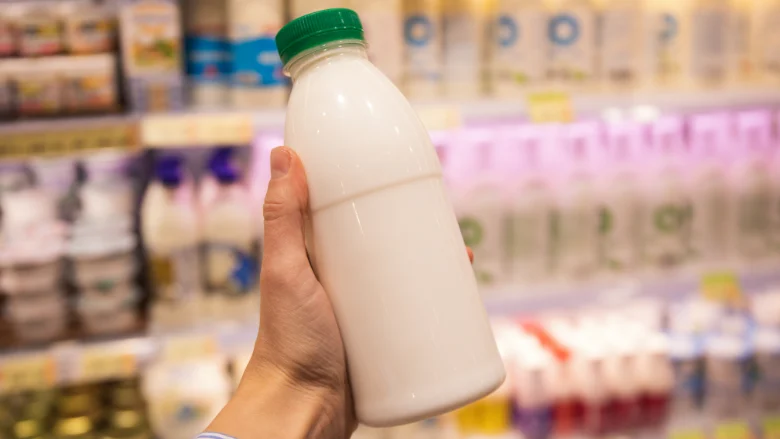
- Preservation Trials: Finally, the researchers moved to a real-world application, introducing the peptide into pasteurized milk. They tracked its performance against control samples and the industry-standard preservative, nisin, over a 10-day refrigerated storage window.
Supporting Data: The Quantitative Edge
The efficacy of Postbiotin-E8 is supported by substantial laboratory data. In disk diffusion assays, the peptide showed significant potency: 19 mm zones of inhibition against E. coli, 21 mm against B. cereus, and 23 mm against S. aureus.
When testing for bactericidal activity—the ability to kill bacteria outright rather than just slowing their growth—the data was even more impressive. At concentrations as low as 31.25 µg/mL, the peptide achieved total eradication of viable S. aureus colonies within 24 hours. Salmonella Typhi proved slightly more resilient but was entirely eliminated at 62.5 µg/mL.
Perhaps most critically, the peptide tackled the "biofilm problem." Biofilms are a major cause of recurring contamination in food processing plants because they are notoriously resistant to standard cleaning agents. Postbiotin-E8 reduced biofilm formation by 58.7 percent for S. aureus and 67.68 percent for S. Typhi at a concentration of 100 µg/mL. This suggests that the peptide could potentially be used in "clean-in-place" (CIP) systems to prevent the buildup of dangerous bacterial colonies in pipes and storage tanks.
In the milk preservation study, the peptide’s performance was compared to untreated samples and nisin-treated samples. By day 10, the untreated milk had developed significant turbidity and a sour odor, indicative of advanced spoilage. In contrast, milk treated with Postbiotin-E8 maintained a higher pH of 6.38, compared to 6.0 in the control, and significantly lower microbial counts. While nisin remained the "gold standard" in the study, showing marginally better results, the researchers noted that Postbiotin-E8 provides a highly effective, natural alternative that may offer different functional advantages depending on the food matrix.
Official Perspectives: Implications for the Food Industry
The researchers emphasized that Postbiotin-E8 is not just a scientific curiosity; it is a potential tool for modernizing food safety. By utilizing a byproduct of Lacticaseibacillus, the industry can move toward "biopreservation"—using natural microbial metabolites to extend shelf life.
"The versatility of Postbiotin-E8, specifically its stability under varying pH and temperature conditions, makes it a prime candidate for a range of refrigerated products," the research team noted in their publication. The ability of the peptide to remain effective in the presence of detergents and organic solvents suggests it can withstand the harsh conditions of food manufacturing environments, a hurdle that often disqualifies other potential natural preservatives.
However, the team remains cautious and pragmatic. They have identified several key areas that require further exploration before commercialization can occur. These include:
- Mechanism of Action: While the results are clear, the precise molecular pathway by which Postbiotin-E8 disrupts bacterial cell walls or metabolic processes is still being mapped. Understanding this mechanism is vital to ensure that pathogens do not develop resistance to the peptide.
- Safety and Toxicology: As with any new food-related substance, comprehensive safety trials—including cytotoxicity testing on human cell lines—are necessary to confirm that the peptide is safe for human consumption and does not trigger allergic responses.
- Complex Food Systems: While milk is a complex matrix, the efficacy of the peptide in more varied environments, such as meats, processed vegetables, or high-fat products, remains to be seen. The interaction between the peptide and other food components, like proteins and fats, could potentially influence its performance.
Implications: A Sustainable Future
The implications of this study extend beyond the immediate benefits of extending milk shelf life. As global supply chains grow longer and more complex, the risk of foodborne illness outbreaks remains a persistent public health concern. Natural preservatives like Postbiotin-E8 represent a shift toward a more sustainable and safer food infrastructure.
By tapping into the natural antimicrobial defenses of soil bacteria, researchers are effectively "mimicking" nature to protect our food. This circular approach—isolating bioactive compounds from agricultural waste to protect new food products—is a hallmark of the burgeoning "green" food chemistry movement.
If subsequent safety studies confirm the findings, Postbiotin-E8 could find its way into the ingredients lists of dairy products, pre-cut produce, and perhaps even as an additive in antimicrobial packaging materials. Furthermore, its antibiofilm activity could revolutionize how food processing facilities manage sanitation, potentially reducing the reliance on aggressive, hazardous chemicals that are currently used to scrub down equipment.
In conclusion, the study in Applied Food Research is more than just a discovery of a new peptide; it is a signal that the next generation of food safety will be driven by biological innovation. As we move away from synthetic chemicals, substances like Postbiotin-E8 offer a promising, science-backed path toward safer, fresher, and more sustainable food for the global consumer. The next few years of research into its safety and industrial viability will be critical in determining whether this soil-derived peptide will become a staple of the modern food industry.

 Neng Nana