

 Nana Wu

 Dwi Wanna

 Suro Senen

 Evan Lee Salim

 Iffa Jayyana
In the annals of American culinary history, few figures are as enigmatic yet influential as Arthur Leslie Wyman. A man whose career spanned the globe before settling in the burgeoning food laboratory of early 20th-century Southern California, Wyman’s influence on the American palate remains a fascinating case study in the intersection of health, marketing, and the rise of the industrial food age. His most enduring artifact, the 1927 Chef Wyman’s Daily Health Menus, serves not merely as a cookbook, but as a time capsule reflecting the dietary anxieties and agricultural ambitions of a rapidly modernizing nation.
Main Facts: The Rise of a Culinary Architect
Arthur Leslie Wyman was a chef of international pedigree. Before he became the face of Southern Californian domestic science, he traveled extensively, honing his craft in the elite kitchens of Europe, Egypt, India, and the Orient. This global exposure allowed him to integrate exotic seasonings and diverse cooking techniques into a uniquely American framework.
By the mid-1920s, Wyman had pivoted from the professional kitchen to the laboratory-kitchen, specifically focusing on educational work for California’s powerful fruit associations. His role was pivotal in the "branding" of California produce—peaches, figs, raisins, walnuts, and citrus fruits were no longer just agricultural commodities; they were positioned as essential pillars of a "healthy" lifestyle. As a lead contributor to the Los Angeles Times, his "Practical Recipes" column was a staple of the era, turning domestic science into a widely consumed form of entertainment and instruction.
The most notable artifact of his career, Chef Wyman’s Daily Health Menus, provides a snapshot of the 1920s obsession with "digestive health" and "balanced menus." Interestingly, the book’s publication history is marked by a peculiar cross-promotional deal: the Tennessee-based grocery giant Piggy Wiggly acquired the rights to the volume in 1927, reissuing it under their own brand name. This partnership underscores the era’s transition toward mass-market grocery chains, which used such cookbooks as a vehicle to promote the availability of consistent ingredients across the country.
Chronology: A Life Cut Short
The timeline of the Wyman legacy is marked by rapid professional ascent and personal tragedy:
- 1923: Wyman serves as the editor of the Los Angeles Times Prize Cook Book. His biography in the introduction highlights his global expertise and his dedication to making professional-grade cooking accessible to the American housewife.
- 1924–1926: Wyman solidifies his reputation as a consultant for California’s fruit growers, refining recipes that would effectively move tons of surplus produce into the American pantry.
- 1927: The publication of Chef Wyman’s Daily Health Menus. In the same year, the Piggy Wiggly edition is released, showcasing the reach of his influence.
- Late 1927: Arthur Leslie Wyman passes away, leaving behind a massive void in the Los Angeles Times culinary department.
- 1927–1931: His widow, Mabelle Wyman, bravely takes over his column, continuing his mission to provide practical, health-conscious recipes to the public.
- 1931: The Wyman era at the Los Angeles Times comes to a final, tragic close with the sudden passing of Mabelle Wyman.
Supporting Data: The "Sunland Salad" and the 1920s Palette
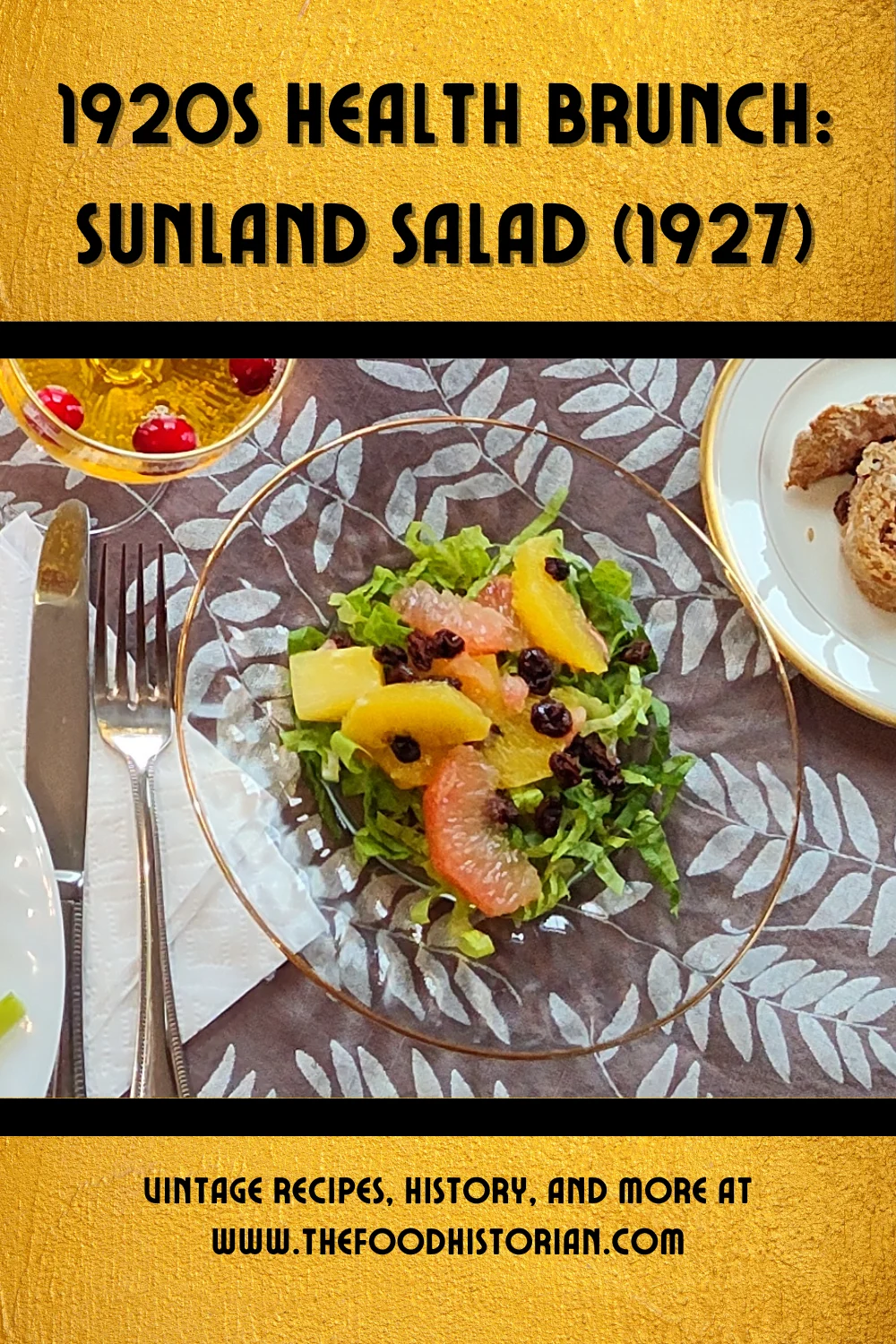
The "Sunland Salad" serves as a perfect proxy for understanding the dietary philosophy of the 1920s. In an age where vitamins were a relatively new scientific discovery, the combination of citrus (oranges and grapefruit) and fiber-rich raisins was touted as a medical imperative.

Nutritional Philosophy of the Era
The 1920s were characterized by a transition from "heavy" Victorian-era cooking to a lighter, more scientific approach to nutrition. Ingredients like pineapple—often canned and imported from Hawai’i—represented modernity and tropical luxury. The original 1927 recipe for Sunland Salad is as follows:
"Mix two cups of peeled and diced oranges with one cup of peeled and diced grape fruit, one cup of diced pineapple, and one cup of seedless raisins that have been soaked in orange juice for one hour. Mound on lettuce-covered plates and place a table-spoon of mayonnaise on each serving."
The inclusion of mayonnaise—a staple dressing for fruit salads at the time—highlights the culinary dissonance between the 1920s and today. While modern palates may recoil at the thought of mayonnaise on fruit, in the 1920s, it was considered a fat-rich, energy-dense addition that helped justify the salad as a substantial part of a dinner menu.
The Modern Adaptation
Contemporary cooks looking to recreate this dish can bridge the gap between historical authenticity and modern taste by focusing on technique. By "supreming" the citrus (removing the membrane to isolate the fruit segments), the cook achieves a level of refinement that balances the intensity of the raisins. Using a chiffonade of romaine lettuce adds a modern texture that was likely less emphasized in the original, more rustic preparations.
Official Responses and Contemporary Reception
While there are no surviving "official" government responses to Wyman’s work, the contemporary reception of his books by the California fruit industry was overwhelmingly positive. Industry records from the mid-1920s indicate that the California fruit associations viewed Wyman as a "force multiplier" for their marketing efforts. By associating their products with the prestige of a professional chef, they elevated the status of the humble raisin or prune to that of a gourmet ingredient.
Historical critics of the era, such as those writing for home economics journals, often lauded the "systematic" nature of Wyman’s menus. By organizing recipes by month and day, he provided the structure that 1920s housewives, dealing with the stressors of post-war domesticity, found immensely comforting. The Piggy Wiggly edition, specifically, was hailed as a "triumph of modern merchandising," proving that the professionalization of cooking could be successfully married to the mass-distribution model of the chain grocery store.

Implications: The Lasting Impact on Modern Cuisine
The legacy of Arthur Leslie Wyman has profound implications for how we view the "California Cuisine" movement today. Often, we attribute the focus on fresh, seasonal, and produce-forward cooking to the late 20th-century revolution led by figures like Alice Waters. However, Wyman’s work proves that the foundation for this movement was laid nearly a century ago.
The Marketing of "Health"
Wyman was among the first to understand that "health" is a powerful marketing tool. By framing his recipes as "Daily Health Menus," he turned the act of eating into a moral and physiological duty. This strategy has been adopted by every major food corporation since, from the breakfast cereal campaigns of the 1950s to the "superfood" marketing of the 2020s.
The Globalization of the Pantry
Wyman’s use of pineapple, Mexican-inspired flavors, and citrus varieties reflects the early globalization of the American kitchen. He taught the American housewife how to use ingredients that were once exotic, thereby creating the demand that eventually led to the diverse, multicultural food landscapes of today’s California.
The Fragility of Culinary Knowledge
The tragedy of the Wyman family serves as a reminder of how precarious the preservation of culinary knowledge can be. When Arthur and Mabelle died, a significant amount of institutional knowledge regarding these "laboratory-kitchen" techniques was lost. We are left with the remnants—the cookbooks, the columns, and the surviving recipes—which allow us to reconstruct a world where the salad was not just a side dish, but a symbol of progress.
Ultimately, revisiting the works of Chef Wyman is an act of historical empathy. Whether one chooses to serve the Sunland Salad with the traditional dollop of mayonnaise or prefers a modern, lightened version, the experience of cooking the recipe connects the modern home chef to a pivotal moment in American history. It reminds us that every recipe we use today is part of a long, evolving conversation about health, convenience, and the pursuit of a better way to eat. As we look back at the 1920s through the lens of Chef Wyman’s Daily Health Menus, we see that while the fashions of food may change, the desire to find joy and health in the produce of the season remains a constant human pursuit.

 Sagoh
 Asep Darmawan

