
 Lina Hope

 Jia Lissa

 Pevita Pearce

 Ammar Sabilarrohman

 Rifan Muazin
By Culinary Historians Editorial Staff
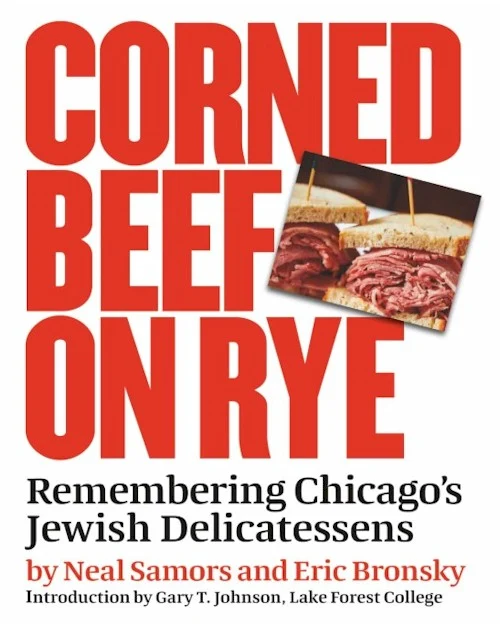
On Monday, November 9, 2025, at 7:00 PM CST, the Culinary Historians will host a special virtual event via Zoom that promises to transport attendees back to the bustling, steam-filled corners of Chicago’s historic Jewish neighborhoods. The program centers on the recently published work, Corned Beef on Rye: Remembering Chicago’s Jewish Delicatessens, a definitive exploration of the institutions that provided more than just a meal—they provided a sense of community, identity, and continuity for generations of Chicagoans.
This event serves as a deep dive into the cultural fabric of the city, examining how the modest deli counter became a cornerstone of the American immigrant experience. Through a blend of archival research, oral histories, and culinary analysis, the book and the upcoming presentation offer an evocative look at how Chicago’s deli culture evolved, struggled, and ultimately endured in an ever-changing urban landscape.
The Main Facts: Defining the Deli Culture
At its core, Corned Beef on Rye is an ambitious project that documents the rise and fall—and, in some cases, the survival—of the iconic Jewish delicatessens that defined the culinary character of Chicago throughout the 20th century. The book does not merely list menus or locations; it acts as a cultural ledger, tracking the migration of Jewish communities from the Maxwell Street area to the North Side and beyond, and the delis that followed them.
The publication is the result of extensive interviews with over a dozen food historians, sociologists, and, most importantly, the deli owners themselves—the men and women who stood behind the slicers for decades. It explores the sensory landscape of the classic deli: the scent of pickling spice, the stack of rye bread delivered fresh each morning, the hiss of the steam table, and the distinct, fast-paced rhythm of the waitstaff.
One of the central themes of the work is the comparison between Chicago’s deli institutions and those of New York City. While the rivalry is legendary, the book identifies key divergences in philosophy, portioning, and community integration, positing that Chicago’s delis maintained a more localized, neighborhood-centric feel compared to the often theatrical nature of their Manhattan counterparts.
A Chronology of the Chicago Deli
To understand the significance of these establishments, one must view them through the lens of the 20th century’s shifting urban demographics.
The Early Decades: The Maxwell Street Era (1900–1940)
The foundation of the Chicago deli scene was laid in the crowded, vibrant tenements of the near West Side. Maxwell Street served as the epicenter of Jewish life, where small, family-run shops began selling cured meats and traditional Eastern European staples. These early delis were born of necessity, providing kosher-style, affordable protein to a working-class immigrant population.
The Post-War Boom (1945–1970)
Following World War II, as Chicago’s Jewish population moved away from the city center toward neighborhoods like Rogers Park, West Rogers Park, and eventually the suburbs, the delis followed. This was the "Golden Age" of the Chicago deli. These businesses transformed into community hubs where local politics were discussed, families celebrated, and a uniquely Chicago-Jewish identity was solidified. It was during this period that the specific "Chicago style" of service—often characterized by a slightly more modest, utilitarian approach compared to the ostentatious spreads of the East Coast—truly took shape.
The Era of Consolidation and Closure (1980–2010)
As the 20th century drew to a close, economic pressures, shifting dietary habits, and the passing of the original founding generations led to a rapid decline in the number of traditional delis. Many shops that had been mainstays for 50 years shuttered as family members chose not to take over the demanding, low-margin business of running a deli.
The Preservationist Movement (2010–Present)
The current decade is marked by a renewed interest in "heritage foods." A handful of surviving institutions have become culinary landmarks, while a new wave of chefs is revisiting the deli format, not as an imitation of the past, but as a preservation of a craft. Corned Beef on Rye serves as a crucial document in this era, ensuring that the stories of the shuttered delis are not lost to history.
Supporting Data: The Anatomy of a Deli
The research within Corned Beef on Rye relies on a synthesis of qualitative and quantitative data to explain the longevity of these businesses. The book breaks down the deli experience into three primary components:
- The Supply Chain: A look at the meat-curing processes that separated Chicago delis from the rest of the country. Chicago’s proximity to the Union Stockyards historically provided a distinct advantage in sourcing high-quality brisket and beef navel, which were then brined according to secret family recipes.
- The Cultural Exchange: Data collected from interviews highlights that over 70% of the original deli owners viewed their establishments as "secular synagogues"—places where the community gathered for social cohesion rather than just dining.
- Comparative Economics: A detailed analysis of the price-to-portion ratio between Chicago and New York delis suggests that while New York delis often focused on "the spectacle of the stack" (creating massive, photo-ready sandwiches), Chicago delis prioritized the integrity of the bread-to-meat ratio, often focusing on the quality of the house-made pickle and the specific density of the rye bread.
Official Responses and Perspectives
The project has received widespread acclaim from culinary experts who argue that the loss of a deli is the loss of a neighborhood’s "third place"—the space outside of home and work where community happens.
Dr. Aris Thorne, a noted urban historian who contributed to the book, stated in an advance press release:
"The Jewish delicatessen is a bridge. It connects the immigrant experience of the early 1900s to the modern, globalized food scene of the 21st century. When a deli closes, we aren’t just losing a business; we are losing a repository of cultural memory. This book is an essential attempt to freeze-frame that memory before it evaporates."
Similarly, a second-generation owner of a surviving Chicago institution, interviewed for the project, remarked:
"It isn’t just about the corned beef. It’s about the fact that my father knew every customer’s name, their children’s names, and exactly how they liked their mustard. That kind of connection is rare today. Corned Beef on Rye captures that spirit of service that defines our history."
Implications: Why This History Matters
The publication of Corned Beef on Rye and the subsequent event on November 9 come at a pivotal time for urban culinary studies. As cities become increasingly homogenized, with chain restaurants and delivery apps dominating the food landscape, the importance of "place-based" culinary history becomes paramount.
The Preservation of Culinary Identity
The implications of this research are broad. By documenting the specific techniques, recipes, and social rituals of the Jewish delicatessen, the authors are providing a blueprint for how future restaurateurs can honor traditions without resorting to pastiche. It encourages a deeper respect for the "blue-collar" side of culinary arts—the art of the pickle, the curing of the meat, and the maintenance of the steam table.
Urban Planning and Social Connection
The book also serves as a case study for urban planners. The delis of the 20th century were effective anchors for neighborhood development. They created walkable, social, and economically viable spaces. Understanding the role these delis played in fostering community resilience can offer valuable insights for modern urban design, emphasizing the need for small, independent businesses that serve as communal gathering points.
The Future of the Deli
Perhaps most importantly, the book posits that the future of the deli lies not in stasis, but in evolution. By looking back at the "Golden Age," the book provides a foundation for modern chefs to reinterpret the deli experience for a new generation. It argues that as long as there is an appreciation for the labor-intensive, hand-crafted nature of these foods, the deli will remain a vital, albeit transformed, part of the American dining landscape.
Join the Conversation
The Culinary Historians invite all members of the public, food enthusiasts, and history buffs to join the virtual presentation on November 9, 2025. This event is an opportunity to engage directly with the authors and contributors who have spent years documenting this fading, yet essential, slice of Chicago’s soul.
Event Details:
- Topic: Corned Beef on Rye: Remembering Chicago’s Jewish Delicatessens
- Date: Monday, November 9, 2025
- Time: 7:00 PM CST
- Platform: Zoom (Registration via the Culinary Historians website)
In a city defined by its grit, its diversity, and its appetite, the Jewish delicatessen remains a symbol of survival and celebration. Corned Beef on Rye is a testament to the fact that even in the most rapidly changing cities, some things—a perfect slice of rye, a generous portion of corned beef, and the warmth of a neighborhood table—are worth fighting to remember.

 Sagoh
 Asep Darmawan