 Jia Lissa
 Raul Delapena Setiawan

 Asro
 Layla Zulfa
 Sagoh
 Reynand Wu
Every autumn, the city of Des Moines, Iowa, transforms into the global epicenter of agricultural discourse. The Borlaug Dialogues, held in conjunction with the World Food Prize, draw thousands of stakeholders—ranging from high-level policymakers and corporate titans to grassroots activists and pioneering scientists. It is a gathering that claims to set the global agenda for how we feed a growing planet, but for those who advocate for sustainable, agroecological, and localized food systems, the event has historically felt like a bastion of "Big Ag."
As the event evolves, so too does the conversation within its halls. The question facing the Foundation today is not just how to increase yields, but how to broaden the definition of innovation itself.
The Evolution of the "Nobel Prize for Food"
The World Food Prize was conceived by Dr. Norman Borlaug, the plant pathologist and Nobel Peace Prize laureate whose work during the mid-20th century Green Revolution saved an estimated billion lives from starvation. Borlaug’s vision was to create a platform that would elevate the importance of food production to the highest levels of global priority.
For decades, the Prize has been the gold standard for recognizing individuals who have significantly improved the quality, quantity, or availability of food in the world. However, the definition of "progress" has historically skewed toward laboratory-based biotechnology and large-scale industrial solutions. In 2013, for instance, the Foundation honored executives and researchers from companies like Monsanto and Syngenta for their contributions to plant biotechnology. While these scientific breakthroughs were undeniably transformative, critics argued that they represented only one narrow pillar of the agricultural spectrum.
Under the current leadership—including Foundation CEO Tom Vilsack and President Mashal Husain—the event is attempting to broaden its tent. This year’s program features an eclectic mix of voices, from Hollywood figures like Nick Offerman and Martin Sheen to Nobel laureate Malala Yousafzai. Yet, the challenge remains: How does a prestigious institution move beyond high-profile guest lists to fundamentally change the power dynamics of global food security?
A Chronicle of Uncomfortable Conversations
The value of the Borlaug Dialogues lies in the proximity of opposing ideologies. For an advocate of sustainable agriculture, attending the event can be an exercise in cognitive dissonance. One might spend the morning discussing the necessity of soil biodiversity and the next hour listening to a panel on industrial synthetic fertilizer application.
Personal anecdotes from attendees reveal the tensions embedded in these interactions. One attendee recalls a memorable encounter at a local hotel bar with a corporate scientist and an industry lobbyist. The conversation, which began under the guise of casual networking, quickly veered into a confrontation over the attendee’s social media critiques of corporate farming. The incident highlighted a pervasive issue: the tendency of stakeholders to pre-judge one another based on tribal labels—"corporate shill" versus "radical activist"—without ever engaging in the underlying substance of their work.
Despite the initial friction, these relationships often evolve. The attendee reports that they eventually developed a professional, and even personal, rapport with those same individuals—proving that when the barriers of preconceived notions are lowered, common ground can be found. It serves as a reminder that transformation requires "getting uncomfortable"—sitting in rooms where one is the minority voice and listening long enough to understand the logic of those on the other side of the agricultural divide.
The Global Crisis: Data and Disruption
The timing of this year’s Dialogues is marked by a somber backdrop. Global funding for food security and agricultural development is facing an unprecedented contraction. According to preliminary data from the Organisation for Economic Co-operation and Development (OECD), official development assistance (ODA) plummeted by over 23 percent in 2025—the largest annual decline on record.
The humanitarian implications are staggering. A 2025 study published in The Lancet suggests that continued erosion of funding for agencies like the U.S. Agency for International Development (USAID) could result in 14 million additional deaths by 2030, with children under five bearing the brunt of this decline. Similarly, the World Food Program (WFP) has issued dire warnings: reduced funding from major donors, including the United States, threatens to push nearly 14 million people from crisis-level hunger into emergency states, placing them on the precipice of famine.
These statistics underscore the gravity of the mission in Des Moines. When the world is losing ground in the fight against hunger, the question of how we allocate resources and what innovations we prioritize is no longer theoretical—it is a matter of life and death.
Rethinking Innovation: Who Holds the Power?
If the goal is to create a "Green Evolution"—a term popularized by CIMMYT’s Director General Bram Govaerts—then the metrics of success must change. A true evolution requires moving away from a sole focus on yield and toward a holistic model that prioritizes farmers’ livelihoods, soil health, biodiversity, and nutritional density.
The Access Gap
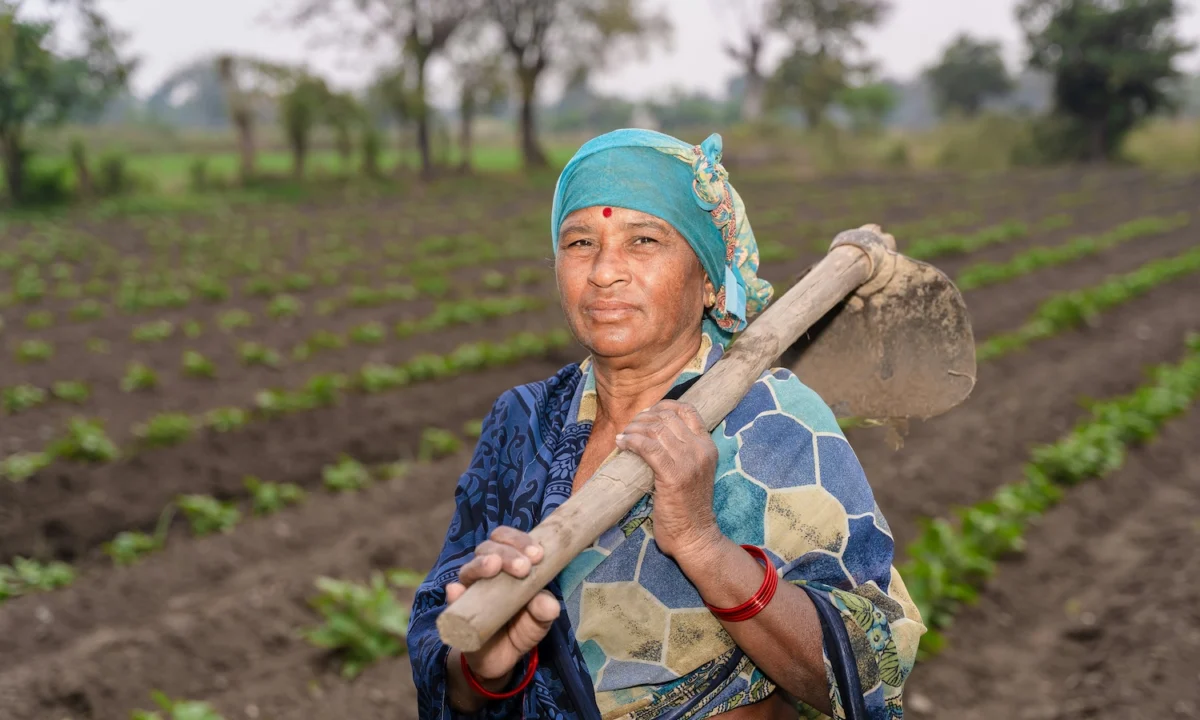
A recurring criticism of the Borlaug Dialogues is the barrier to entry. While registration fees are often waived, the logistical cost of attending—travel, lodging, and the necessity of leaving one’s farm—creates an inherent bias toward those with institutional backing. This effectively filters out the very people who are on the front lines of food production: smallholder farmers, landless laborers, and grassroots organizers from the Global South.
The Recognition Gap
This year’s laureate, Dutch food safety scientist Huub Lelieveld, is being recognized for his vital work in preventing foodborne illness. While his contributions are undeniably critical to global food security, the absence of recognition for grassroots leaders in the Global South remains a point of contention.
The United Nations has designated 2026 as the "International Year of the Woman Farmer." While the Dialogues have scheduled a panel titled "What If Her Harvest Changes Everything?" to highlight women in agriculture, there is a missed opportunity to place women farmers at the very center of the award process itself. Leaders like Esther Penunia of the Asian Farmers’ Association, Elizabeth Nsimadala of the Eastern Africa Farmers Federation, and Mariam Sow of Senegal represent a different kind of innovation—one based on social organization, seed saving, and resilient, community-led agroecology.
Implications for the Future of Food
The World Food Prize stands at a crossroads. As the most visible platform for agricultural policy, its choices regarding who it honors and whose voices it elevates set the tone for the entire industry.
To remain relevant and effective, the Foundation must address several difficult questions:
- Whose knowledge counts? Is the focus strictly on top-down technological breakthroughs, or does it include the indigenous and traditional knowledge that has sustained communities for millennia?
- Who holds the power? How can the Foundation ensure that corporate sponsorship does not dictate the agenda or the scope of the conversation?
- How do we measure success? Can we shift from a paradigm of "feeding the world" to one of "nurturing the ecosystem," where the success of a farm is measured by the health of the community and the planet?
Conclusion: The Power of Listening
The beauty of an event like the Borlaug Dialogues is its capacity to convene. It is a space where the scientist, the activist, and the CEO can occupy the same room. However, convening is not the same as communicating.
If the future of food is to be sustainable, we must move toward a model of radical transparency and inclusion. This means inviting the marginalized to the stage, not just the panel; it means questioning the influence of donor capital; and most importantly, it means being willing to have the uncomfortable conversations that shatter the silos of our comfort zones.
As we look toward the future, the hope is that the World Food Prize continues to evolve into a forum that is as diverse as the landscapes it seeks to cultivate. Until the voices of the smallholder, the farmworker, and the local organizer are given the same weight as the corporate innovator, the "Green Evolution" will remain incomplete. We are all waiting to see if, in the coming years, the Prize will lean into the discomfort of change—because that is where the real solutions lie.


 Nila Kartika Wati

 Dwi Wanna