

 Nana Wu

 Dwi Wanna

 Suro Senen

 Evan Lee Salim

 Siti Muinah
In the landscape of American urban planning, the traditional solution to "food deserts"—neighborhoods lacking access to fresh, healthy, and affordable food—has long been the recruitment of a traditional, large-scale supermarket. For over a decade, the City of Baltimore relied on tax incentives to lure big-box retailers into underserved areas. However, as store after store shuttered, leaving behind "food swamps" and empty storefronts, municipal leaders reached a stark realization: the corporate-reliant model was fundamentally broken.
Today, Baltimore is pivoting. Leveraging a landmark US$11 million grant from the American Rescue Plan Act (ARPA), the city’s Food Policy and Planning (FPP) Division is spearheading a comprehensive, decentralized strategy to build food resilience. By shifting focus from private corporate interests to community-based, holistic ecosystems, Baltimore is testing a new blueprint for urban nutrition.
The Evolution of Emergency to Strategy: A Chronology of Change
The roots of this shift lie in the crucible of the COVID-19 pandemic. Between 2020 and 2022, the city launched an unprecedented emergency food response, distributing over 180 million servings of fresh fruits and vegetables to residents in designated "healthy food priority areas."
The Pandemic Catalyst (2020–2022)
When the world locked down, Baltimore’s food system—already fragile—threatened to collapse. The city’s response was not merely about caloric intake; it was about quality. The nearly US$40 million emergency effort proved that residents were not only in dire need of fresh produce but also deeply valued it. This period served as a massive data-gathering exercise, demonstrating that when healthy options are made accessible, residents will choose them, leading to tangible improvements in public health.
The Strategic Pivot (2023–2024)
As the emergency funding subsided, the FPP Division, led by Chief of Food Policy and Planning Taylor LaFave, transitioned from crisis management to systemic architecture. Recognizing the inherent volatility of relying on profit-driven grocery chains, the city began codifying the lessons of the pandemic into five pillar programs. These initiatives—ranging from medically tailored meals to urban agriculture—are designed to create a multi-channel network of food access that does not depend on a single brick-and-mortar retailer.
The Five Pillars of Resilience: Supporting Data and Programmatic Scope
The US$11 million ARPA investment is currently fueling five distinct programs that operate across the city, aiming to reach residents where they live, work, and receive medical care.
1. The Black Butterfly Teaching Farm
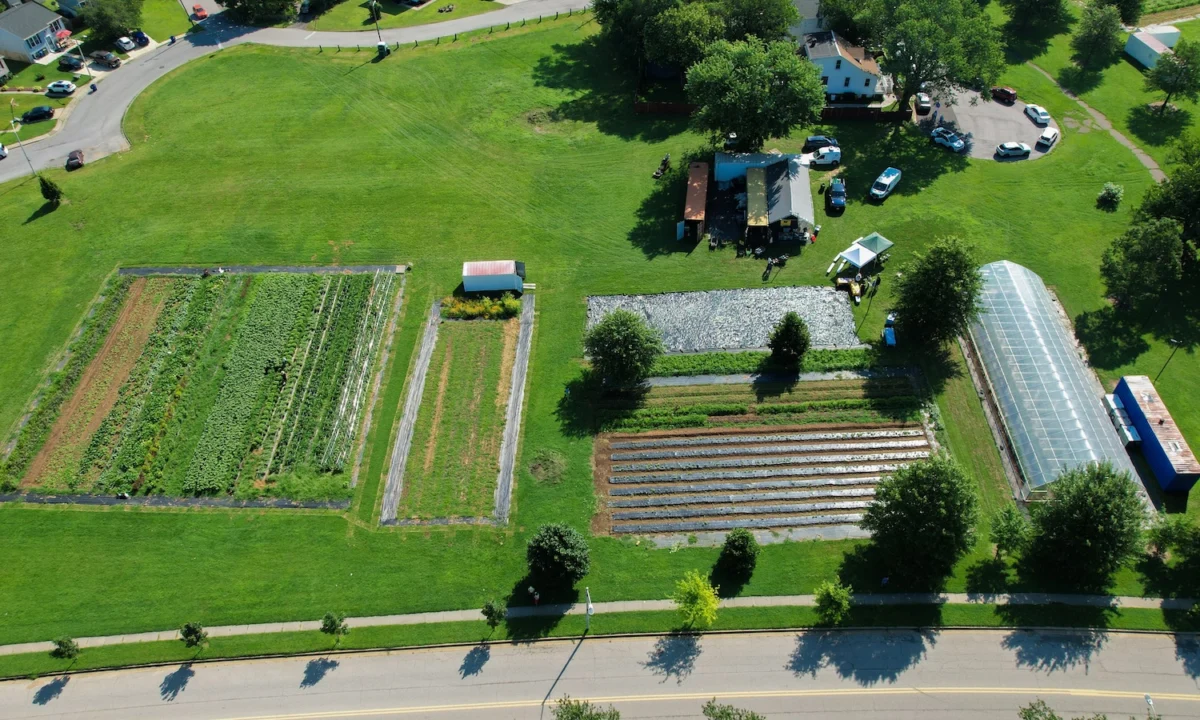
Supported by a partnership with the Farm Alliance of Baltimore, this initiative serves as a model for urban land use. Located strategically between an elementary and a high school, the farm does more than grow produce; it functions as a community hub. By offering mentorship and vocational training to emerging farmers of color, the farm addresses the historical inequities in agricultural land ownership while simultaneously educating the next generation about the efficiency of urban food production.
2. Food Rx
This initiative represents the "Food is Medicine" movement, currently hosted at MedStar Harbor Hospital and Good Samaritan Hospital. Enrolled patients receive a prescription for nutrition: enough produce to prepare 10 medically tailored meals per week. The goal is to mitigate diet-related health outcomes, such as hypertension and diabetes, while simultaneously reducing the long-term cost of care for the healthcare system.
3. The Produce Box Distribution Program
Building on the momentum of the pandemic response, this program continues to bridge the gap in priority areas. Since 2020, this infrastructure has connected residents with over 195 million servings of fresh produce, ensuring that logistical barriers to transportation do not prevent healthy eating.
4. B’More Fresh
This program utilizes financial incentives to lower the barrier to entry for healthy food. Recipients of the Supplemental Nutrition Assistance Program (SNAP) receive US$30 in monthly vouchers for fruits and vegetables when shopping through online platforms like Amazon and Safeway. This bridges the gap between digital retail access and low-income affordability.
5. Electronic Nutrition Incentives (ENI)
The final pillar focuses on local markets. By expanding the use of ENI at city farmers’ markets, the city is effectively increasing the purchasing power of low-income residents while simultaneously supporting local growers, thereby keeping capital within the Baltimore economy.
Official Responses: Shifting the Paradigm
Taylor LaFave has been clear-eyed about the necessity of this departure from traditional retail recruitment. In discussions with Food Tank, she emphasized the futility of relying on corporate entities. "We can’t continue to rely on large private corporations that are ultimately only interested in profit to solve our healthy food access issues," LaFave stated.
Her sentiment is echoed by Najahla Olumiji, Baltimore’s Food Systems Planner, who has witnessed the community impact firsthand. Reflecting on the Black Butterfly Teaching Farm, Olumiji noted that community engagement has been organic and enthusiastic. "Neighbors are constantly asking how to get involved," she said. The surprise of local students—many of whom are "shocked at how little space it takes to grow thousands of pounds of produce"—highlights the potential for urban agriculture to reshape the cultural perception of food production.
Implications: Sustainability and the Looming Funding Cliff
The current challenge facing the FPP Division is the "fiscal cliff." With the ARPA funding scheduled to expire at the end of October, the city faces a critical juncture. The sustainability of these programs is no longer a theoretical concern; it is an operational imperative.
Bridging the Gap
LaFave acknowledges that the status quo is unsustainable without a diversified funding strategy. "None of these programs will be able to continue how they’ve been operating by relying just on city funding," she admits. To mitigate this, the city has allocated US$150,000 from the annual general fund to serve as a baseline for covering gaps and leveraging external grants.
Future Evaluation
The path forward involves rigorous academic and empirical scrutiny. In June 2026, the Division initiated a collaboration with researchers from the Johns Hopkins Center for a Livable Future. This partnership aims to evaluate the efficacy of the current programs over the next year, providing the data necessary to justify long-term investment.
A Call for National Collaboration
The long-term viability of Baltimore’s model may ultimately depend on a shift in national philanthropic priorities. LaFave advocates for a more unified front among national funders. "We need national funders to step up and work more collaboratively together across the food system," she says.
The Baltimore experiment is a microcosm of a larger, national conversation. If the city can prove that a decentralized, health-focused, and community-led food system is more resilient and cost-effective than the traditional supermarket model, it could serve as a national prototype.
For now, the city’s residents—from the students at the Black Butterfly Teaching Farm to the patients participating in Food Rx—are living the answer to a question that has haunted urban policy for decades: Is it possible to feed a city by empowering its people rather than relying on corporate benevolence? Baltimore is betting that the answer is yes, provided the infrastructure is built to last.
As the city enters this transition period, the eyes of urban planners and public health officials remain fixed on Baltimore. The success of this model hinges not just on the US$11 million spent, but on the enduring political and financial will to sustain a system that values human health over corporate profit margins.

 Asep Darmawan

 Layla Zulfa

