
 Jia Lissa

 Raul Delapena Setiawan

 Asro

 Layla Zulfa

 Sagoh
 Siti Muinah
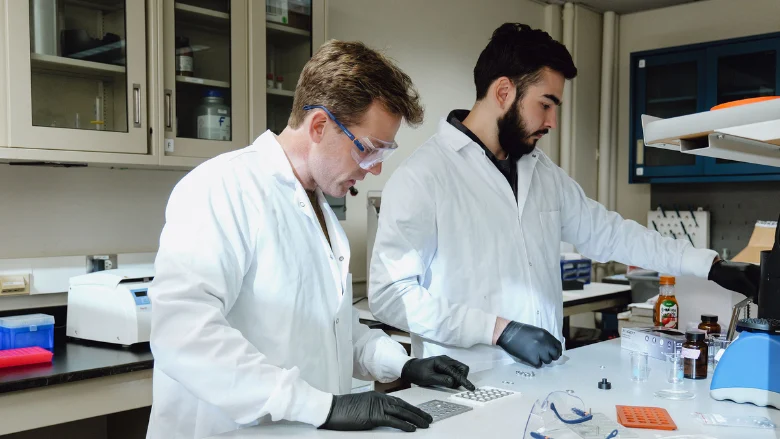
In the high-stakes world of food and beverage quality control, the ability to detect volatile and semi-volatile compounds at the parts-per-billion (ppb) or even parts-per-trillion (ppt) level is the difference between a premium product and a catastrophic recall. For decades, the industry has relied on time-consuming, serial processing methods. Today, that paradigm is shifting. Quantera Analytical has officially introduced the Curio HS, a groundbreaking planar, parallel, cartridge-based headspace extraction platform designed to fundamentally accelerate trace-level testing.
Born from extensive research at Cornell University, the Curio HS promises to transform how laboratories handle everything from off-flavor identification in dairy and beverages to the assessment of grape ripeness and the detection of residual solvents in food packaging. By enabling dozens of samples to be processed simultaneously, Quantera is addressing one of the most persistent bottlenecks in analytical chemistry.
Main Facts: The Architecture of Efficiency
The Curio HS platform is not merely an incremental improvement; it is a structural reimagining of headspace analysis. Conventional methods—most notably solid-phase microextraction (SPME)—are inherently serial, requiring laboratory technicians to process individual samples one at a time using delicate fiber-based extraction tools. This workflow is labor-intensive, costly, and difficult to scale.
The Curio HS replaces this serial bottleneck with a parallelized, high-throughput architecture. The system utilizes a standard multi-well plate format. An array of specialized sorbent cartridges is sealed directly over the plate, positioning a unique cartridge above each sample well. This geometry allows for the simultaneous preparation of dozens of samples, with total prep time clocking in at under two minutes per sample.
Key Technical Advantages
- Workflow Flexibility: Unlike fixed-fiber systems, the Curio HS cartridge design allows laboratories to swap sorbent materials to match specific target compounds without requiring a complete hardware overhaul.
- Portability: Perhaps most significantly, the cartridges can be loaded at the site of sample collection—be it a vineyard, a dairy farm, or a processing floor—and transported to the lab. This minimizes the logistical challenges and degradation risks associated with shipping perishable raw materials.
- Instrument Versatility: The platform is engineered for broad compatibility. It integrates seamlessly with gas chromatography (GC) systems, including GC-MS and GC-FID. Furthermore, it supports cutting-edge, chromatography-free mass spectrometry such as Direct Analysis in Real Time (DART-MS). Development is currently underway to extend this compatibility to liquid chromatography (LC) workflows.
Chronology: From Cornell Labs to Industrial Pilot
The journey of the Curio HS from an academic concept to a commercial platform is a case study in effective technology transfer and industry-academic partnership.
The Foundation (Academic Roots): The technology was meticulously developed in the laboratory of Professor Gavin Sacks, Ph.D., at Cornell University. Over years of rigorous experimentation, the research team documented their findings across 12 distinct peer-reviewed publications, establishing the scientific validity of the extraction geometry.
Intellectual Property and Licensing: Recognizing the potential for industrial disruption, Quantera Analytical secured an exclusive license to Cornell’s robust patent portfolio covering the core extraction workflow. Since securing this license, the company has bolstered its position by filing additional patent applications specifically focused on the Curio platform’s proprietary cartridge design and scalability.
Industry Validation (The Path to Pilot): The transition from the lab bench to the production floor was facilitated by strategic collaborations. A pivotal research partnership with E. & J. Gallo Winery provided the "real-world" stress testing necessary for such a platform. This collaboration proved that the technology could withstand the rigors of large-scale beverage production, paving the way for the current pilot program.
Current Status: As of this quarter, Quantera has opened an early-access program for food producers and contract laboratories. The company is currently deploying the technology in pilot configurations, supported by collaborations with key industry players, including a major wine industry contract laboratory and the U.S. Department of Agriculture’s Agricultural Research Service (USDA-ARS), which is currently co-authoring a formal validation study.
Supporting Data: Economic and Operational Impact
The value proposition for the Curio HS is rooted in empirical performance gains. When comparing the platform against conventional SPME methods, the data presented by Quantera suggests a seismic shift in cost-efficiency and throughput.
Throughput and Cost Efficiency
- DART-MS Integration: When paired with DART-MS, the Curio HS platform can increase sample throughput by as much as 60 times. This massive increase in speed, combined with reduced manual labor, results in per-sample cost reductions of up to 80 percent compared to fiber-based extraction.
- GC-MS Integration: For laboratories relying on traditional GC-MS, the gains remain significant. Quantera reports a 50 percent reduction in per-sample costs, a figure that provides a compelling ROI for laboratories struggling with high-volume testing demands.
- Method Transfer: One of the most significant barriers to adopting new technology is the cost of re-validation. Quantera has addressed this by ensuring that established headspace SPME methods can be transferred to the Curio HS with minimal re-optimization, significantly lowering the "switching cost" for labs.
Official Responses and Strategic Collaborations
Quantera is not navigating this launch in isolation. The company has secured high-level support from across the analytical ecosystem, most notably through a partnership with Bruker Corporation. Bruker is providing essential analytical instrumentation and technical expertise, ensuring that the Curio HS platform is optimized for the high-performance mass spectrometry environments that industrial users demand.
"The goal of the early-access program is to ensure that the transition to the Curio platform is seamless for our partners," a spokesperson for Quantera stated. As part of this program, participating labs receive complimentary method development support, ensuring that their legacy protocols are successfully translated to the new parallel format.
The involvement of the USDA-ARS as a co-author of a validation study serves as a critical third-party endorsement. In the highly regulated food safety sector, such validation is often the final hurdle before widespread adoption by regulatory bodies and major food manufacturers.
Implications: The Future of Food Safety Testing
The introduction of the Curio HS carries profound implications for the global food and beverage industry.
1. Enhanced Quality Assurance
By making trace-level testing faster and more affordable, the barrier to "testing everything" is lowered. Producers can move from randomized batch testing to more comprehensive quality oversight. Detecting off-flavors earlier in the production cycle—or even at the raw ingredient stage—prevents significant financial loss and protects brand equity.
2. Supply Chain Integrity
The portability of the Curio HS cartridges addresses a long-standing weakness in the supply chain. Because samples can be stabilized in the cartridge at the source, the "time-to-analysis" is no longer a constraint on data accuracy. This allows for more granular data collection across global supply chains, providing producers with unprecedented visibility into the chemical composition of their products regardless of geographic origin.
3. Sustainability and Resource Optimization
Traditional analytical methods consume significant amounts of energy and chemical solvents, and the use of disposable SPME fibers contributes to lab waste. The Curio HS, by consolidating the extraction process and utilizing high-throughput plates, offers a more sustainable path forward. The reduction in per-sample costs also democratizes access to high-end chemical analysis, potentially allowing smaller laboratories and regional producers to maintain standards that were previously reserved for the largest multinational corporations.
4. The Shift Toward "Real-Time" Analytics
As Quantera continues to develop liquid chromatography (LC) workflows and further refines its integration with DART-MS, the industry is moving closer to a future where high-resolution chemical fingerprinting is a standard step in production. The Curio HS serves as the "front end" of this revolution, bridging the gap between raw sample and actionable analytical data.
Conclusion: A New Standard?
The food and beverage industry has long been defined by its tension between high-volume production and the need for precision quality control. For years, laboratories have been forced to choose between the speed of rapid screening and the sensitivity of deep, trace-level analysis.
With the introduction of the Curio HS, Quantera Analytical appears to have resolved this tension. By leveraging parallel processing, versatile cartridge-based sorbents, and seamless integration with existing GC and MS instrumentation, the platform offers a path toward a more efficient and rigorous approach to food safety. As the pilot programs with the USDA-ARS and E. & J. Gallo Winery progress, the industry will be watching closely to see if the Curio HS becomes the new gold standard for analytical throughput.
For laboratories and producers looking to modernize their analytical capabilities, the early-access program represents a unique opportunity to gain a competitive edge in product quality and operational efficiency. Interested parties are encouraged to visit www.quantera.as to learn more about the integration process and to apply for inclusion in the upcoming rollout.
As the industry pivots toward this high-throughput future, one thing is clear: the days of serial, fiber-based headspace analysis are numbered. The future of trace-level testing is planar, parallel, and undeniably faster.

 Neng Nana